Twenty Years of Bigtable
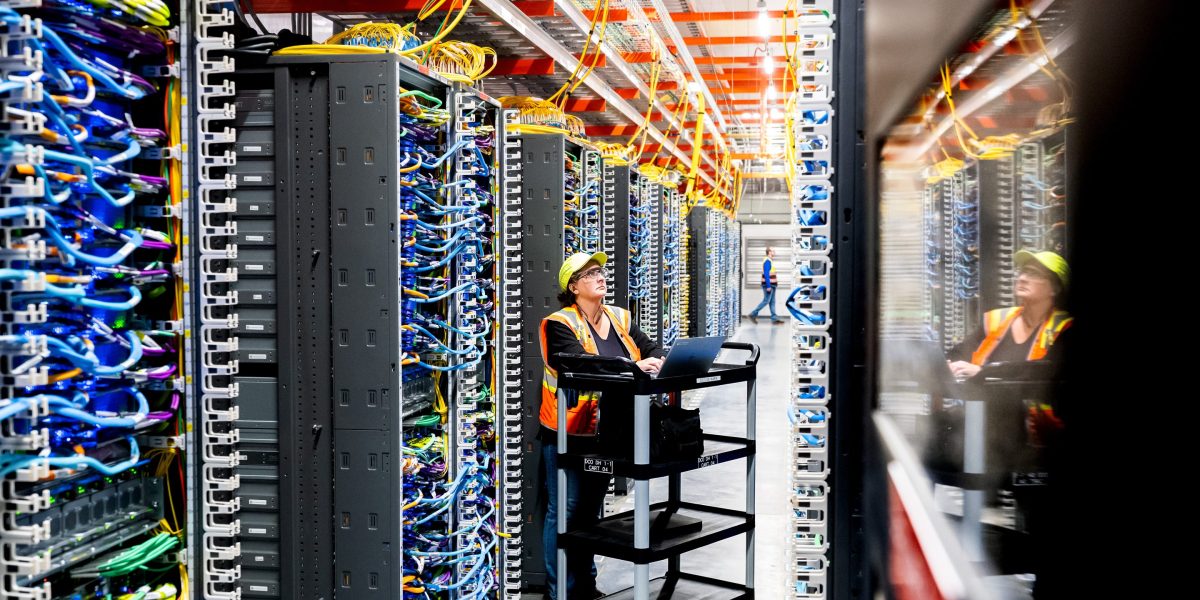
Why it matters — The title indicates a significant milestone for a technology named Bigtable, but the provided material lacks the article body to explain the specific operational impacts or engineering takeaways discussed.
Why it matters — The title indicates a significant milestone for a technology named Bigtable, but the provided material lacks the article body to explain the specific operational impacts or engineering takeaways discussed.
CLUSTERED TODAY
Engineers can test or develop legacy IA‑64 software without needing rare hardware, using a modern host and open‑source tools. The build process, inclu...
For engineers managing cloud costs, this API eliminates the need to scrape dashboards or manually aggregate per-product billing data. It enables autom...
Only one feed elseif tracks has carried this so far, so there is no independent corroboration yet. Read it as a single-source report.
THE INDEX
Why it matters — The title indicates a significant milestone for a technology named Bigtable, but the provided material lacks the article body to explain the specific operational impacts or engineering takeaways discussed.
Why it matters — AI is increasingly being applied to long-standing open problems in theoretical fields like geometry and complexity. The Anthropic experiment demonstrates that with significant investment, such as spending $100,000 on tokens, AI can produce "proper research" rather than just "low hanging fruit."
Why it matters — Engineers deploying BSD systems now have official support for RISC-V hardware and improved ability to run Linux binaries. The release also changes installation procedures, with ARM-based devices requiring U-Boot pre-configured images and ISO images split into separate files.
Why it matters — Engineers running inference can fit larger contexts and more simultaneous requests on the same hardware, lowering per‑token cost and latency. The memory savings also free capacity for additional workloads, simplifying GPU provisioning. Because the precision changes do not affect benchmark scores, existing model quality expectations remain unchanged.
Why it matters — Engineers can test or develop legacy IA‑64 software without needing rare hardware, using a modern host and open‑source tools. The build process, including a fix for zlib’s fdopen macro and a manual libgcc copy, offers a reproducible workflow for reviving dead toolchains. This reduces the effort required to preserve or extend support for Itanium‑based firmware and operating systems.
Why it matters — For engineers managing cloud costs, this API eliminates the need to scrape dashboards or manually aggregate per-product billing data. It enables automated cost tracking, allocation, and alerting, especially when combined with partners like Vantage. The FOCUS alignment means teams can integrate Cloudflare spend into existing multi-cloud cost reports without custom parsing.
Why it matters — Only one feed elseif tracks has carried this so far, so there is no independent corroboration yet. Read it as a single-source report.
Why it matters — Engineers can expect forthcoming advances in query processing, data structures, and performance that may be incorporated into ClickHouse and PostgreSQL. The open‑source focus means the research outcomes will be publicly available, allowing teams to adopt and extend new techniques without waiting for proprietary releases. Pavlo’s expertise in autonomous databases and large‑scale analytics aligns with the growing AI‑driven workload demands that many real‑time analytics platforms face.
Why it matters — Engineers who deeply understand their codebase can push LLMs toward simpler, more relevant solutions by asking specific questions and rejecting poor suggestions. Without domain knowledge, users can still get basic output, but experts can wring far more value from the same model. As models improve, human expertise remains critical because the bottleneck is often the human's ability to communicate the exact desired solution.
Why it matters — Only one feed elseif tracks has carried this so far, so there is no independent corroboration yet. Read it as a single-source report.
Why it matters — Fully automating code generation with AI risks developers losing their mental models of how systems function, making future maintenance difficult. By manually transcribing AI output, engineers can retain spatial awareness of their projects and catch subtle errors, trading raw generation speed for sustained comprehension.
Why it matters — Engineers frequently invoke the Dunning-Kruger effect to explain poor self-assessment and skill gaps on teams; if the effect is actually a data artifact, those explanations and any interventions based on them rest on shaky ground. This is carried by only one feed, so corroboration is thin.
Why it matters — Engineers relying on these authentication and service‑integration APIs must expect increased latency or timeouts during the incident. The event highlights the need for robust DDoS defenses and clear incident‑communication channels when critical infrastructure is outsourced to a partner.
Why it matters — Only one feed elseif tracks has carried this so far, so there is no independent corroboration yet. Read it as a single-source report.
Why it matters — The piece, while comedic, captures a real and growing tension: maintainers are being flooded with low-quality AI-authored PRs, pressured to relicense permissively, and watching AI-heavy forks outpace their projects in visibility. For engineers who depend on or contribute to open source, it signals that maintainer goodwill is not infinite and that the social contract around contributions is fraying.
Why it matters — Only one feed elseif tracks has carried this so far, so there is no independent corroboration yet. Read it as a single-source report.
Why it matters — Engineers maintaining or emulating legacy ZX Spectrum software now have a clear reference for the two sound pathways: the BIOS-backed beeper routine and direct port manipulation. The article also surfaces the trade-offs between cycle-accurate timing and code portability when targeting 16 KB vs. 128 KB models.
Why it matters — This shifts immovability from a property of places (Pin) to a property of types, which could simplify self-referential data structures and unblock patterns like safe scoped spawn for async. Real-world validation is planned in the Linux kernel, indicating potential impact on systems-level Rust code.
Why it matters — When engineers paste AI output directly into conversations or code reviews without understanding it, they create noise rather than signal—the recipient could query the AI themselves with better context. The real value an engineer can add comes from reading, validating, and synthesizing AI output into their own words, which demonstrates comprehension and filters out plausible-sounding nonsense.
Why it matters — Engineers building or operating AI infrastructure will face higher financing costs as lenders demand a premium for the growing leverage. The shift from asset‑light to asset‑heavy models means more capital‑intensive projects, longer‑term rent or lease obligations, and potential constraints on future spending if debt markets tighten. Monitoring these financing trends helps anticipate changes in hardware availability, data‑center expansion, and operational budgets.
HOW RANKING WORKS
Every story carries a signal score, and every score decomposes into named parts you can inspect on the story page. If you disagree with a ranking, you can see exactly which component put it there.
Read the full method →01 · RECENCY
How recently it was published, decaying on a fixed half-life rather than falling off a cliff.
02 · CROSS-FEED AGREEMENT
How many independent feeds carried the same story. Agreement reached separately is the strongest signal we have.
03 · SOURCE AUTHORITY
Editorial trust in the reporting feed. Primary engineering write-ups outrank rewrite desks.
04 · EARLY VELOCITY
Discussion the story drew at its origin, not on elseif. We never rank on our own click data.
05 · TOPIC CLARITY
How confidently the story classified. A story we cannot place is unlikely to be what you came for.
Top stories right now