SECURITY Signal 488
Over 21,000 internet-facing MCP servers exposed as 92% of audited instances lack OAuth authentication
 ↗
↗
A security audit found more than 21,000 MCP server instances exposed on the internet, with 91.8% of 640 audited production servers lacking OAuth and 687 instances offering unrestricted shell tool access.
MCP is becoming the standard protocol for how AI models interact with local and remote data, and its attack surface is now demonstrably systemic rather than theoretical. The disagreement between Anthropic's position that STDIO is secure by design and the security community's evidence of mass exposure will shape whether the protocol gets architecturally hardened or left as a developer-side burden.
Written by elseif from the cluster below · every claim links back to a sourceThe three things worth knowing
An OX Security report identified up to 200,000 vulnerable MCP instances and 150 million downstream package downloads potentially affected by a systemic architectural vulnerability in the STDIO transport.
Anthropic maintains that STDIO behavior is by design and a secure default, while the NSA's AI Security Center has published design considerations emphasizing risks around serialization, trust boundaries, and implicit trust relationships.
MCP governance has moved to the Linux Foundation under the Agentic AI Foundation, giving the community a neutral venue to debate architectural changes outside a single-vendor veto.
THE READ
What the cluster adds up to.
The exposure data is stark and corroborated across multiple sources. Research published as arXiv 2608.00150 detected over 21,000 internet-facing MCP server instances, audited 640 production servers, and found 91.8% lacked OAuth authentication while 687 instances had unrestricted shell tool access. The OX Security report published in April 2026 separately identified over 7,000 publicly accessible MCP servers and up to 200,000 vulnerable instances, with 150 million downstream package downloads potentially affected. These findings sit alongside over 10 critical or high-severity CVEs and the formalization of the OWASP MCP Top 10, which catalogs risks from token mismanagement to tool poisoning.
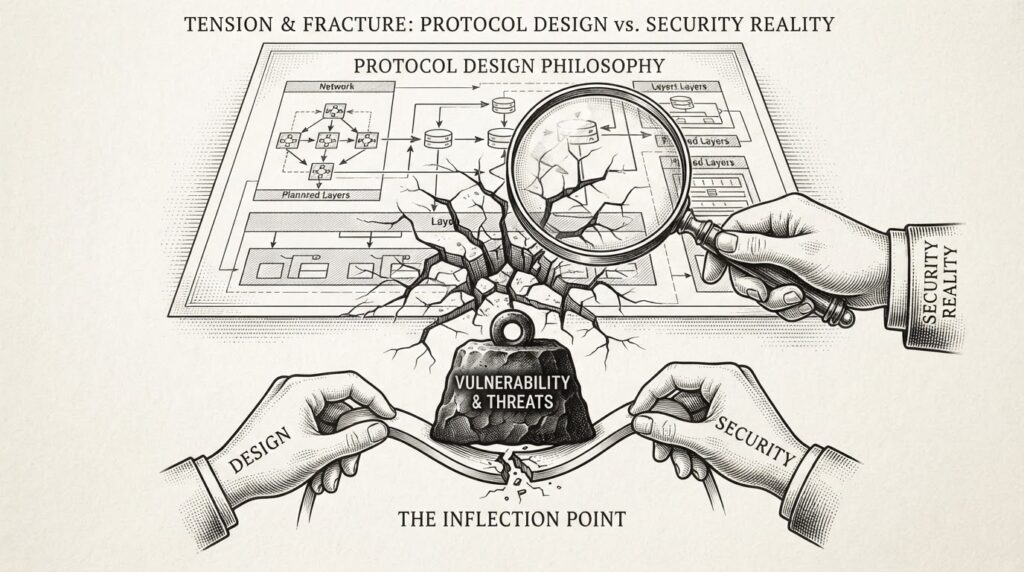
The core dispute is architectural, not operational. OX Security labeled the MCP STDIO transport a systemic architectural vulnerability, while Anthropic has maintained that the STDIO behavior is by design, calling the execution model a secure default and placing input sanitization responsibility on developers. The NSA's AI Security Center published security design considerations in June 2026 that emphasize risks related to serialization, trust boundaries, and implicit trust relationships, implicitly challenging the idea that developer-side workarounds are sufficient. This leaves teams building on MCP with a protocol whose creator says the current transport is safe by design while multiple independent assessments show mass exposure in practice.
Governance has shifted in a way that could break the stalemate. MCP direction was previously heavily influenced by co-founders including Anthropic, Block, and OpenAI, but the protocol has moved to the Linux Foundation under the Agentic AI Foundation. This gives the community a neutral venue where architectural decisions can be debated without a single-vendor veto, which matters directly because Anthropic's by-design stance is the position being challenged.
For engineers operating or building MCP servers, the immediate cost is authentication and access control that the protocol does not enforce. Nearly 92% of audited production servers lacked OAuth, and hundreds of instances exposed unrestricted shell tool access to the internet. Until the governance process produces architectural hardening, teams must treat STDIO transport as untrusted by default, implement their own authentication and input sanitization, and assume that any internet-facing MCP instance is a live attack surface rather than a controlled local resource.
Written by elseif from the cluster below · checked for specifics the sources never containedTHE CLUSTER