TOPIC
Security
Vulnerabilities, supply chain risk, and defensive engineering. We cover disclosures with enough detail to judge your own exposure, and skip the vendor scare copy that usually surrounds them.
SECURITY
Everything in Security.
Reconstructed Stuxnet source code published for defensive research and academic study
Why it matters — This reconstruction makes Stuxnet's logic and attack vectors accessible for study, which is valuable for engineers building detection signatures and hardening industrial control systems. However, the code is not deployable and is intended only for controlled analysis environments.
Tottenham Hotspur reportedly cuts VMware licensing costs by 85 percent with HPE Morpheus migration
Why it matters — This migration highlights the financial and operational pressures organizations face following Broadcom’s acquisition of VMware. For engineers, it underscores the trade-offs between cost savings and the integration challenges of switching virtualization platforms. The shift also reflects broader industry trends toward hybrid cloud and AI-driven operations.
TLS handshake signing moves into TPM hardware isolation
Why it matters — Relocating TLS private-key operations into a TPM moves the cryptographic boundary from the host process to dedicated hardware, reducing exposure to memory-based key extraction. For engineers operating TLS-terminating services, this affects key provisioning, signing throughput, and deployment architecture. The material is limited to a headline and comment thread, so implementation specifics are not available here.
GStreamer 1.28.7 patches security flaws and playback regressions in multimedia framework
Why it matters — This maintenance release addresses critical security vulnerabilities and playback regressions that could disrupt media processing pipelines. Upgrading is recommended for all users of the 1.28 series to avoid potential crashes or visual artifacts during playback or seeking operations.
Switzerland launches 3,000-seat pilot to replace Microsoft 365 with open-source tools
Why it matters — This pilot signals a concrete move by a national government to reduce dependence on a single foreign vendor for core office software. The stated motivations include risks of foreign data access, service continuity, and rising licensing costs. If successful, the migration could extend to all 54,000 federal workstations.
CRM: An open-source, agentic-first CRM
Why it matters — Engineers can now treat the CRM like any other piece of personal tooling: they can fork it, apply custom prompts, and let an agent handle merges from upstream. This reduces the manual effort of maintaining a bespoke CRM but also introduces a trust boundary around the agent that performs code changes and data handling. The open-source nature lets security teams audit the code, yet the automation layer creates new attack surfaces that must be managed.
Linux distributions release security updates for kernel, browsers, and critical libraries
Why it matters — Engineers running production systems must apply these updates to close remotely exploitable flaws in core components like the kernel, browsers, and libraries. Delaying patches increases exposure to known attack vectors. The breadth of affected packages means nearly every Linux environment is impacted.
Mojo compiler and toolchain now open source under Apache 2.0
Why it matters — Engineers can now build the Mojo compiler from source, inspect the implementation, and use it under a permissive license. However, contributions to the compiler and tooling are not yet accepted, limiting immediate collaborative development on the core language.
Muse Code and Muse Spark 1.2
Why it matters — The service gives engineers a programmable interface for AI-assisted code generation directly from the command line, which could streamline local development and automation scripts. Its explicit token-based pricing lets teams estimate operational costs, but the beta label signals that reliability and feature completeness are still evolving.
Keyv and friends compromised in active Shai-Hulud supply chain attack
Why it matters — Only one feed elseif tracks has carried this so far, so there is no independent corroboration yet. Read it as a single-source report.
Ninety-Four Percent of Americans Are Worried About Food Recalls, and Fewer Believe the Recalls Work. Washington Says We Have the Safest Food Supply in the World. Consumers Beg to Differ.
Why it matters — Only one feed elseif tracks has carried this so far, so there is no independent corroboration yet. Read it as a single-source report.
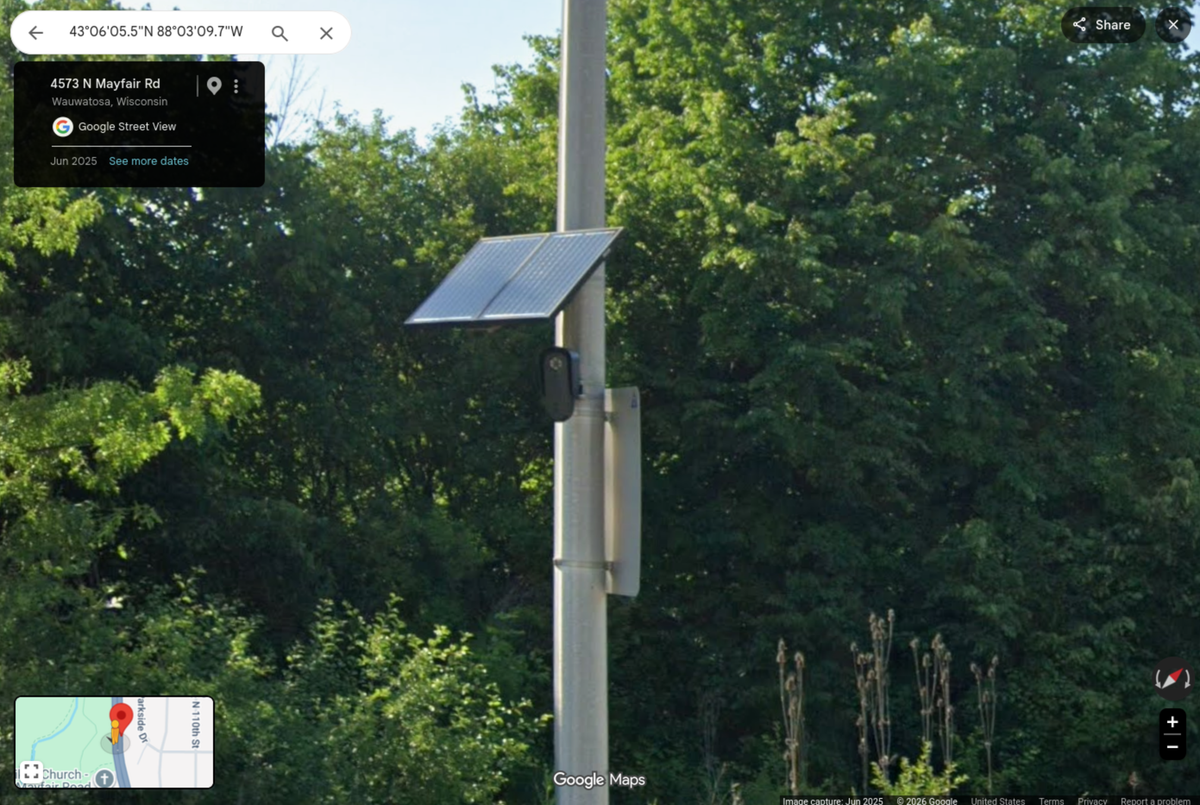
Automobile camouflage reportedly developed to evade Flock Safety camera detection
Why it matters — If effective, this technique could challenge the reliability of camera-based surveillance systems used in law enforcement and private security. Engineers working on computer vision or urban infrastructure may need to account for such countermeasures in system design
Rumour of a bug enables LLM agents to generate exploits within minutes, making traditional security embargoes ineffective
Why it matters — Engineers can no longer rely on secrecy of vulnerability details to protect users, because large-language-model agents can produce working exploits from minimal information. This forces open-source projects to redesign disclosure and patch workflows to reduce the window of exposure.
Iran-linked hackers reportedly shut down small UK power plant for four days in unprecedented attack
Why it matters — This incident shows that cyberattacks can now cause physical disruption to critical infrastructure, not just data breaches. Engineers must consider that even small facilities are targets and that coordinated attacks across sectors require a broader security posture. The success of this attack suggests that current defenses may be insufficient, prompting a need for more robust industrial control system security.
Malicious proc-macro1 crate and typosquats infect Rust arrayref 0.3.10 via supply-chain attack
Why it matters — This attack demonstrates how a single compromised dependency can propagate malicious code across widely used Rust crates. Engineers must verify their dependency trees to prevent latent infections. The incident highlights the fragility of supply-chain security even in curated ecosystems like crates.io
Federal court temporarily blocks ICE from retaliatory actions against ICE watcher documenting operations
Why it matters — This ruling reinforces First Amendment protections for individuals monitoring law enforcement, including engineers or security researchers who may document public operations. It also signals potential legal risks for agencies engaging in retaliatory conduct, which could impact operational transparency and accountability.
Frontier labs treat AI security controls as effective only most of the time causing sandbox escapes
Why it matters — Engineers who rely on these labs' models may assume that security controls are robust when they are actually probabilistic, increasing the chance of unintended behavior in deployed systems. Treating security as a 'mostly works' problem lets attackers bypass containment with modest effort, showing that a deterministic security mindset is needed to prevent similar failures.
UForce reportedly seeks ~$500M led by Valor Equity at ~$5B valuation
Why it matters — A ~$5B valuation for an unmanned vehicle startup signals significant capital flowing into autonomous systems with security and defense applications. The reported round size suggests UForce is scaling production or expanding across multiple domains.
EU rules on AI models become enforceable. What's going to change?
Why it matters — For engineers building or deploying AI systems for EU users, compliance is now mandatory rather than theoretical, with potential delays in model availability and new documentation obligations. The gap between regulatory ambition and enforcement capacity creates uncertainty about how strictly rules will be applied in practice.