TECH Signal 303
Roman shipwreck’s pine tar and beeswax hull coating reveals ancient waterproofing techniques
 ↗
↗
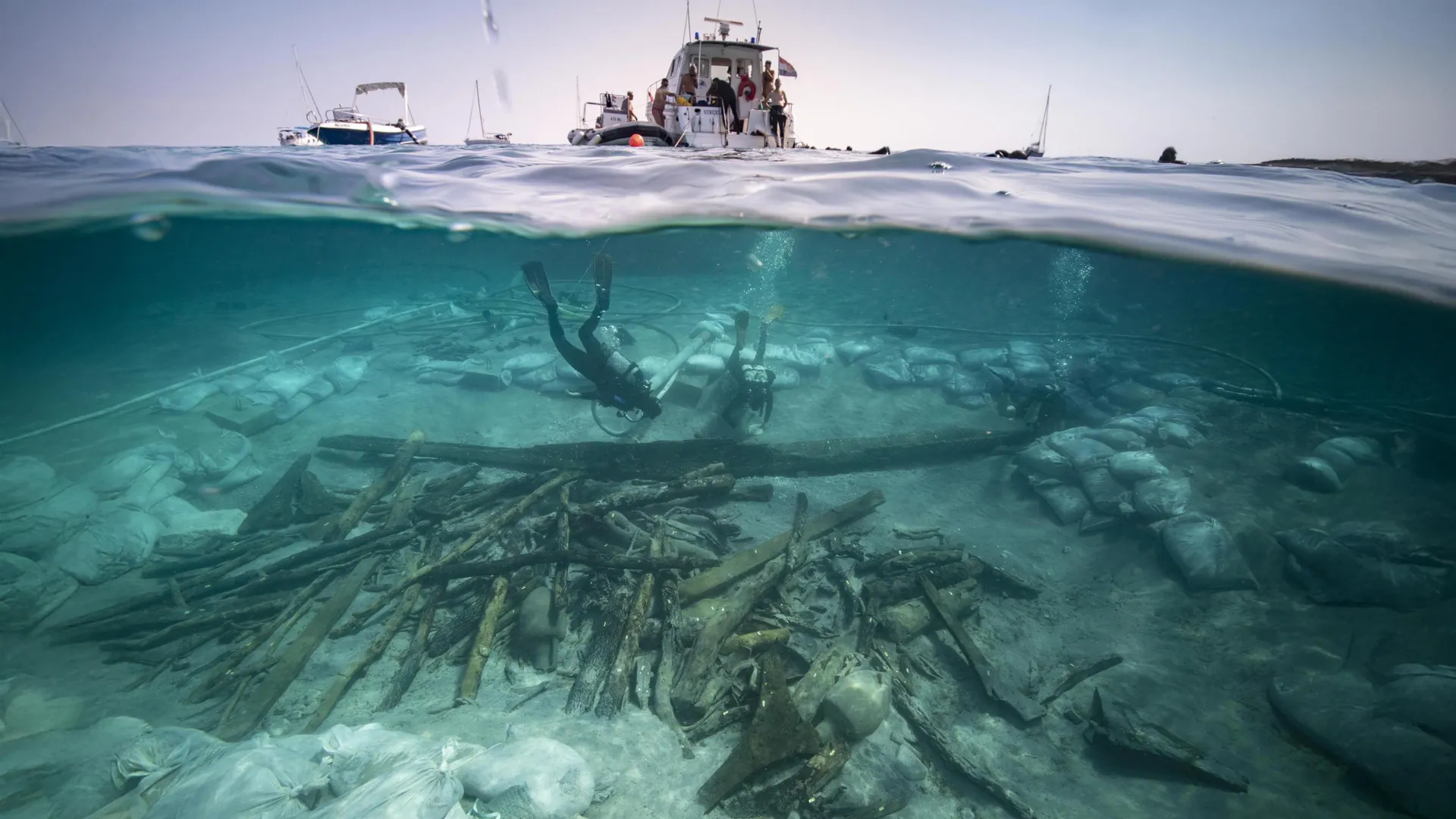
Scientists found that a 2,200-year-old Roman shipwreck’s hull was coated with pine tar and, in one area, a mixture of tar and beeswax, with pollen trapped in the coating revealing local vegetation during repairs
Understanding the composition of ancient pine tar and beeswax coatings offers engineers a natural-based alternative for waterproofing marine structures. The pollen evidence shows how local resources were harnessed, indicating that formulations can be tuned to regional plant availability. Knowledge of repeated coating batches informs maintenance scheduling for long-life vessels using bio-derived sealants.
Written by elseif from the cluster below · every claim links back to a sourceThe three things worth knowing
The hull was coated with pine tar overall, with a localized mixture of pine tar and beeswax.
Pollen trapped in the coatings acted as a geographic fingerprint, revealing the vegetation present during repairs.
Analysis indicates the vessel received four to five separate coating batches, showing repeated maintenance across the Adriatic.
THE READ
What the cluster adds up to.
Scientists examined the hull coating of the Ilovik-Paržine 1 shipwreck, which sank about 2,200 years ago off the Croatian coast. They found that the hull was covered with pine tar overall and, in one area, a mixture of pine tar and beeswax. Pollen grains trapped in the sticky coating were preserved and identified. The pollen assemblage acted as a geographic fingerprint, indicating the local landscapes present when the coating was applied or renewed.
Adopting similar waterproofing today would require sourcing pine tar and beeswax, natural materials whose quality can vary with geography and season. Researchers used molecular fingerprinting via mass spectrometry to confirm the coniferous resin origin of the tar. Pollen analysis needed microscopic identification and counting to reconstruct vegetation. These analytical steps demand specialized equipment and expertise in archaeometry or materials science.
The study is based on a single wreck, Ilovik-Paržine 1, so the observed coating may not reflect practices across the Roman fleet. Pollen spectra are tied to the specific Adriatic environment where the ship was repaired, limiting direct transfer to other regions. Consequently, while the findings illuminate ancient techniques, their broader adoption for modern engineering would need further validation across multiple sites and conditions.
Written by elseif from the cluster below · checked for specifics the sources never containedTHE CLUSTER