TECH Signal 297
240-million-year-old reptile fossil reveals a lost chapter before dinosaurs and crocodiles
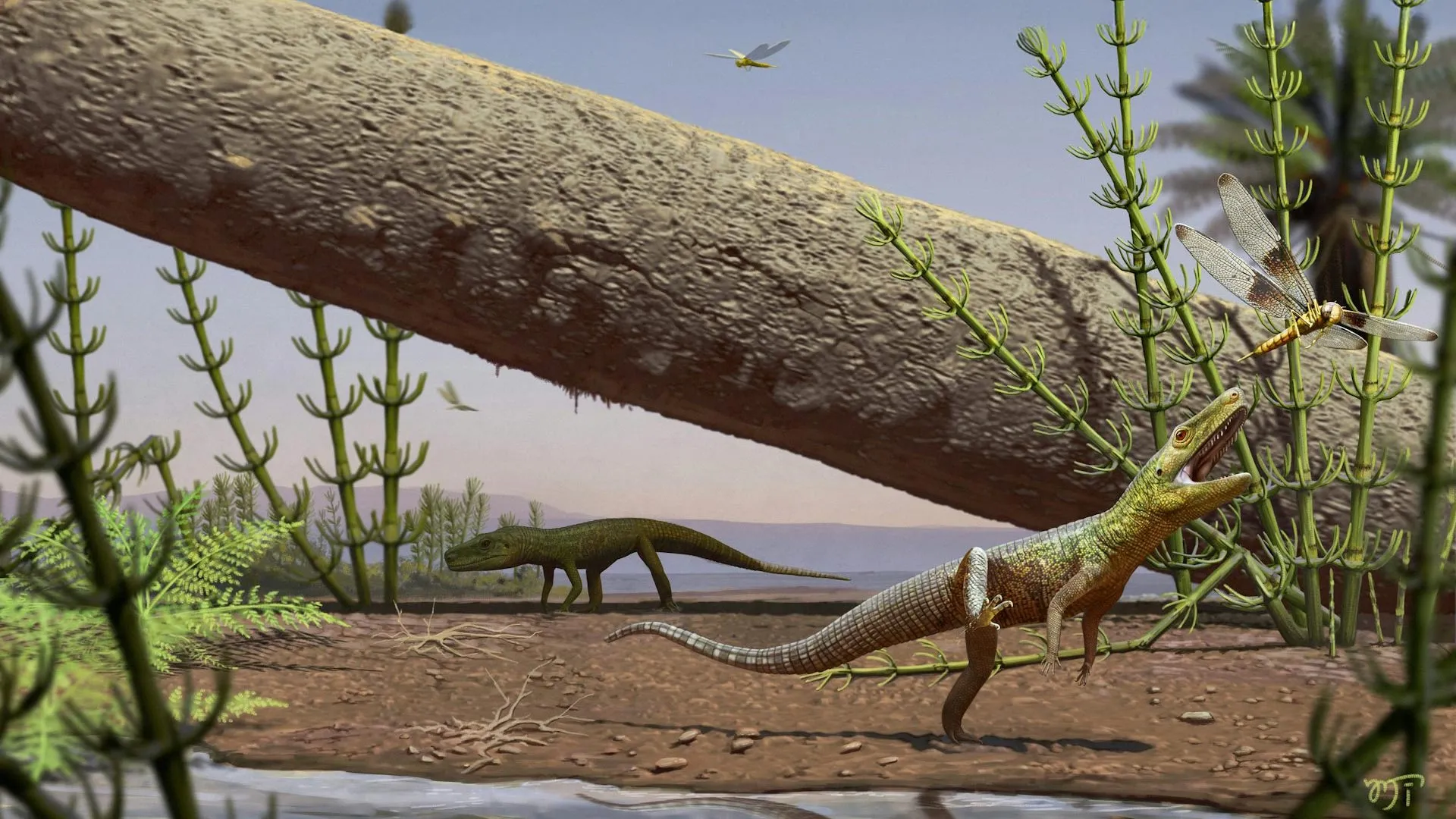 ↗
↗
A Middle Triassic reptile fossil discovered in Brazil, named Silescelida acristata, provides new limb anatomy and phylogenetic data for archosauriforms and may extend the known range of the rare Euparkeriidae lineage into South America.
The discovery has no direct software or hardware consequence for engineers, no library, platform, or method is introduced. It surfaced in this collection under the Tech topic via a single feed, which is itself the most useful takeaway: aggregator topic labels are lossy, and a working engineer should verify the source framing before treating a story as engineering-relevant.
Written by elseif from the cluster below · every claim links back to a sourceThe three things worth knowing
Silescelida acristata was described from Middle Triassic (~240 Ma) deposits in Dona Francisca, Rio Grande do Sul, Brazil, in Scientific Reports by a consortium including the Federal University of Santa Maria, UFRGS, and PUCRS.
The femur indicates a semi-erect leg posture interpreted as more efficient locomotion, placing the animal in the anatomical transition that preceded the rise of dinosaurs and crocodiles.
A proposed phylogenetic link to Euparkeriidae, previously documented mainly in Africa, Asia, and Europe, would extend that group's known range to South America.
THE READ
What the cluster adds up to.
A new species, Silescelida acristata, has been described from limb fossils recovered in Dona Francisca, Rio Grande do Sul, within the UNESCO Quarta Colônia Geopark. The stratigraphic context places the animal in the Middle Triassic, roughly 240 million years ago, during the recovery window after the Permian, Triassic extinction. The description was produced by researchers at the Federal University of Santa Maria (CAPPA/UFSM), the Federal University of Rio Grande do Sul (UFRGS), and the Pontifical Catholic University of Rio Grande do Sul (PUCRS), and was published in Scientific Reports. The taxon is interpreted as a small quadrupedal predator roughly the size of a small alligator, and it sits inside Archosauriformes but outside the lineages that produced dinosaurs and crocodilians. The taxonomic placement itself is the central scientific claim being advanced.
From an engineering standpoint, the practical cost of engaging with this work is effectively zero. No new tool, library, model, or dataset is released that a working engineer would integrate, and no infrastructure dependency is created. The only computational component referenced in the supplied material is phylogenetic analysis based on morphological characters, which is a standard cladistic method rather than a novel contribution. There is no API surface, no platform change, and no benchmark or performance claim to weigh. The appropriate response for an engineer is awareness, not adoption.
Several limits should temper how strongly the claims are read. The fossil primarily preserves limb elements, and the source itself characterizes this as 'limited' material, even while arguing that the femur carries enough anatomical signal to support a postural inference. The provided extract cuts off mid-sentence at 'The "rediscovery" of a f,' so any closing remarks from the authors, including the implications they want to emphasize, are not available here. Only one feed carried the story, so there is no independent corroboration present in the supplied material, and both the locomotion-efficiency interpretation and the Euparkeriidae affinity should be treated as the authors' framing rather than as triangulated conclusions.
The most useful observation for a working engineer is the mismatch between the assigned topic and the content. The event was filed under Tech, but ScienceDaily framed it as a science-research item sourced from The Conversation via university press distribution. A feed aggregator that routes paleontology into a Tech lane is making a categorization decision that its engineering readers would not naturally benefit from. The operational lesson is that aggregator topic tags are not guarantees of relevance, and reading the underlying source framing takes only a moment and prevents wasted attention. Even on a generous reading of the article, no technology signal is present.
Written by elseif from the cluster below · checked for specifics the sources never containedTHE CLUSTER