TECH Signal 409
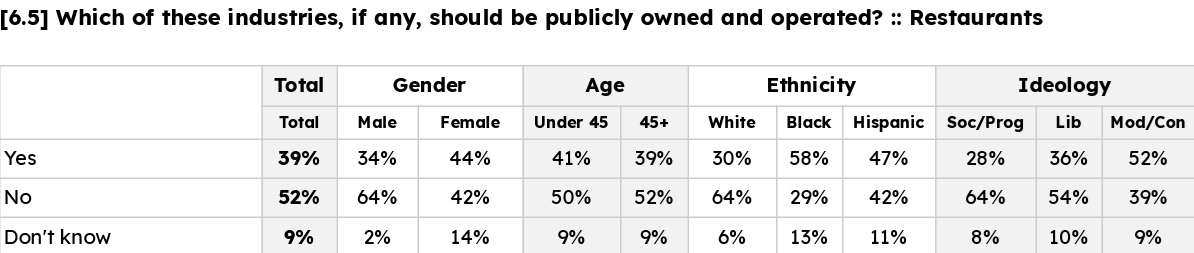
39% of Democratic Voters Support Public Ownership of Restaurant Industry
 ↗
↗
A recent survey indicates that 39% of Democratic voters believe the restaurant industry should be publicly owned and operated.
This statistic reflects shifting attitudes towards public ownership in the restaurant sector among Democratic voters. It suggests a significant portion of the electorate may advocate for systemic changes in how restaurants are managed and operated, which could influence future policy discussions. Understanding these sentiments can help businesses and policymakers navigate the evolving landscape of public and private ownership models.
Written by elseif from the cluster below · every claim links back to a sourceThe three things worth knowing
39% of Democratic voters favor public ownership of the restaurant industry according to a recent survey.
Support for public ownership is notably higher among conservative Democrats compared to more progressive factions.
The survey also found greater support for public ownership of grocery stores, at 46%.
THE READ
What the cluster adds up to.
The survey reveals that a notable 39% of Democratic voters endorse the idea of public ownership for the restaurant industry. This sentiment indicates a potential demand for changes in how restaurants operate, which could lead to increased discussions around public versus private ownership models within the food service sector.
The support for public ownership is particularly pronounced among conservative Democrats, suggesting a divide in perspectives within the party on economic models. This could lead to internal debates and policy proposals that may not align with the traditional pro-business stance typically associated with the Democratic party.
Interestingly, the survey indicates an even higher percentage, 46%, support public ownership for grocery stores. This broader support in the grocery sector might indicate a trend where voters feel more comfortable with public involvement in essential services, reflecting changing views on the role of government in everyday life.
The implications of this support could lead to significant shifts in local and state policies, particularly if public sentiment continues to favor these changes. Policymakers may need to consider how to balance these views with the existing private ownership models that currently dominate the restaurant and grocery industries.
While the survey highlights a significant voting block in favor of public ownership, it remains to be seen how this sentiment will translate into actionable policy or changes in the industry. The effectiveness of such a model in practice and the potential pushback from private sector advocates will be key factors in any future developments.
Written by elseif from the cluster below · checked for specifics the sources never containedTHE CLUSTER