TECH Signal 456
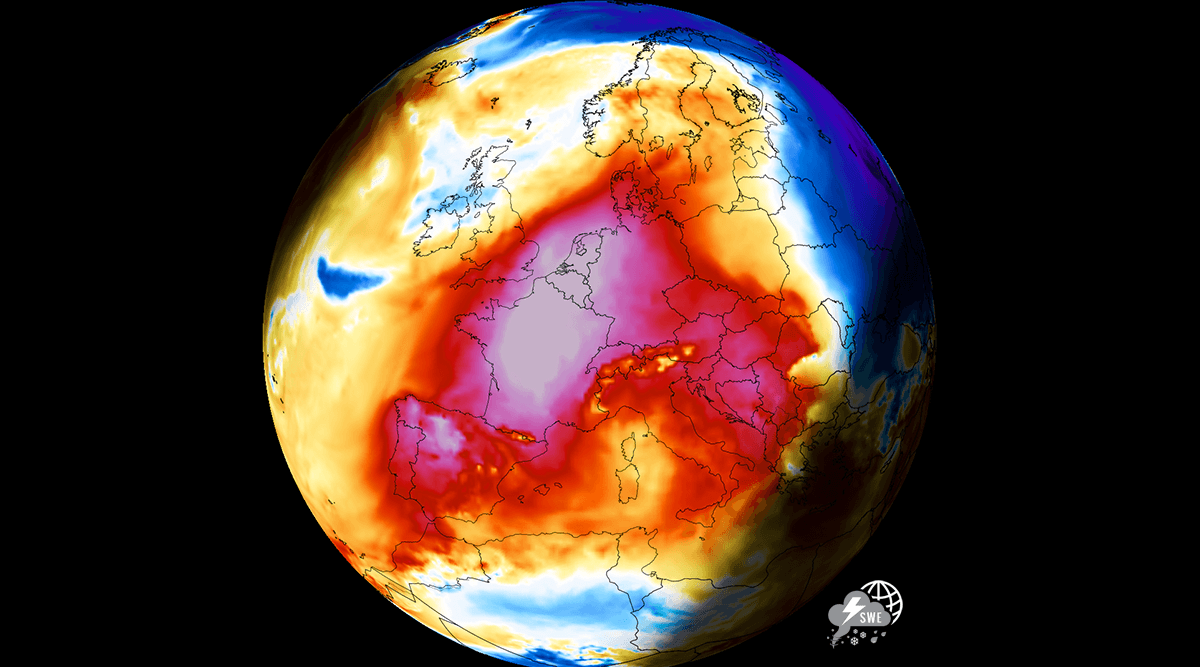
Fifth heat dome drives 40°C+ temperatures across Western and Central Europe this week
 ↗
↗
A persistent high-pressure ridge is amplifying Europe’s fifth major heat dome of the season, pushing surface temperatures above 40 °C in low-lying regions and urban corridors.
Sustained extreme heat stresses power grids, elevates wildfire risk, and removes overnight cooling, directly affecting data-center operations, outdoor construction, and hardware reliability. Engineers managing infrastructure must account for prolonged thermal loads and potential brownouts.
Written by elseif from the cluster below · every claim links back to a sourceThe three things worth knowing
Peak temperatures of 40 °C to 43 °C are forecast across France, the UK, Italy, and Central Europe due to adiabatic compression under the heat dome.
Overnight lows remaining above 22 °C to 26 °C prevent cooling, increasing physiological stress and energy demand for climate-controlled facilities.
Dry continental winds and depleted soil moisture heighten wildfire risk, complicating logistics for field installations and maintenance crews.
THE READ
What the cluster adds up to.
The fifth heat dome of the season is anchored by a high-amplitude upper-level ridge, creating a stable atmospheric lid that traps warm air. This compression effect raises surface temperatures to 40 °C and above, particularly in low-lying basins and urban areas where heat retention is already elevated. The ridge’s persistence means the heatwave will last several days, with minimal diurnal relief as overnight temperatures stay above 22 °C.
For engineers, the immediate impact is on infrastructure resilience. Power grids face heightened demand from cooling systems, while hardware in non-climate-controlled environments risks thermal throttling or failure. Data centers, outdoor telecom equipment, and construction sites must adapt to sustained high temperatures, which can degrade materials and reduce worker productivity. The lack of nighttime cooling exacerbates these challenges, as systems cannot offload accumulated heat.
Wildfire risk is another critical concern. Dry continental winds and rapidly depleting soil moisture create conditions where fires can spread quickly, disrupting logistics for field operations. Engineers managing remote installations or maintenance schedules must factor in potential access restrictions and equipment exposure to smoke or extreme heat. The heat dome’s slow eastward dissipation late this weekend offers only partial relief, as residual heat may linger in urban corridors.
The event underscores the need for adaptive design in infrastructure. Systems reliant on passive cooling or ambient air may fail under these conditions, requiring contingency plans for active cooling or temporary shutdowns. The heatwave also highlights vulnerabilities in energy distribution, as grid operators balance demand spikes with the risk of brownouts. For outdoor workers, the physiological strain of prolonged exposure to 40 °C+ temperatures necessitates adjusted schedules or protective measures.
While the heat dome is a meteorological phenomenon, its consequences are operational. Engineers must treat this as a stress test for systems designed for lower thermal extremes, identifying weak points in cooling, power redundancy, and material durability. The event’s duration, spanning multiple days, demands proactive monitoring rather than reactive fixes, particularly in regions where such extreme heat is becoming more frequent.
Written by elseif from the cluster below · checked for specifics the sources never containedTHE CLUSTER