TECH Signal 133
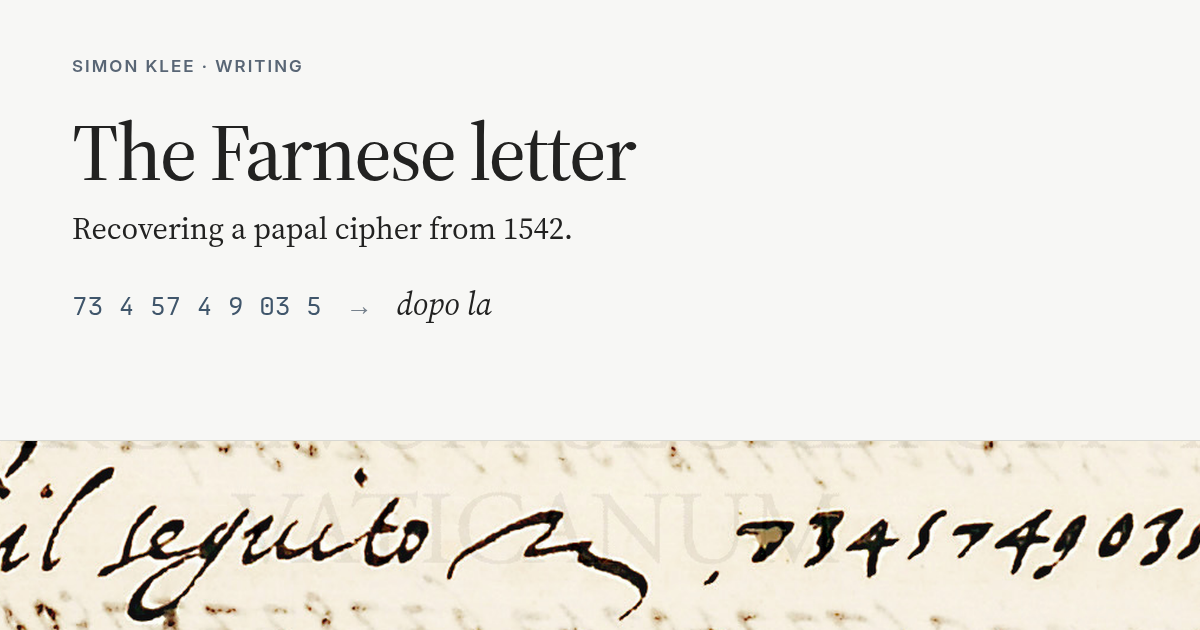
A 1542 papal cipher cracked with simulated annealing
 ↗
↗
Comments
The cracking of a 1542 papal cipher demonstrates the potential of simulated annealing in solving complex cryptographic challenges. This method highlights advancements in computational techniques for historical cryptography, making previously unsolvable texts accessible. Understanding such methods can enhance modern cryptographic practices and foster interdisciplinary research.
Written by elseif from the cluster below · every claim links back to a sourceThe three things worth knowing
The cipher was part of a letter sent by Cardinal Alessandro Farnese to Giovanni Poggio.
Simulated annealing was employed to decipher the complex code structure of the letter.
The results may lead to greater insights into historical communication and cryptography methods.
THE READ
What the cluster adds up to.
The successful decryption of the 1542 papal cipher indicates a significant breakthrough in the field of cryptography, particularly through the application of simulated annealing. This algorithm mimics the physical process of heating and cooling to find optimal solutions, making it suitable for tackling the complexities of historical ciphers that lack clear word divisions and consistent patterns.
Adopting simulated annealing for decryption requires computational resources and expertise in algorithmic design. The complexity of the cipher, characterized by its ambiguous digit groupings and lack of a consistent key, demands advanced analytical techniques. The cost of this approach lies in the time and resources needed to implement and fine-tune the algorithm effectively.
The method's effectiveness may diminish with other types of ciphers that do not exhibit similar structural characteristics as the papal cipher. While this breakthrough offers a promising avenue for decrypting certain historical texts, its applicability to more complex or different cipher systems remains uncertain. Further research and trials will be necessary to establish broader usability.
Written by elseif from the cluster below · checked for specifics the sources never containedTHE CLUSTER