TECH Signal 318
Neutron and X-ray imaging reveals fossilized blood vessels in Scotty's rib
 ↗
↗
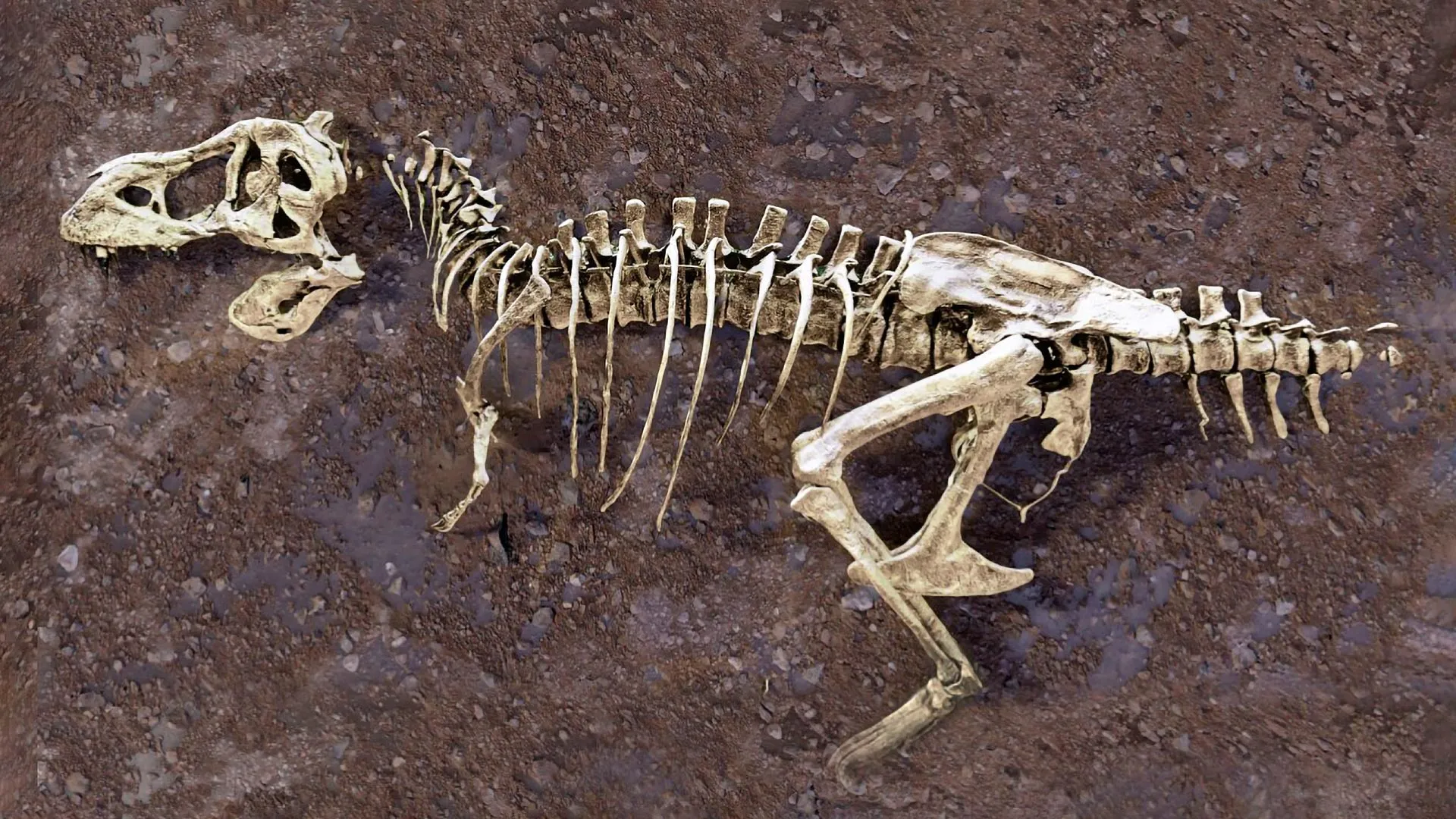
A broken rib from Scotty, the largest known T. rex skeleton, contains an extraordinary fossilized network of blood vessels formed while the dinosaur was healing.
This discovery offers unprecedented insight into the healing processes of dinosaurs, which are rarely preserved in the fossil record. The methods used, neutron and X-ray imaging, demonstrate a non-invasive approach that could revolutionize the study of paleobiology and soft tissue preservation in fossils.
Written by elseif from the cluster below · every claim links back to a sourceThe three things worth knowing
Scotty's rib contains a fossilized network of blood vessels formed during the healing process after an injury.
Neutron and X-ray imaging allowed researchers to explore the rib without causing damage to the fossil.
This finding provides a rare glimpse into dinosaur biology and injury healing that is not typically available in the fossil record.
THE READ
What the cluster adds up to.
The research conducted on Scotty's rib revealed a network of fossilized blood vessels that formed as the dinosaur was healing from an injury. This is significant because such structures are rarely preserved in fossils, providing new insights into the biology and healing processes of dinosaurs from 66 million years ago.
The imaging techniques employed, particularly neutron and X-ray imaging, enabled scientists to visualize the internal structure of the rib without damaging it. This non-destructive approach is critical for paleontological research, as it allows for the detailed study of fossils while preserving their integrity for future analyses.
While this discovery is groundbreaking, it also highlights the limitations of fossil preservation. Most soft tissues decompose before fossilization is complete, making Scotty's rib an exceptional case. Researchers must consider the rarity of such findings when interpreting dinosaur biology and the conditions necessary for preserving such delicate structures.
The findings could lead to advancements in imaging technologies used in paleontology, providing a framework for exploring other fossilized remains for evidence of soft tissue. This could open new avenues for research, including the study of other dinosaur species and their biological processes.
Overall, this research not only enriches our understanding of T. rex biology but also emphasizes the potential of advanced imaging techniques in uncovering secrets of the past that were once thought to be lost.
Written by elseif from the cluster below · checked for specifics the sources never containedTHE CLUSTER