TECH Signal 174
A giant crater on Phobos may reveal the origin of Mars’ moon, reportedly linked to Japan’s MMX mission
 ↗
↗
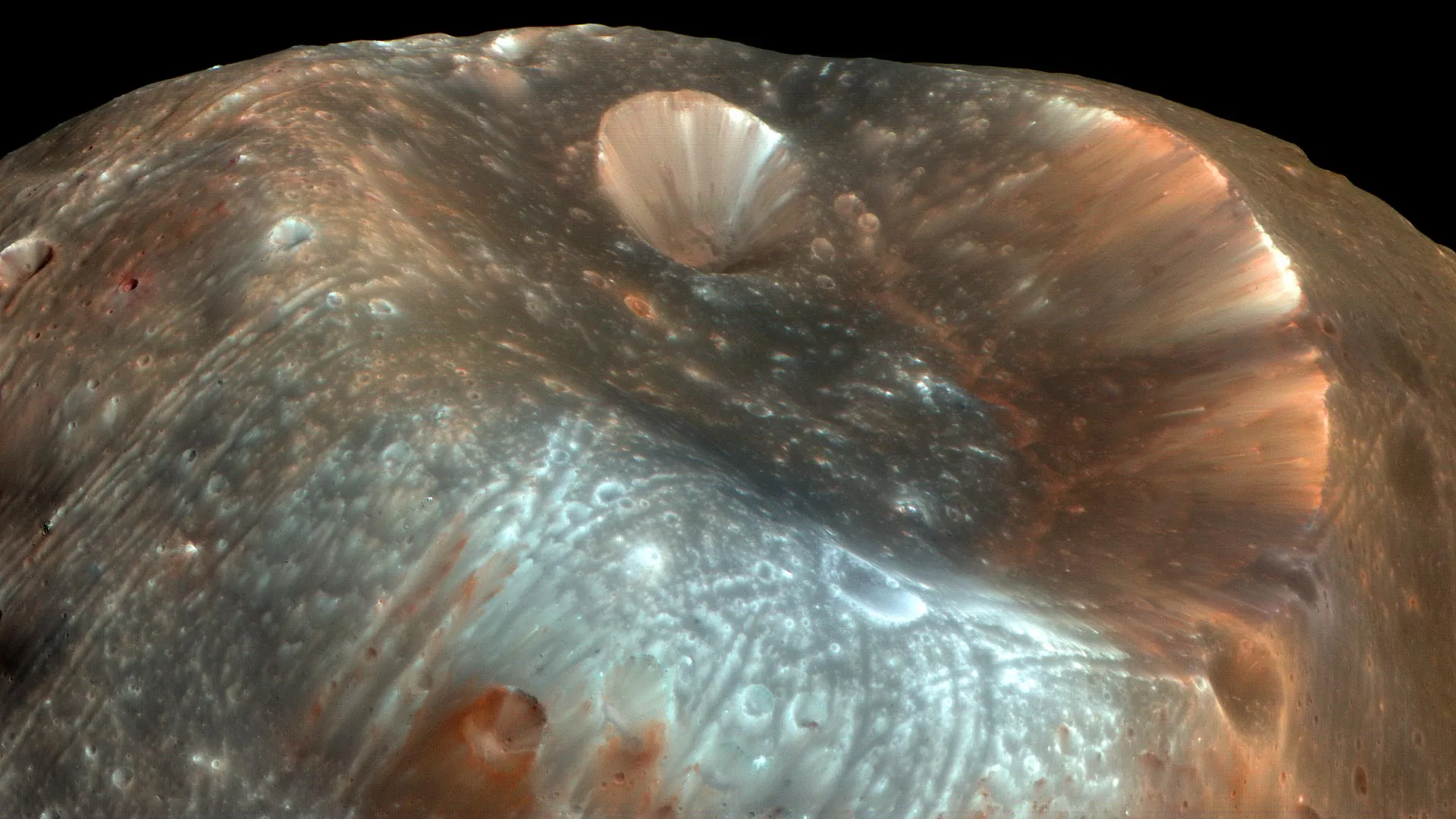
A massive crater on Mars’ moon Phobos may hide a dense region of compressed material that could reveal whether the moon is a captured asteroid or debris from an ancient impact on Mars. Japan’s upcoming MMX sample return mission could provide the measurements and physical evidence needed to solve the mystery.
Understanding the origin of Phobos could reshape our knowledge of Mars' history and its moons. The findings from the MMX mission may clarify whether Phobos is an asteroid or a product of Martian impacts. This distinction has implications for planetary formation theories and future exploration strategies.
Written by elseif from the cluster below · every claim links back to a sourceThe three things worth knowing
The Stickney Crater is crucial for understanding Phobos' origin.
Japan's MMX mission aims to gather data to help resolve the moon's formation debate.
Current research suggests Phobos may have a porous interior and could contain water ice.
THE READ
What the cluster adds up to.
The Stickney Crater on Phobos is central to ongoing debates about the moon's formation, with two primary theories suggesting it is either a captured asteroid or debris from a Martian impact. The crater itself is significant as it may harbor a dense region of material that could provide insights into these origins. Understanding this material is essential for determining the moon's history and composition.
The upcoming MMX mission by Japan could play a vital role in this investigation. By returning samples from Phobos, the mission aims to provide concrete measurements and physical evidence that could support one of the two prevailing theories about the moon's origin. This could involve analyzing the composition of materials beneath the Stickney Crater, which may reveal critical information about historical impacts.
Current estimates of Phobos indicate it has a porous interior, potentially containing water ice. The implications of this are significant, as they challenge previous assumptions about the moon's structure and resilience. If Phobos has survived impacts due to its low density, this would inform our understanding of impact dynamics and the characteristics necessary for a celestial body to withstand such events.
Written by elseif from the cluster below · checked for specifics the sources never containedTHE CLUSTER