TECH Signal 318
Maternal age effects on offspring may stem from reversible epigenetic changes not DNA damage
 ↗
↗
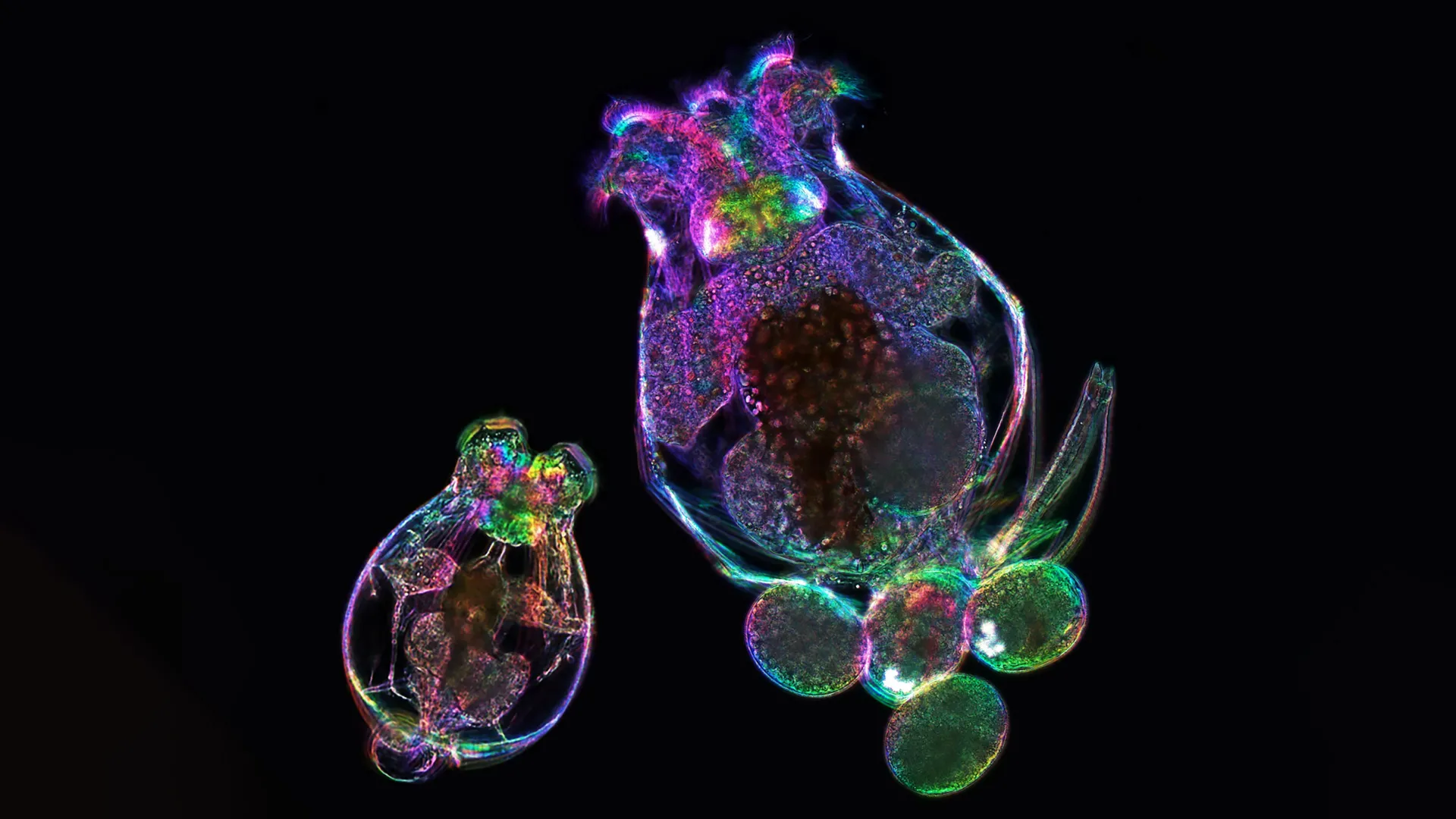
Research in rotifers suggests maternal age influences offspring traits through epigenetic mechanisms rather than permanent genetic alterations.
This finding shifts focus from irreversible DNA damage to potentially reversible epigenetic processes, which could inform interventions for age-related developmental risks. For engineers in biotech or computational biology, it highlights new targets for modeling and therapeutic design.
Written by elseif from the cluster below · every claim links back to a sourceThe three things worth knowing
Maternal age effects are widespread across species but their biological basis has been unclear.
Rotifer studies indicate these effects may be driven by epigenetic changes like histone modifications, not DNA mutations.
The reversibility of these effects within a single generation challenges prior assumptions about cumulative damage.
THE READ
What the cluster adds up to.
The study challenges the long-held assumption that maternal age effects on offspring are primarily caused by irreversible DNA damage or mutations. Instead, research in rotifers suggests these effects may be mediated by epigenetic mechanisms, such as histone modifications, which regulate gene activity without altering the underlying DNA sequence. This distinction is critical because epigenetic changes are potentially reversible, whereas genetic mutations are not. For engineers working in synthetic biology or genetic engineering, this opens new avenues for exploring interventions that could mitigate or even reverse age-related developmental risks in offspring.
The reversibility observed in the rotifer experiments is particularly noteworthy. Unlike genetic mutations, which accumulate over generations, the effects of maternal age in this study could be reversed within a single generation. This finding implies that the biological information passed from mother to offspring is not permanently encoded in the DNA but is instead a dynamic process. For computational biologists and data scientists, this introduces complexity into models of inheritance and aging, as it suggests that environmental or biochemical factors could modulate these effects in real time.
The study also raises questions about the evolutionary persistence of maternal age effects. Despite often reducing offspring fitness, these effects remain widespread across species. The researchers propose that natural selection may be weaker at advanced maternal ages, particularly in species like rotifers that reproduce early in life. This hypothesis could have implications for understanding human aging and reproductive health, where advanced maternal age is associated with increased risks. Engineers in biomedical fields may need to account for these epigenetic factors when designing diagnostics or therapies aimed at maternal or fetal health.
While the study focuses on rotifers, the implications extend to other species, including humans. If similar epigenetic mechanisms are at play, it could reshape how we approach age-related developmental disorders. However, the research also highlights the complexity of these processes, as genetic variation can sometimes mitigate or even reverse the negative effects of advanced maternal age. This variability suggests that any interventions would need to be highly personalized, taking into account both epigenetic and genetic factors. For engineers, this underscores the need for robust, adaptable models that can account for such variability in biological systems.
Written by elseif from the cluster below · checked for specifics the sources never containedTHE CLUSTER