TECH Signal 133
Tesla reportedly ran stop sign with Full Self-Driving engaged killing driver in New Jersey crash
 ↗
↗
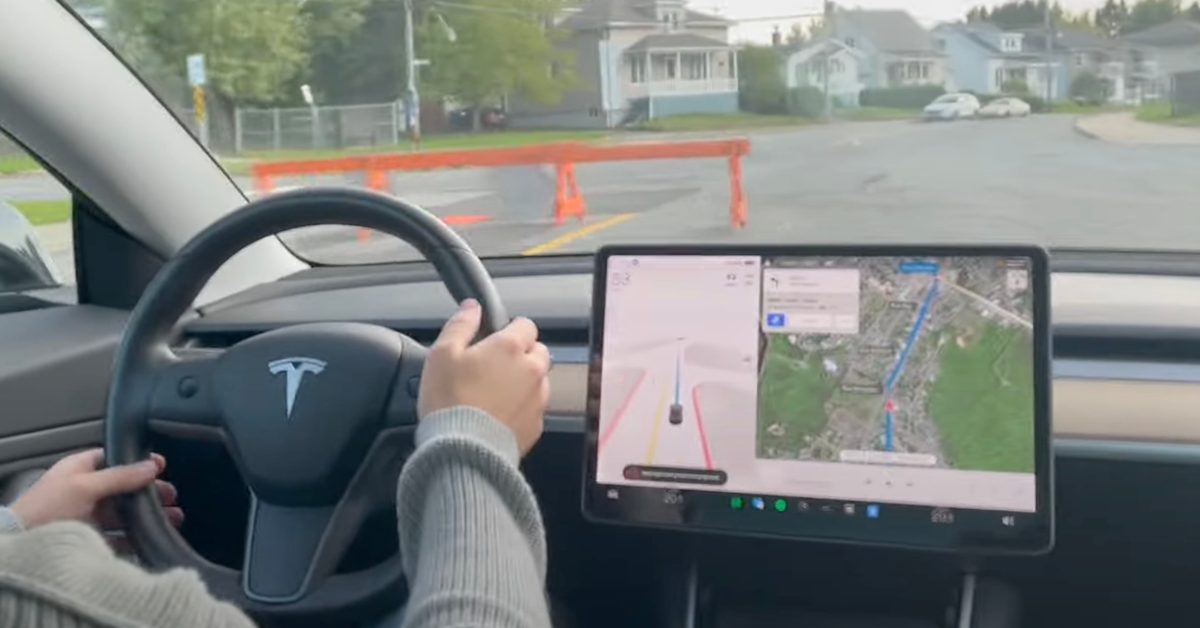
A Tesla Model 3 with its driver-assist system active failed to stop at a stop sign, resulting in a fatal collision with a turning Honda Civic.
This incident underscores the risks of Level 2 driver-assist systems operating in environments they may not fully handle, particularly when marketed as autonomous. The lack of transparency in Tesla’s crash reporting complicates accountability and safety assessments for engineers and regulators.
Written by elseif from the cluster below · every claim links back to a sourceThe three things worth knowing
Tesla’s telematics confirmed its driver-assist system was engaged during the crash, though the specific software (Autopilot or Full Self-Driving) remains redacted.
The intersection’s stop sign suggests Full Self-Driving was likely active, as basic Autopilot does not respond to such road features.
Tesla’s reported pre-crash speed of 4 mph conflicts with the severity of the impact, leaving critical details unresolved due to redactions.
THE READ
What the cluster adds up to.
A Tesla Model 3 collided with a Honda Civic at an intersection after failing to stop at a stop sign, killing the Civic’s driver. Tesla’s internal data, submitted to NHTSA, confirms its driver-assist system was active within 30 seconds of the crash. This aligns with Tesla’s mandatory reporting under federal regulations, but the company’s redactions obscure key details, including the software version and crash narrative. For engineers, this opacity limits the ability to assess whether the system’s design or implementation contributed to the failure.
The intersection’s stop sign is a critical clue. Basic Autopilot, Tesla’s highway-focused system, does not respond to stop signs, while Full Self-Driving (FSD) is designed for city streets and includes stop-sign recognition. If FSD was active, the crash raises questions about its reliability in real-world conditions, particularly given Tesla’s 2022 recall for FSD rolling through stop signs. However, the redactions prevent definitive conclusions, leaving open the possibility of driver misuse or system limitations.
Tesla’s reported pre-crash speed of 4 mph complicates the narrative. A near-stop speed suggests the car may have been attempting a rolling stop, but this conflicts with the fatal impact and airbag deployment. The discrepancy highlights the need for unredacted data to determine whether the system failed to stop, the driver intervened incorrectly, or the speed reading was taken at a misleading moment. Without this clarity, engineers and regulators cannot isolate the root cause or implement targeted fixes.
The incident reflects broader concerns about Level 2 driver-assist systems, which require constant human supervision but are often treated as autonomous by drivers. Tesla’s marketing of FSD as “self-driving” exacerbates this issue, creating a mismatch between user expectations and system capabilities. For engineers, this underscores the importance of designing fail-safes and clear user interfaces to mitigate over-reliance on systems that remain prone to errors in complex environments.
Written by elseif from the cluster below · checked for specifics the sources never containedTHE CLUSTER