LANGUAGES Signal 330
Acer Swift Go 16 AI (AMD Gorgon Point) Review: A balanced, affordable, big-screen portable
 ↗
↗
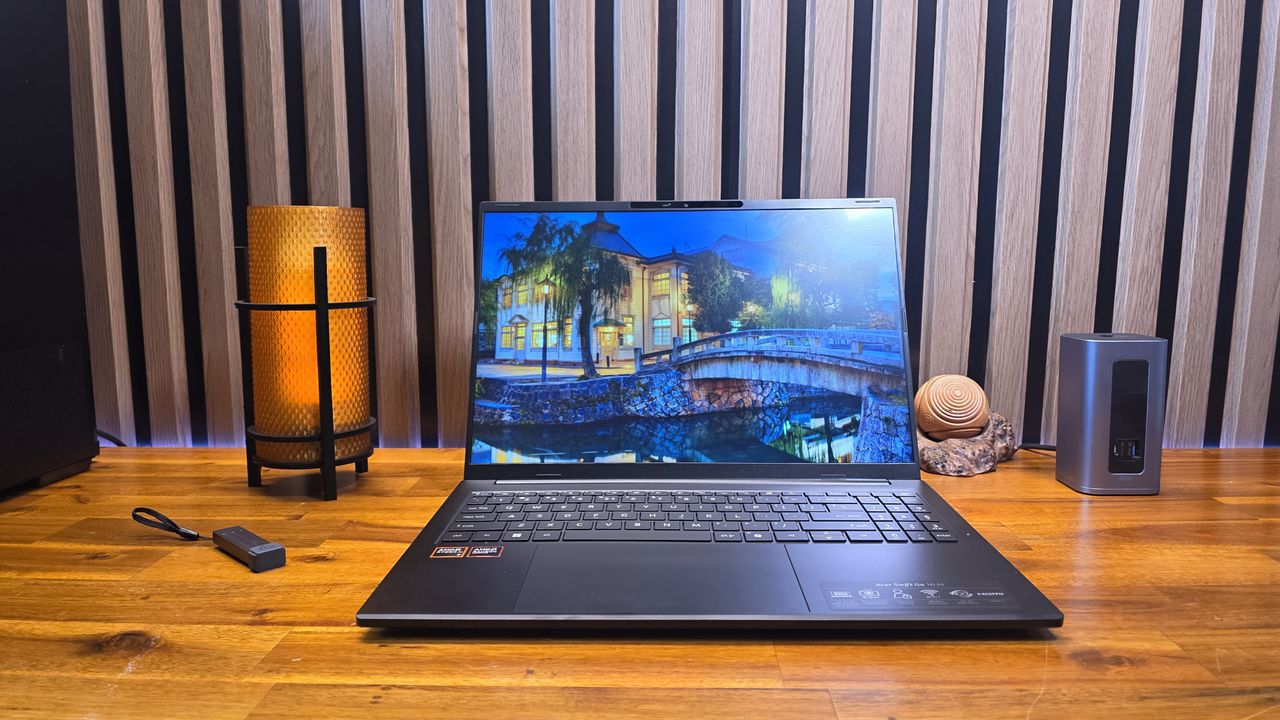
Tom's Hardware reviewed the Acer Swift Go 16 AI laptop, highlighting its large IPS touchscreen, metal build, and ample ports while noting its value when discounted and drawbacks such as bloatware, slower SSD, and lid smudges.
The review shows that a 16-inch IPS display with 120 Hz refresh gives developers more vertical space for code and debugging windows, while the mix of USB-C, USB-A, HDMI and microSD ports supports common toolchains without adapters. However, the presence of pre-installed bloatware and a magnetic-sensitive lid that can trigger unexpected screen dimming may require extra setup time or workflow adjustments. Engineers should weigh the laptop’s discounted price against the Intel-based OLED alternative when screen colour fidelity is a priority.
Written by elseif from the cluster below · every claim links back to a sourceThe three things worth knowing
The laptop offers a 16-inch IPS touchscreen at 1920×1200 resolution with 120 Hz refresh, providing ample screen real estate for multi-window development work.
Port selection includes two USB-C (USB4), two USB-A, HDMI 2.1, a microSD slot and a headset jack, allowing direct connection to many peripherals and external displays.
Bloatware, a relatively slow SSD, and a lid that attracts persistent smudges can affect out-of-the-box usability and may require cleaning or software cleanup before reliable use.
THE READ
What the cluster adds up to.
The 16-inch IPS panel with 1920×1200 resolution and 120 Hz refresh gives developers more vertical space for code editors, terminals and documentation windows without needing an external monitor. The touchscreen adds an optional input method for sketching diagrams or navigating UI prototypes directly on the laptop. Combined with the slim metal chassis, the device remains portable enough to move between desks or meeting rooms while still offering a large viewing area. This combination can reduce reliance on secondary displays for many everyday coding tasks.
Because the laptop’s MSRP of $1,149 is high relative to its mid-range positioning, the reviewer notes that its value improves significantly when found on sale, such as the $799 price observed during testing. Engineers considering this model may need to monitor price fluctuations or wait for promotions to avoid paying a premium for hardware that is otherwise comparable to competitors. Additionally, the unit ships with a noticeable amount of bloatware that must be removed or disabled before a clean development environment can be established, adding setup time. The SSD, while providing 1 TB of PCIe Gen 4 storage, is described as slower than expected, which could lengthen build or container image pulls for workloads that are storage-bound.
The lid’s tendency to attract smudges that resist wiping with a damp cloth can reduce screen clarity, especially under bright lighting, potentially interfering with readability of code or design assets. A separate issue observed during testing was that a magnetic watch band could cause the screen to dim and kick the system to the Windows login screen, indicating that certain accessories may trigger unintended power-or-sensor events. These behaviors mean that the laptop may not work reliably in environments where users wear magnetic jewelry or where frequent handling leaves oily residues on the lid. The chassis also exhibits measurable flex on the lid and keyboard, which could affect long-term durability under heavy travel or rough handling.
When comparing to the Intel-based variant that offers an OLED screen and sometimes a lower sale price, engineers must weigh the importance of colour accuracy and contrast against the AMD model’s larger battery and port selection. The Intel model halves the storage to 512 GB, which may be insufficient for large local datasets or multiple VMs, while the AMD version retains the full 1 TB SSD. Ultimately, the decision hinges on whether the added screen quality of the OLED option outweighs the storage and port advantages of the AMD-based Swift Go 16 AI.
Written by elseif from the cluster below · checked for specifics the sources never containedTHE CLUSTER