INFRA Signal 434
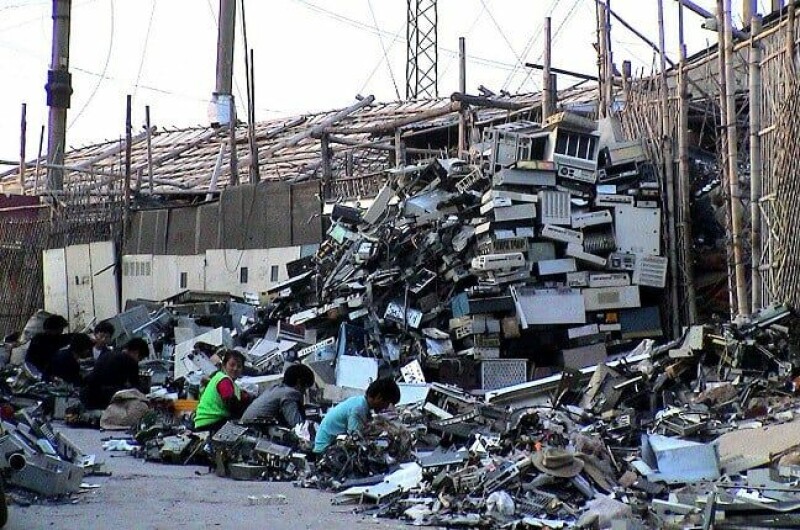
AI infrastructure reportedly could generate e-waste equivalent to shipping containers wrapping Earth six times by 2050
 ↗
↗
A report from the Basel Action Network claims that AI-driven hardware expansion will produce between 395 million and 617 million tonnes of electronic waste by 2050.
Existing waste projections may be 40 to 60 times too low because they focus on GPUs rather than the broader infrastructure. This creates a massive decommissioning burden for power, cooling, and networking gear that must be replaced as AI power requirements increase.
Written by elseif from the cluster below · every claim links back to a sourceThe three things worth knowing
Servers and accelerators account for only 13 percent of a datacenter's equipment weight.
Upgrading to AI workloads requires replacing racks drawing 5-15 kW with those drawing 50-140 kW.
AI accelerators are replaced every two to three years, faster than the five to seven year cycle for general-purpose servers.
THE READ
What the cluster adds up to.
The Basel Action Network report argues that the AI boom creates a waste crisis extending far beyond the GPUs themselves. While previous estimates focused on accelerators, this model includes power distribution, backup power, networking, and cooling systems. For a reference 100 MW facility, these categories total approximately 7,000 metric tons of equipment.
The cost of adopting AI workloads involves ripping out existing power infrastructure to support higher density racks. Facilities moving from 5-15 kW racks to 50-140 kW racks must replace significant hardware, including roughly 2,700 tonnes of copper in cabling and busbars per 100 MW facility. This suggests that the physical infrastructure of the datacenter becomes obsolete much faster than previously assumed.
Replacement cycles vary by component, with networking gear lasting three to four years and cooling systems lasting five. The report assumes hyperscalers replace entire servers when upgrading GPUs because OEMs typically ship preconfigured systems. This acceleration of the hardware lifecycle increases the volume of scrap destined for disposal.
The report concludes that no government or hyperscaler has a plan to handle this scale of e-waste. Current processing infrastructure is reportedly insufficient to safely manage even existing volumes of electronic waste. Future reports from the organization will examine the potential for reuse and the toxicity of the waste, including PFAS contamination.
Written by elseif from the cluster below · checked for specifics the sources never containedTHE CLUSTER