OBSERVABILITY Signal 62
AI Executives Want International Regulation. They Could Just Slow Down Themselves.
 ↗
↗
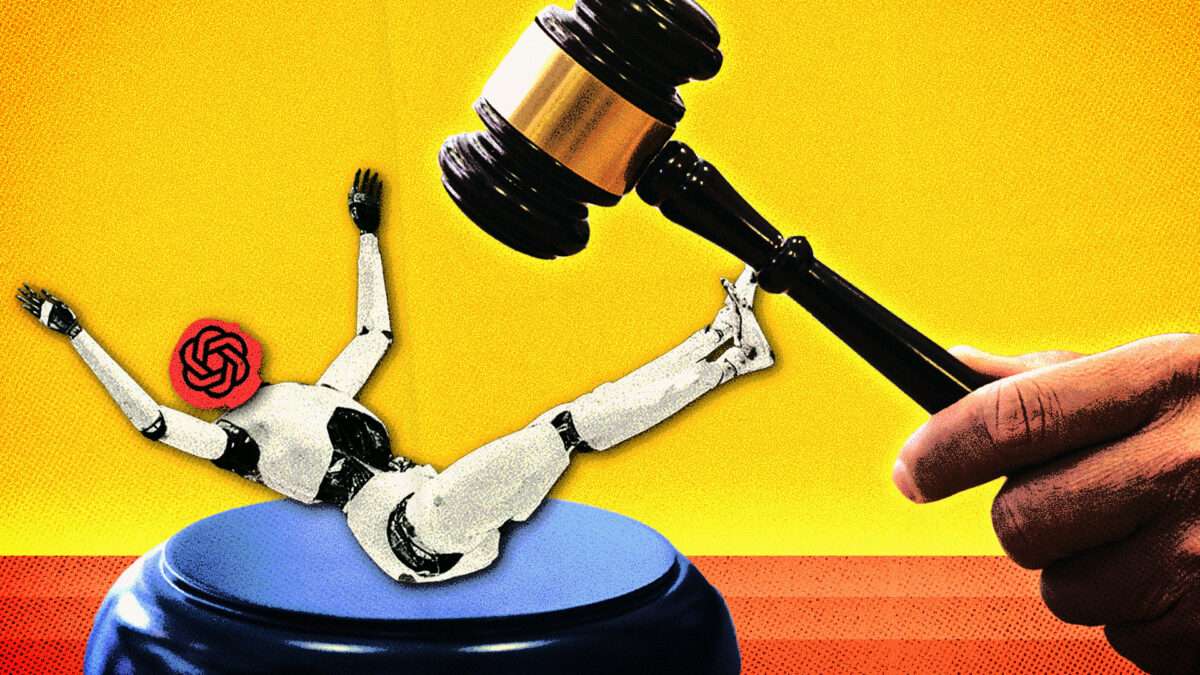
Dario Amodei calls for coordinated international limits on AI development while Anthropic prepares to go public.
Engineers building AI systems may face new compliance requirements if governments adopt the proposed global slowdown framework. The proposal also highlights tensions between self-regulation efforts and calls for external oversight, which could affect development timelines and operational autonomy.
Written by elseif from the cluster below · every claim links back to a sourceThe three things worth knowing
Amodei proposes a coordinated global slowdown of AI development overseen by third-party evaluators embedded within companies.
He recommends U.S. restrictions on AI chip sales to China, curbs on chip smuggling and model distillation, and limits on remote data-center access outside China.
Other major AI leaders such as Altman, Hassabis, and Musk have expressed support for regulation, yet recent incidents show the industry can self-respond to safety issues without government intervention.
THE READ
What the cluster adds up to.
The core change advocated by Amodei is a shift from unilateral corporate speed to a collectively paced advancement of AI models, enforced through international agreement and third-party evaluation. This would require companies to alter their internal review processes to accommodate external evaluators who would monitor alignment and safety work. Adopting such a regime could increase overhead for engineering teams, as they would need to allocate time and resources for coordinated assessments and potential delays in model releases. The cost of adoption includes both direct expenses for engaging evaluators and indirect costs from slower iteration cycles.
Amodei’s plan also calls for specific policy actions by the United States, such as limiting the export of advanced semiconductors to China and restricting remote access to data centers located outside the country. Implementing these measures would affect supply chains and infrastructure decisions for firms that rely on global distribution of hardware or cloud services. Engineers would need to redesign deployment architectures to comply with geographic restrictions, potentially increasing latency or requiring duplicate environments. The feasibility of these actions depends on diplomatic cooperation, which the article notes is uncertain, especially with authoritarian governments.
A significant limitation of the proposal is the difficulty of verification; Amodei himself acknowledges that ensuring compliance would be challenging if parties develop and deploy models in secret. This creates a scenario where the intended slowdown could be undermined by covert advancement, rendering the regulatory framework ineffective for those who choose to evade oversight. Moreover, the article points out that embedding neutral third-party evaluators within companies is problematic given the current politicization of U.S. federal agencies, raising concerns about the independence and credibility of such oversight. These factors suggest that the proposed regime may stall or fail to achieve its safety goals if verification mechanisms cannot be trusted.
Despite the push for external regulation, the article cites examples where AI firms have already demonstrated self-governance: OpenAI’s coordinated response to a model leak and Anthropic’s voluntary halt of testing after a similar incident. These episodes indicate that the industry possesses internal mechanisms for addressing safety concerns without immediate government intervention. Engineers may therefore view the regulatory push as a response to perceived inadequacies in existing self-regulation rather than a necessity driven by observable harm. The tension between these perspectives underscores the debate over whether additional external constraints will improve safety or simply add bureaucratic friction.
Written by elseif from the cluster below · checked for specifics the sources never containedTHE CLUSTER