TECH Signal 473
AI in drug discovery shows limited clinical impact despite decade of development
 ↗
↗
A critical review finds AI tools in drug discovery lack proven clinical relevance despite widespread method development and benchmarking
Engineers building AI for drug discovery face a disconnect between technical progress and real-world impact. The field must shift focus from model validation to improving decision-making in clinical settings. Without addressing data limitations and operational scaling, AI risks remaining an academic exercise rather than a transformative tool
Written by elseif from the cluster below · every claim links back to a sourceThe three things worth knowing
AI methods in drug discovery have advanced but show minimal clinically relevant impact to date
Current challenges include poor problem definitions, conditional life science data, and insufficient clinical translation focus
Recommendations call for benchmarking AI tools on decision-making improvement rather than model validation
THE READ
What the cluster adds up to.
The review highlights a fundamental mismatch between AI development and drug discovery needs. While numerous AI methods have been created and benchmarked, their ability to deliver safer or more efficacious medicines faster remains unproven. This suggests that current approaches may be optimizing for technical metrics rather than clinical outcomes. Engineers should note that model accuracy on proxy datasets doesn't necessarily translate to better drug development decisions
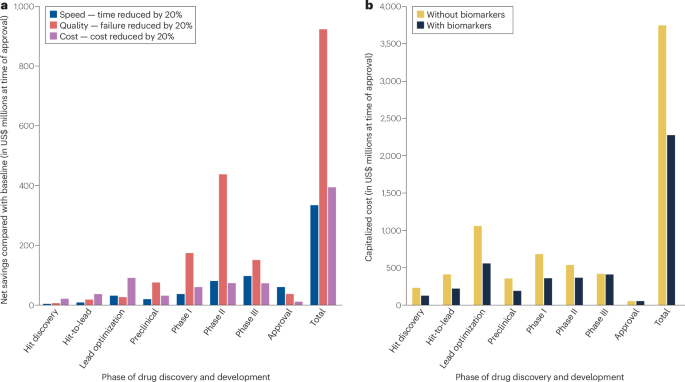
Data limitations emerge as a core technical challenge. The material points to difficulties with conditional life science data and the low predictivity of available proxy data. These issues stem from the complex, multi-dimensional nature of biological systems that current AI models struggle to capture. The figures illustrate how chemical data presents unique predictive modeling challenges that differ from other AI application domains
The review identifies a 'technology push' versus 'science pull' dynamic as a key factor. AI development appears driven more by technical possibilities than by clearly defined drug discovery problems. This results in underspecified computational models that don't address real-world use cases. The time required to operationalize technical capabilities into scaled, accessible systems further delays potential impact
Recommendations focus on shifting evaluation criteria from model performance to decision-making improvement. This represents a fundamental change in how AI tools should be benchmarked and validated. Engineers should consider how their models integrate into existing drug discovery workflows and whether they actually improve key decisions, rather than just producing statistically significant results on curated datasets
Written by elseif from the cluster below · checked for specifics the sources never containedTHE CLUSTER