TECH Signal 503
AI's Mathematical Edge Comes From Vast Working Memory, Not Superior Reasoning
 ↗
↗
An essay argues that AI's performance on difficult mathematical problems reflects its access to a vastly larger symbolic working memory rather than genuinely superior reasoning ability.
If AI's mathematical advantage is primarily a memory advantage, this reframes expectations about where AI will outperform humans and where it will not. Domains where working memory is the binding constraint are where AI's edge is largest; domains requiring conceptual leaps beyond what memory alone supplies may see a smaller gap.
Written by elseif from the cluster below · every claim links back to a sourceThe three things worth knowing
AI models can hold entire problem statements, intermediate equations, abandoned approaches, definitions, and conclusions in their context window simultaneously, while human working memory is severely limited.
Multiple studies found that working memory predicts mathematical performance independently of IQ, suggesting memory capacity is a distinct bottleneck in mathematical reasoning.
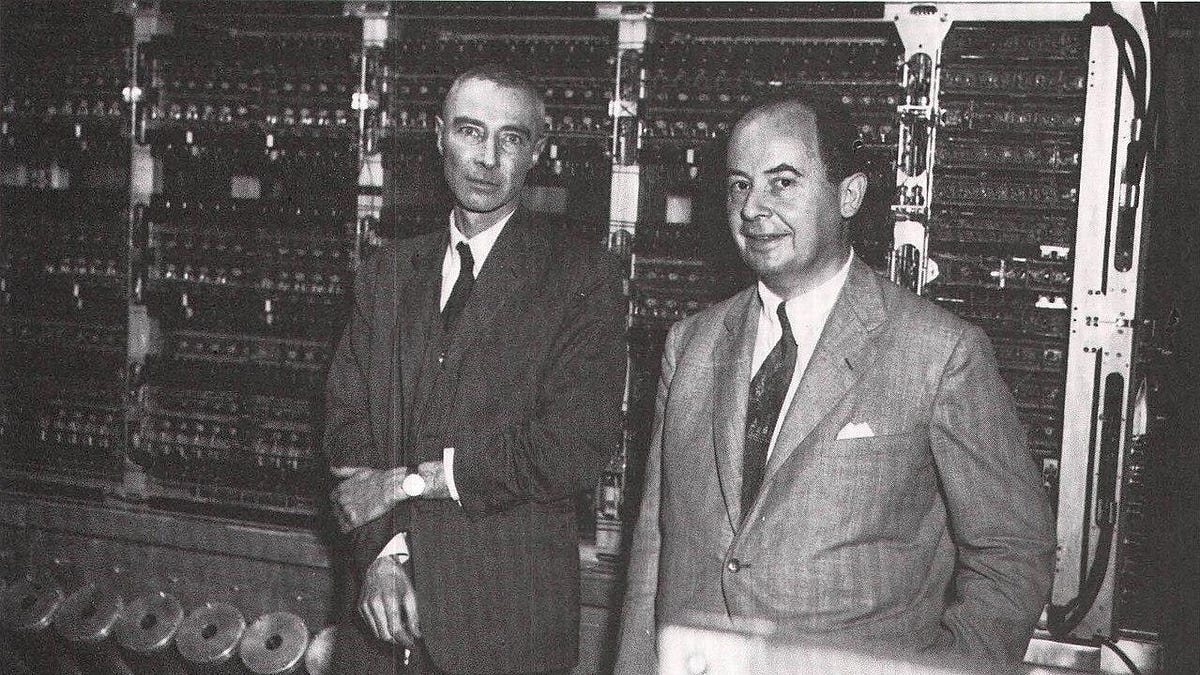
The article likens AI to a machine-amplified von Neumann, immense speed, breadth, and symbolic memory, rather than an electronic Einstein with deeper insight.
THE CLUSTER