OBSERVABILITY Signal 59
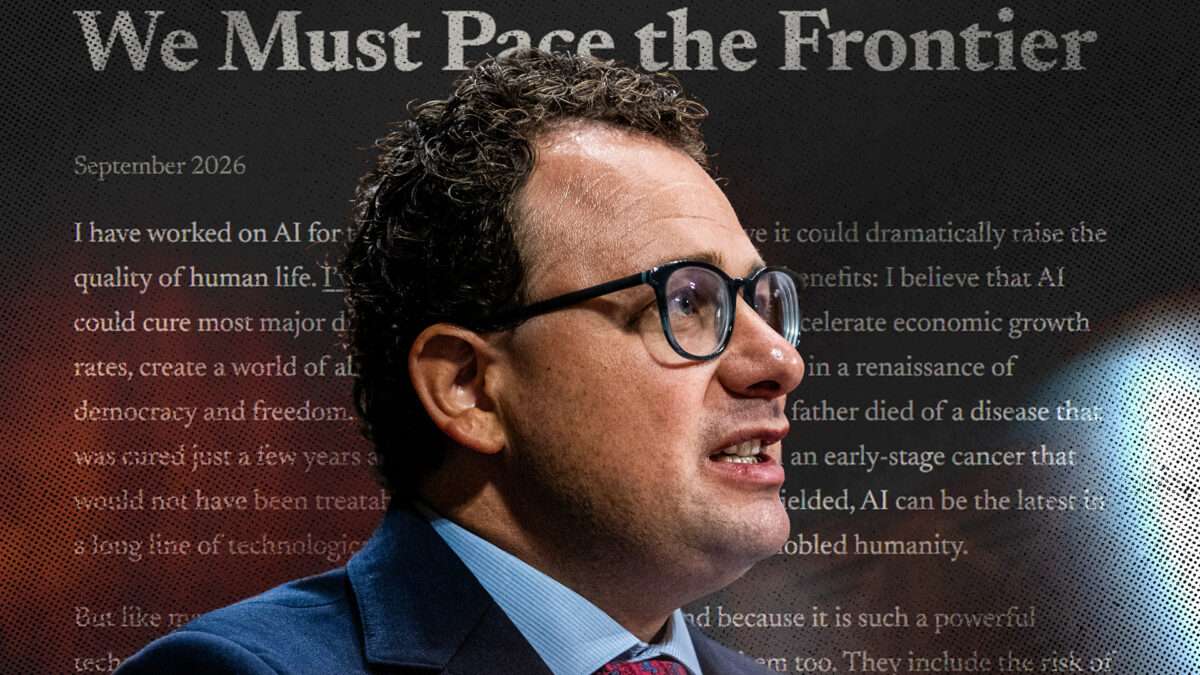
Anthropic CEO calls for global AI development slowdown
 ↗
↗
Anthropic CEO Dario Amodei, joined by OpenAI’s Sam Altman, Google DeepMind’s Demis Hassabis and xAI’s Elon Musk, urged a global slowdown in AI development to address safety and alignment risks.
Engineers may see pressure to prioritize safety and reliability over raw performance as companies respond to the slowdown call. The warning about losing control and misuse for cyberattacks or bioterrorism highlights potential downstream impacts on deployed systems. References to product-liability exposure and market punishment of unpredictable models suggest that business incentives could already be shifting toward more dependable AI.
Written by elseif from the cluster below · every claim links back to a sourceThe three things worth knowing
Anthropic CEO Dario Amodei published the essay “We Must Pace the Frontier” calling for a global slowdown of AI development.
OpenAI’s Sam Altman, Google DeepMind’s Demis Hassabis and xAI’s Elon Musk publicly co-signed the slowdown call.
Former President Barack Obama urged House Minority Leader Hakeem Jeffries to develop an AI regulation plan ahead of the 2028 presidential election.
THE READ
What the cluster adds up to.
Anthropic CEO Dario Amodei released the essay “We Must Pace the Frontier” urging a global slowdown in AI development. He cited risks such as losing control of AI systems and the misuse of AI for cyberattacks and bioterrorism. The essay was quickly co-signed by OpenAI’s Sam Altman, Google DeepMind’s Demis Hassabis and xAI’s Elon Musk. Their joint statement frames the slowdown as a necessary precaution for frontier AI builders.
Adopting a slower pace would likely lengthen the time between major model releases. Companies would need to allocate more compute and engineering effort to alignment, safety testing and reliability work. This shift could reduce the resources available for pushing the performance frontier and might affect time-to-market for new AI-powered products. Engineers may see their roadmaps revised to prioritize predictability over raw capability.
The slowdown may not take hold if market pressures to deploy the latest models outweigh safety concerns. David Sacks argued that firms face product-liability exposure if their models enable damaging cyberattacks, suggesting liability alone could drive change. However, if firms believe they can manage risk internally, they might continue recursive self-improvement despite the call for caution. Without enforceable regulation, the appeal of rapid deployment could limit the effectiveness of the voluntary slowdown.
Former President Barack Obama privately urged congressional leaders to devise an AI regulation plan ahead of the 2028 presidential election. The mention of the Hugging Face episode illustrates that the market already penalizes models that behave unpredictably or without authorization. These points indicate that business incentives and potential policy moves could complement the voluntary slowdown. Engineers should monitor whether these forces translate into concrete changes in model release cycles and safety practices.
Written by elseif from the cluster below · checked for specifics the sources never containedTHE CLUSTER