SECURITY Signal 75
Airbnb reduces authentication code by 60% using server-driven architecture for cross-platform flows
 ↗
↗
Airbnb shifted authentication logic to a server-side policy engine, cutting client-side code and improving adaptability across Web, iOS, and Android.
Authentication flows are a common pain point for engineers maintaining multiple clients. Moving logic to the server reduces duplication, speeds up experimentation, and improves user recovery without requiring app updates. The trade-off is increased backend complexity and dependency on real-time server responses.
Written by elseif from the cluster below · every claim links back to a sourceThe three things worth knowing
Authentication decisions moved from clients to a server-side policy engine, reducing code by 60%.
Server-driven flows allow regional adaptations and A/B testing without client updates.
Successful authentications increased by 2.6%, while duplicate account creation dropped by 27%.
THE READ
What the cluster adds up to.
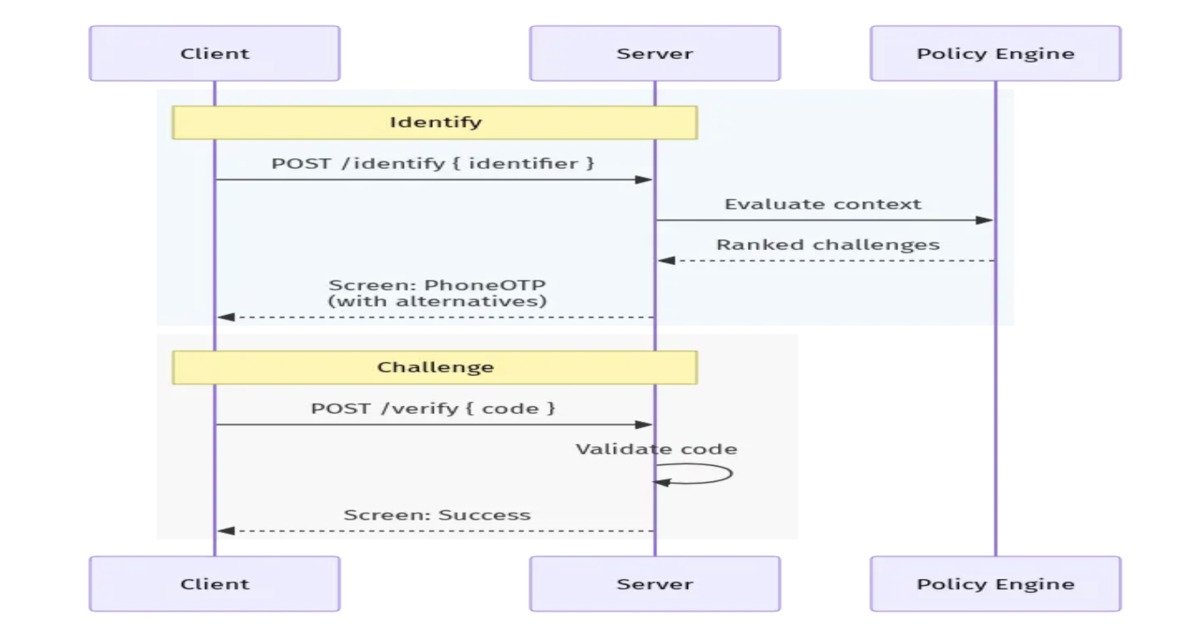
Airbnb’s redesign replaces client-side authentication logic with a server-driven architecture. The server evaluates user context, such as location, device, and past behavior, and selects the most appropriate challenge (e.g., OTP, social login, or regional identity providers). Clients render screens based on server responses, eliminating the need to hardcode flow variations. This reduces code duplication across Web, iOS, and Android, but shifts complexity to the backend, where policy engines and real-time decision-making must scale reliably.
The architecture separates identification from challenge selection. Users first provide an identifier (email, phone, or social account), after which the server determines the best authentication method. Fallback options are ranked and returned, allowing users to recover from failures without restarting the flow. This improves resilience but requires careful handling of edge cases, such as users who no longer have access to their registered phone number or email.
Server-driven flows enable faster experimentation. Airbnb ran over 20 authentication experiments in three months, with changes deployed in days rather than weeks. However, this agility depends on robust server-side tooling, including schema validation to catch mismatches between server responses and client expectations. The approach also introduces latency risks, as clients must wait for server decisions before rendering screens.
The redesign delivered measurable improvements: a 2.6% increase in successful authentications, a 27% reduction in duplicate accounts, and a 100 KB smaller web client bundle. However, initial iterations revealed usability pitfalls, such as overly minimalist recovery options that users dismissed too easily. This highlights the need for continuous refinement, balancing simplicity with user guidance to avoid abandonment during authentication failures.
Written by elseif from the cluster below · checked for specifics the sources never containedTHE CLUSTER