TECH Signal 349
AMD claims 4x AI system efficiency gain over two years with rack-scale GPUs
 ↗
↗
AMD reports its latest AI systems achieve four times the energy efficiency of 2024 designs using integrated rack-scale GPU platforms.
Datacenter operators face rising power costs and thermal limits for AI workloads. A 4x efficiency gain could reduce rack count or increase compute density for the same power budget. The claim rests on AMD’s methodology, not yet third-party benchmarks.
Written by elseif from the cluster below · every claim links back to a sourceThe three things worth knowing
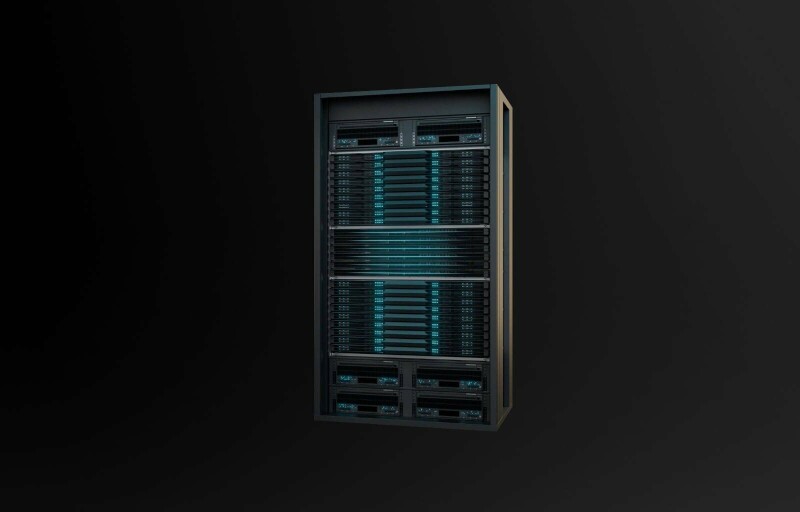
AMD’s Helios rack-scale system packs 72 MI455X GPUs, replacing discrete servers with a single integrated unit.
The MI455X GPU delivers 7.7 to 15.4x higher FP performance and 4x faster chip-to-chip links than the 2024 MI300X.
AMD estimates two Helios racks match the workload of 570 racks from 2024, but real-world benchmarks are pending.
THE READ
What the cluster adds up to.
AMD’s efficiency claim centers on a shift from individual GPU servers to rack-scale systems. The Helios platform integrates 72 MI455X GPUs, memory, and interconnects into a single unit, reducing overhead from redundant power supplies, cooling, and networking. This mirrors Nvidia’s 2024 Grace Blackwell NVL72 design, but AMD’s implementation relies on a different balance of compute, memory, and bandwidth.
The MI455X GPU itself is a significant upgrade over the 2024 MI300X, with 7.7 to 15.4x higher floating-point performance and 4x faster chip-to-chip links. However, each GPU also draws over 3x the power, so the efficiency gain comes from scaling workloads across the entire rack rather than individual accelerators. AMD’s methodology weights max FLOPS, memory, and bandwidth differently for training and inference, which may not align with real-world application performance.
AMD’s 4x efficiency improvement is an internal estimate, not yet validated by third-party benchmarks like MLPerf. The first Helios systems ship this quarter, with benchmarks expected to follow. If the claim holds, two Helios racks could replace 570 racks from 2024, but operators will need to verify whether the gains translate to their specific workloads and power constraints.
The broader context is a race to reduce AI’s energy footprint. Nvidia’s 2024 NVL72 systems also targeted rack-scale efficiency, claiming 4x training and 30x inference gains over Hopper GPUs. AMD’s approach competes on density and power, but adoption depends on software stack maturity and workload compatibility. Operators must weigh these factors against capital and operational costs before committing to a platform.
Written by elseif from the cluster below · checked for specifics the sources never containedTHE CLUSTER