TECH Signal 421
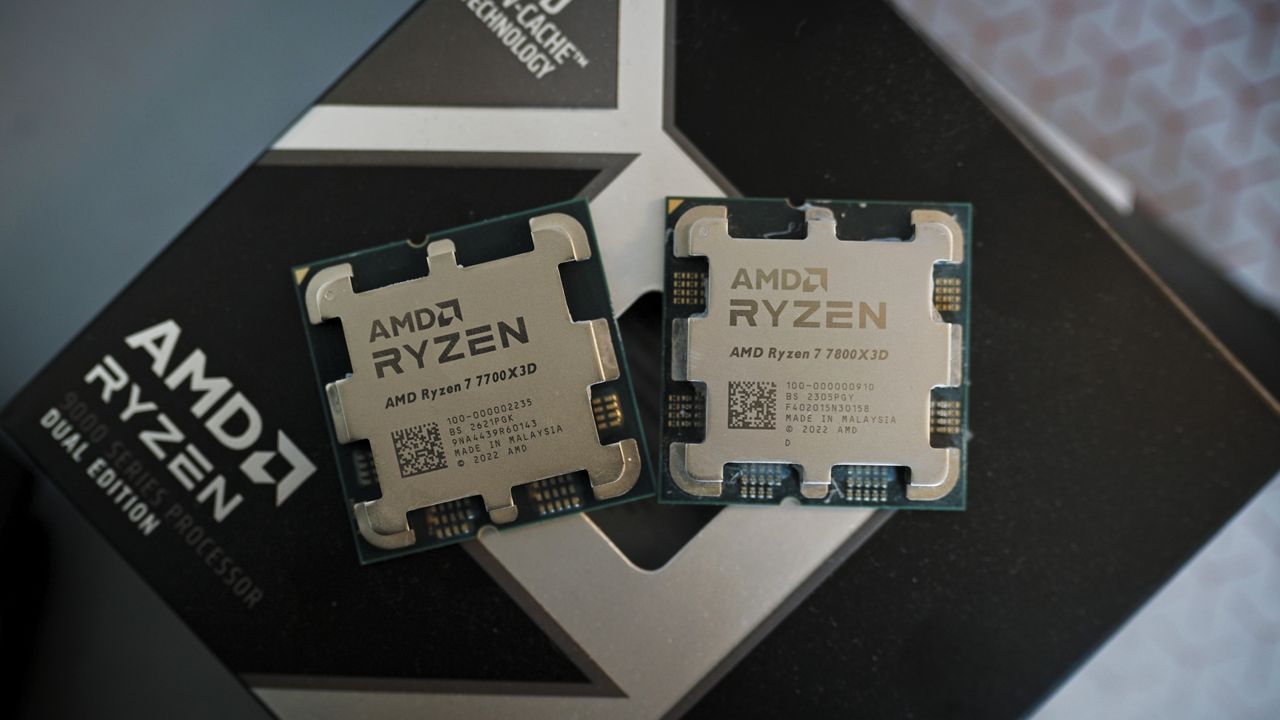
AMD Ryzen 7 7700X3D undercuts 7800X3D by $120 with 500 MHz lower boost clock
 ↗
↗
AMD’s new Ryzen 7 7700X3D offers identical cache and core count to the 7800X3D but trades clock speed for a lower price point on AM5.
Engineers selecting CPUs for gaming or productivity builds now have a cheaper X3D option on AM5. The trade-off between clock speed and cost will determine whether the 7700X3D delivers sufficient performance per dollar compared to the established 7800X3D. This comparison clarifies where the diminishing returns of higher clocks begin for 3D V-Cache workloads.
Written by elseif from the cluster below · every claim links back to a sourceThe three things worth knowing
Both CPUs share 8 cores, 16 threads, 104MB cache, AM5 socket, and 120W TDP, differing only in boost clock and price.
The 7700X3D’s 4.5 GHz boost is 500 MHz lower than the 7800X3D’s 5.0 GHz, but it launched at $329 versus $449 for the 7800X3D.
Neither CPU supports traditional multiplier overclocking, though Curve Optimizer and PBO tuning remain available for both.
THE READ
What the cluster adds up to.
AMD’s Ryzen 7 7700X3D introduces a lower-cost entry point to its X3D lineup while retaining the core advantages of the platform. The chip matches the 7800X3D in core count, cache, and TDP but reduces the boost clock by 500 MHz to achieve a $120 price cut at launch. This positions the 7700X3D as a direct alternative for builders who prioritize cache over clock speed, particularly in gaming workloads where 3D V-Cache has proven effective.
The performance gap between the two CPUs will hinge on how well the 7700X3D’s lower clock speed translates to real-world benchmarks. In gaming, the 7800X3D’s higher boost clock may provide a measurable advantage in CPU-bound scenarios, but the 7700X3D’s identical cache could narrow the gap in cache-sensitive titles. For productivity workloads, the clock speed difference may become more pronounced, particularly in tasks that scale poorly with cache but benefit from higher frequencies.
Power consumption and cooling requirements are unlikely to differ significantly between the two chips, given their identical TDP and architectural similarities. However, the 7700X3D’s lower clock speed could result in slightly reduced thermal output under load, potentially easing cooling demands in compact builds. Overclocking headroom remains limited for both CPUs, though Curve Optimizer and PBO tuning may offer marginal gains for users willing to experiment with undervolting or precision boost adjustments.
The pricing strategy here is straightforward: the 7700X3D undercuts the 7800X3D while offering nearly identical hardware, making it a compelling option for budget-conscious builders. However, the 7800X3D’s established reputation as a top-tier gaming CPU may justify its higher cost for users who prioritize maximum performance. The comparison will ultimately hinge on whether the 7700X3D’s price savings outweigh the performance trade-offs in specific workloads.
Written by elseif from the cluster below · checked for specifics the sources never containedTHE CLUSTER