TECH Signal 494
Software engineer's tabular recipe format resurfaces after viral tweet divides cooks
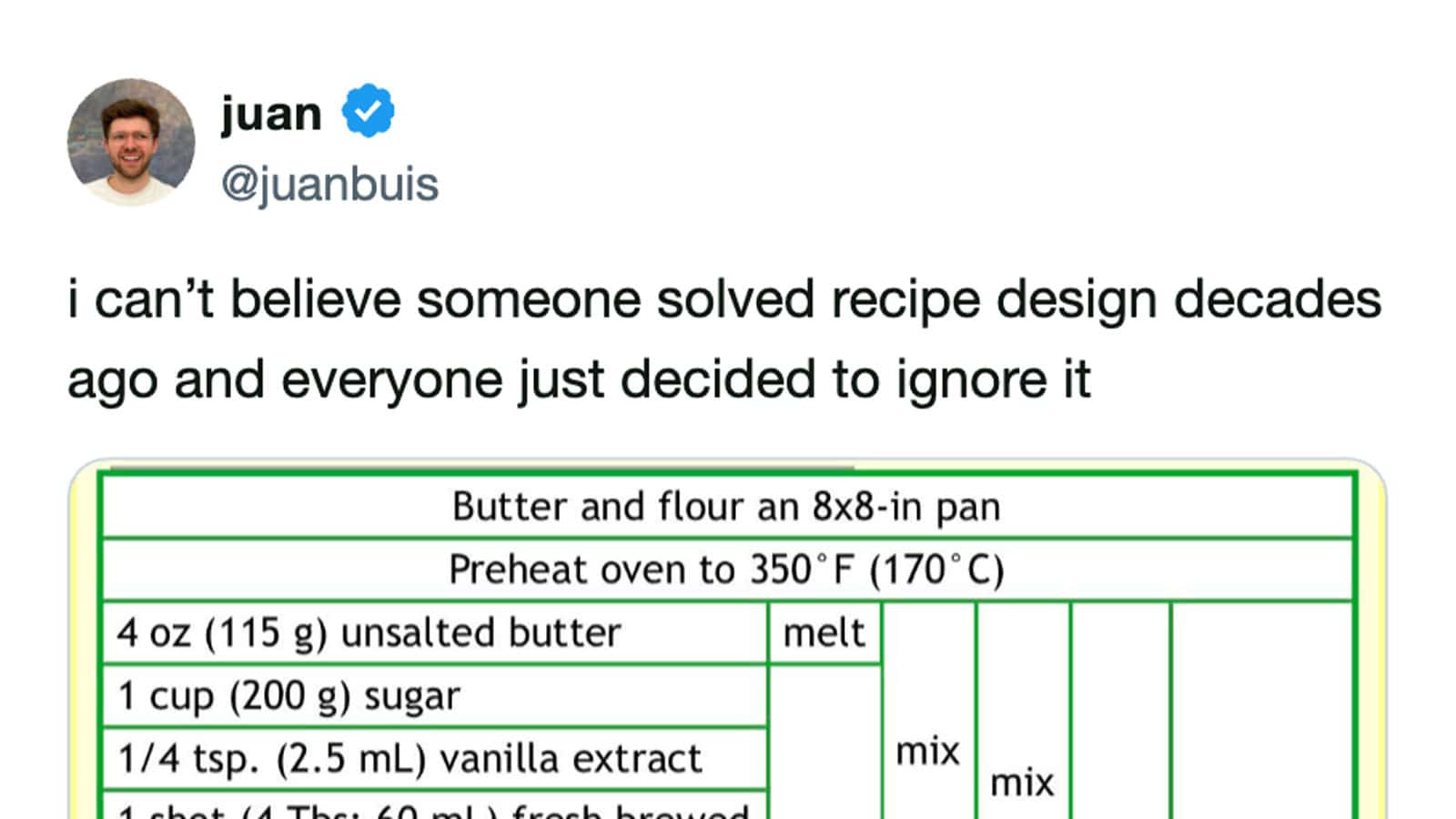 ↗
↗
A decades-old column-based recipe layout by Michael Chu gains sudden attention after a tweet highlights its structured approach to cooking instructions
This event highlights how engineering problem-solving can reshape everyday tasks outside tech. The format's polarizing reception suggests workflows optimized for clarity may still face resistance from established habits. Engineers may find value in applying similar structured thinking to non-technical domains.
Written by elseif from the cluster below · every claim links back to a sourceThe three things worth knowing
The format uses HTML tables to align ingredients with steps in a visual grid, eliminating narrative scrolling
Chu developed the system from personal cooking notes that evolved into the Cooking For Engineers website
Viral discussion reveals tension between intuitive cooking methods and structured engineering approaches
THE READ
What the cluster adds up to.
The resurfaced recipe format represents a direct application of engineering documentation principles to cooking. By organizing ingredients and steps in parallel columns with connecting braces, Chu created a system that mirrors flowchart or dependency mapping techniques common in software development. This approach eliminates the need to cross-reference separate ingredient lists and instruction blocks, reducing cognitive load during meal preparation.
The format's sudden popularity exposes a gap between professional cooking methods and home cook needs. While chefs often rely on muscle memory and intuitive timing, home cooks frequently pause to consult recipes, making the tabular layout's immediate visual reference particularly valuable. The division in online reactions suggests some users find the engineering approach overly rigid, while others appreciate its clarity for complex recipes.
Chu's implementation using HTML tables demonstrates how simple web technologies can solve real-world problems. The system predates modern responsive design challenges, suggesting potential limitations on mobile devices where horizontal scrolling might interfere with usability. The format's reliance on visual alignment also creates accessibility concerns for users who depend on screen readers or other assistive technologies.
The viral spread through social media rather than culinary publications indicates how engineering-adjacent solutions can gain traction outside their original domain. The discussion's focus on the format's origins in personal note-taking rather than professional cooking circles suggests similar opportunities exist for engineers to rethink other everyday processes. The tool's reception highlights the importance of balancing structure with flexibility when applying technical solutions to creative activities.
Written by elseif from the cluster below · checked for specifics the sources never containedTHE CLUSTER