SECURITY Signal 386
Apple warns users reportedly targeted by state-sponsored mercenary spyware attacks
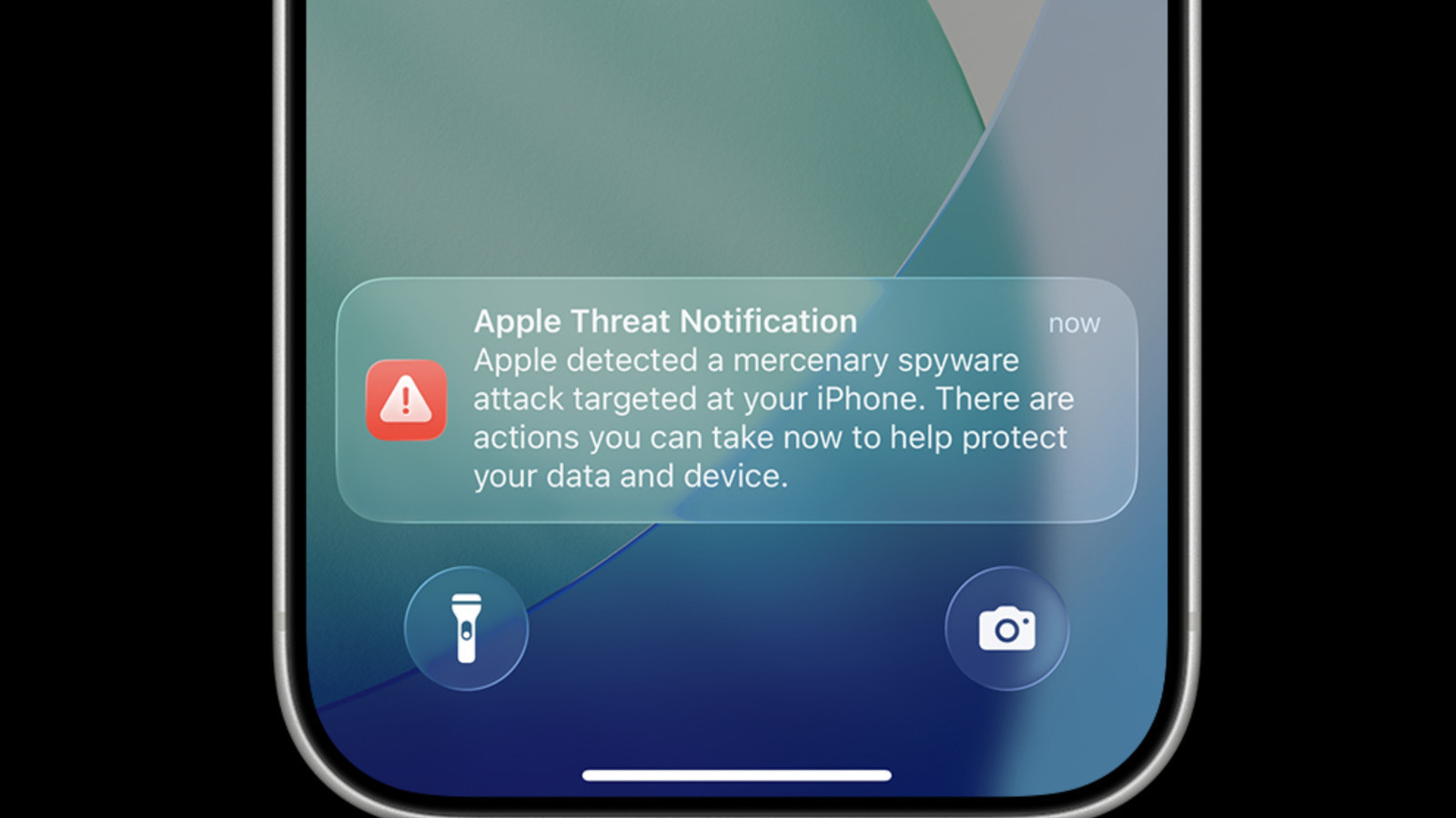 ↗
↗
Apple issued threat notifications to users it detected as targets of highly sophisticated mercenary spyware attacks, typically used by governments.
These attacks are rare but devastating, often targeting high-risk individuals like journalists or activists. The warnings signal a need for immediate security hardening, as standard protections may be insufficient. Engineers should note that even robust platforms like Apple’s cannot guarantee detection or prevention of such attacks.
Written by elseif from the cluster below · every claim links back to a sourceThe three things worth knowing
Apple’s notifications indicate high-confidence detection of mercenary spyware targeting specific users.
Recipients are advised to enable Lockdown Mode, which restricts device functionality to reduce attack surface.
Mercenary spyware is typically sold to state actors and costs millions, making it a threat to a narrow but critical subset of users.
THE READ
What the cluster adds up to.
Apple’s latest round of warnings highlights the ongoing threat of mercenary spyware, a class of surveillance tools sold to governments and state actors. These attacks are not opportunistic but highly targeted, often focusing on individuals like journalists, activists, or diplomats. The material suggests that Apple’s detection methods are probabilistic, meaning false negatives or positives are possible, but the alerts are treated as high-confidence indicators of an active threat. For engineers, this underscores the limitations of even well-funded security systems in detecting or preventing such attacks outright.
The recommended response, enabling Lockdown Mode, introduces trade-offs between security and usability. Lockdown Mode disables many common features, such as message attachments, FaceTime calls, and shared photo albums, to minimize potential attack vectors. While effective, this mode is not a permanent solution but a temporary measure for high-risk scenarios. The material does not specify how long users should remain in Lockdown Mode, leaving it to individual risk assessments. This approach reflects the reality that mercenary spyware attacks are persistent and adaptive, requiring dynamic countermeasures.
Apple’s decision to withhold details about its detection methods is a deliberate security measure. Revealing specifics could allow attackers to refine their techniques to evade future detection. However, this opacity also means users and security teams must rely on Apple’s internal assessments without independent verification. The material mentions third-party resources, such as Access Now’s Digital Security Helpline, suggesting that external expertise may be necessary for comprehensive protection. Engineers should note that this event is not about a vulnerability in Apple’s software but about the broader ecosystem of state-sponsored surveillance tools.
The material frames mercenary spyware as a niche but severe threat, with attacks costing millions of dollars and targeting a small number of individuals. This contrasts with broader cybersecurity threats like phishing or ransomware, which are more common but less sophisticated. For most users, the risk of mercenary spyware is low, but for those in high-risk professions, the consequences can be catastrophic. Apple’s warnings serve as a reminder that security is not a one-size-fits-all proposition, and that specialized tools and protocols are required for extreme threat models.
Written by elseif from the cluster below · checked for specifics the sources never containedTHE CLUSTER