TECH Signal 257 2 feeds carried it
Stryker completes first intraoperative Apple Vision Pro surgery using SportSuite Vision app
 ↗
↗
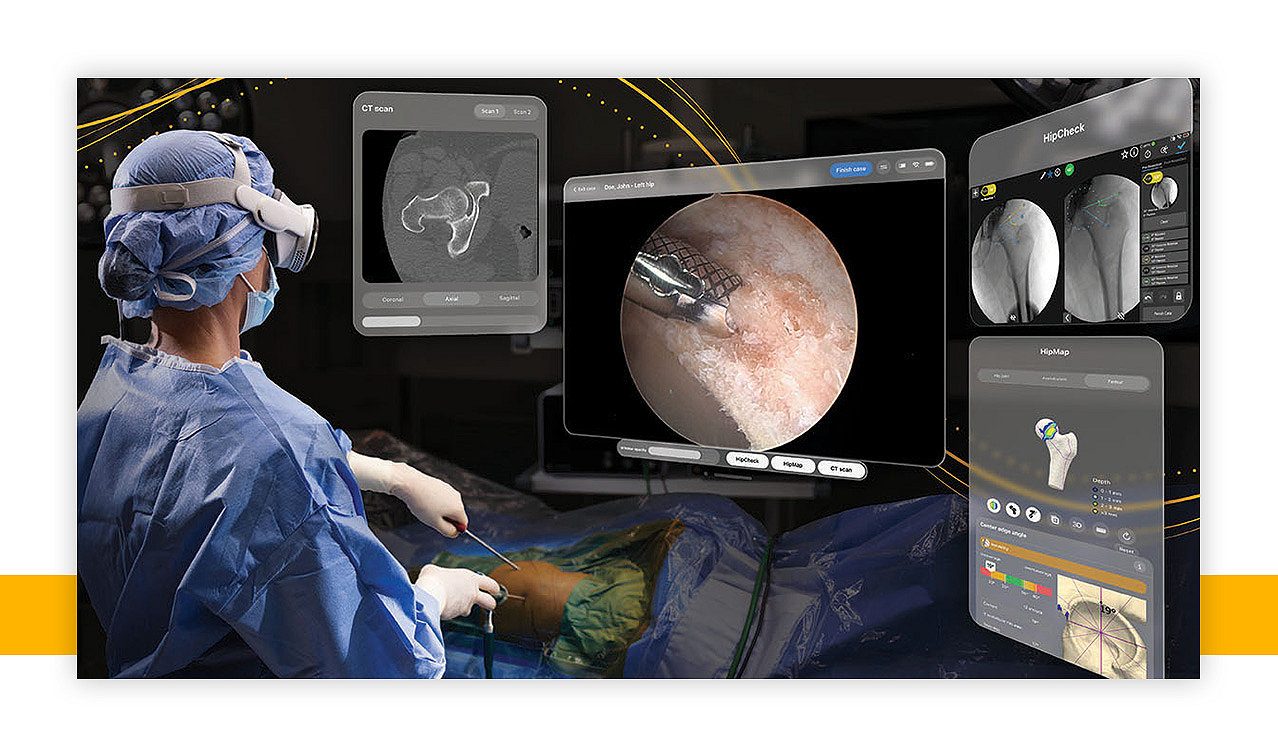
Stryker announced that a hip arthroscopy at Duke Health was performed with its FDA-authorized SportSuite Vision app on Apple Vision Pro, delivering imaging and procedural data directly in the surgeon’s view.
The procedure shows that spatial computing can replace multiple OR monitors with a single head-mounted display, potentially streamlining workflow and improving ergonomics. For developers, it demonstrates a regulatory pathway, FDA De Novo clearance, for mixed-reality medical software, opening a new market for AR surgical tools.
Written by elseif from the cluster below · every claim links back to a sourceThe three things worth knowing
SportSuite Vision received FDA De Novo authorization, the first intraoperative app cleared for Apple Vision Pro.
The app overlays arthroscopic video, HipCheck, HipMap and CT imaging in the surgeon’s visual space, reducing reliance on traditional monitors.
The hip arthroscopy was performed at Duke Health, confirming that critical digital content can be accessed within the sterile field.
THE READ
What the cluster adds up to.
The change is the use of Apple Vision Pro in a live hip arthroscopy, where Stryker’s SportSuite Vision app supplied arthroscopic video, HipCheck, HipMap and CT imaging directly to the surgeon’s field of view. The surgery was completed at Duke Health and is described as the first intraoperative use of Vision Pro approved by the FDA under a De Novo classification.
From an engineering perspective, the app must fuse multiple data streams, live video, pre-operative imaging and procedural overlays, into a spatially accurate AR display. This requires precise head-tracking, low-latency rendering, and a user interface that can be positioned within the sterile field, as the surgeon noted the ability to customize placement of key information.
Adopting this workflow entails purchasing the Vision Pro headset, licensing the SportSuite Vision software, and meeting any hospital IT integration requirements. The FDA clearance also implies a compliance cost, as developers must follow medical device regulations to achieve similar authorizations for future apps.
The approach is currently limited to the specific FDA-cleared app and the hip arthroscopy procedure; other surgeries will still rely on conventional monitors until additional apps receive clearance. Moreover, the headset must be worn in a sterile environment, which may not be suitable for all operative contexts.
This milestone establishes a precedent for AR-based surgical tools, suggesting that more developers may target the mixed-reality platform for intraoperative applications. As the technology proves ergonomic and workflow-friendly, hospitals could reconsider OR equipment layouts, and software teams will need to address regulatory, integration and usability challenges to expand the ecosystem.
Written by elseif from the cluster below · checked for specifics the sources never containedTHE CLUSTER