TECH Signal 497 2 feeds carried it
Apple Watch Series 12 reportedly adds opt-in conversation monitoring and live audio transcripts
 ↗
↗
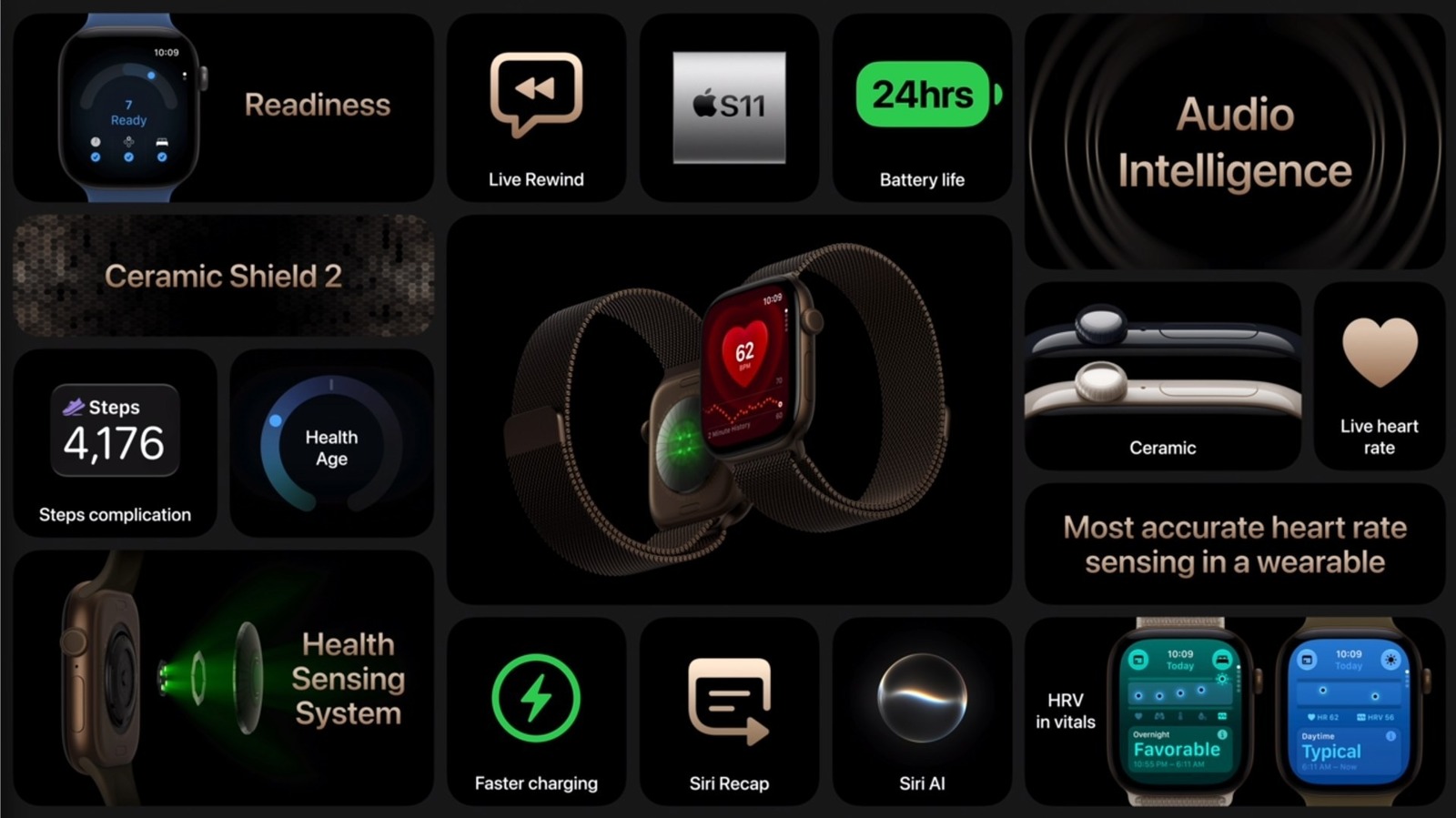
The Apple Watch Series 12 introduces Audio Intelligence, an opt-in feature that listens to conversations and provides live transcripts and summaries via Siri
This marks a shift in wearable functionality from passive health tracking to active ambient intelligence. Engineers must now account for real-time audio processing constraints, privacy compliance, and the trade-offs between on-device computation and battery life in always-listening scenarios.
Written by elseif from the cluster below · every claim links back to a sourceThe three things worth knowing
Audio Intelligence processes conversations locally in a secure enclave and deletes data immediately after use
The feature requires an iPhone 16 or newer, Apple Intelligence enabled, and is unavailable in the EU
New health sensors improve heart rate accuracy and frequency, alongside a readiness score system
THE READ
What the cluster adds up to.
The Apple Watch Series 12's Audio Intelligence feature represents a significant expansion of the device's capabilities beyond traditional health and fitness tracking. By introducing real-time conversation monitoring and transcription, Apple is positioning the watch as an ambient computing device that actively participates in user interactions. This shift requires engineers to consider the computational demands of continuous audio processing, which must be balanced against the device's limited power budget and thermal constraints.
Privacy and security implications are central to this feature's implementation. Apple states that audio processing occurs entirely within a secure enclave and that no audio is stored, which suggests a heavy reliance on on-device machine learning models. Engineers will need to evaluate the trade-offs between model accuracy, processing latency, and power consumption, particularly as the feature is opt-in and must avoid false positives in sensitive conversations. The exclusion of EU users hints at regulatory challenges that may arise from ambient data collection, even when processed locally.
The health sensor upgrades in the Series 12 demonstrate Apple's focus on improving the reliability of its biometric data. The redesigned sensor platform, with larger electrodes and photodiodes, aims to enhance the accuracy of heart rate and ECG measurements. The increased frequency of heart rate variability readings (every five minutes) and the introduction of a readiness score suggest a move toward more actionable health insights. However, the readiness score's simplified 10-point scale may limit its utility for users seeking granular feedback on their physical state.
Battery life and charging improvements address long-standing limitations of the Apple Watch. The claim of 12 hours of use after just 15 minutes of charging could reduce downtime for users, though the overall 24-hour battery life remains unchanged. Engineers must assess whether the new power-efficient LEDs and other optimizations can sustain the increased sensor activity and audio processing without degrading performance. The return of ceramic cases also indicates a renewed focus on durability, which may appeal to users in demanding environments.
Written by elseif from the cluster below · checked for specifics the sources never containedTHE CLUSTER