INFRA Signal 568 2 feeds carried it
Arm’s Neoverse CSS N4 platform scales to 128 cores per die on TSMC N3P process
 ↗
↗
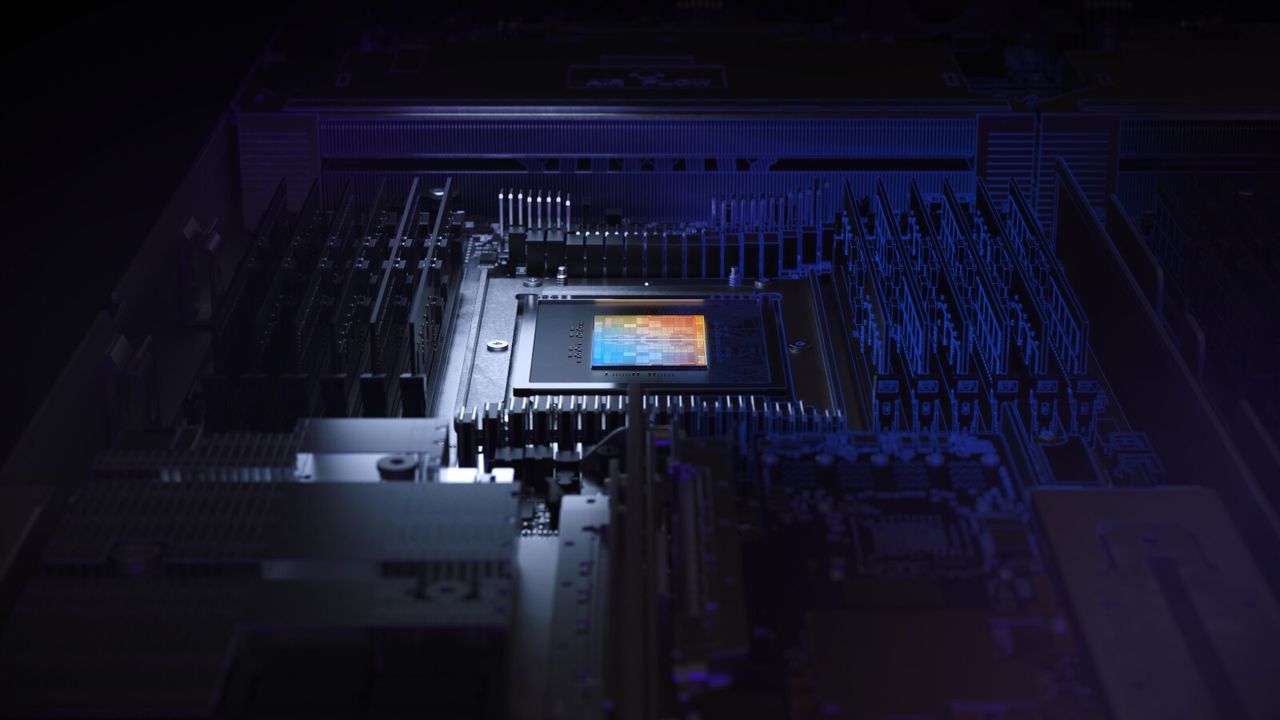
Arm’s latest Neoverse CSS N4 compute subsystem doubles core count and L3 cache over its predecessor, targeting cloud and custom silicon workloads.
This update allows cloud providers and hardware designers to build denser, more efficient server chips with Arm’s pre-validated IP. The shift to TSMC’s N3P process and support for PCIe 7/CXL 4.0 may reduce time-to-market for custom designs, but real-world adoption depends on partner uptake and workload optimization.
Written by elseif from the cluster below · every claim links back to a sourceThe three things worth knowing
Neoverse CSS N4 supports 8 to 128 cores per die, up from 64 in the N2 platform, with up to 256 MB of L3 cache.
The platform uses TSMC’s N3P process and includes PCIe 7/CXL 4.0 support, DDR5/LPDDR6 memory, and multi-chiplet scaling.
Arm claims 2x socket performance and 1.25x performance-per-watt gains over Neoverse N3, but no partner announcements yet
THE READ
What the cluster adds up to.
Arm’s Neoverse CSS N4 platform introduces a significant scaling upgrade for custom silicon designs, targeting cloud and data center workloads. The jump from 64 to 128 cores per die, paired with 256 MB of L3 cache, doubles the compute density of its predecessor. This aligns with trends in hyperscale infrastructure, where higher core counts and larger caches can improve throughput for parallel workloads. However, the platform’s efficiency gains, such as 1.25x performance per watt, will depend on workload-specific tuning, as clock speeds may drop at higher core counts.
The shift to TSMC’s N3P process and support for PCIe 7 and CXL 4.0 reflect Arm’s push to match or exceed x86 alternatives in I/O and memory bandwidth. The inclusion of DDR5 and LPDDR6 support provides flexibility for different use cases, from high-performance computing to memory-constrained edge deployments. Multi-chiplet and multi-socket designs further extend scalability, but the lack of public partner commitments suggests adoption may be limited to a few large cloud providers initially.
Arm’s claims of 2x socket performance over Neoverse N3 are based on internal estimates, not third-party benchmarks. While the platform’s architecture, including 2 MB of L2 cache per core and sub-100ns memory latency, positions it competitively against x86, real-world performance will vary by workload. The absence of detailed clock-speed scaling for different core counts leaves questions about how the platform will handle mixed workloads, where single-threaded performance remains critical.
The Neoverse CSS program’s semi-custom approach reduces development time for partners, but it also limits differentiation. Arm’s own AGI CPU, built on Neoverse V3 cores, demonstrates the platform’s potential, but its lack of public performance data underscores the gap between announcements and deployments. For engineers, the N4 platform offers a validated path to higher core densities, but its success hinges on whether cloud providers prioritize Arm’s efficiency gains over x86’s established ecosystem and software optimization.
Written by elseif from the cluster below · checked for specifics the sources never containedTHE CLUSTER