TECH Signal 334
Rapid spin before capture may explain why repeated black hole star encounters fade
 ↗
↗
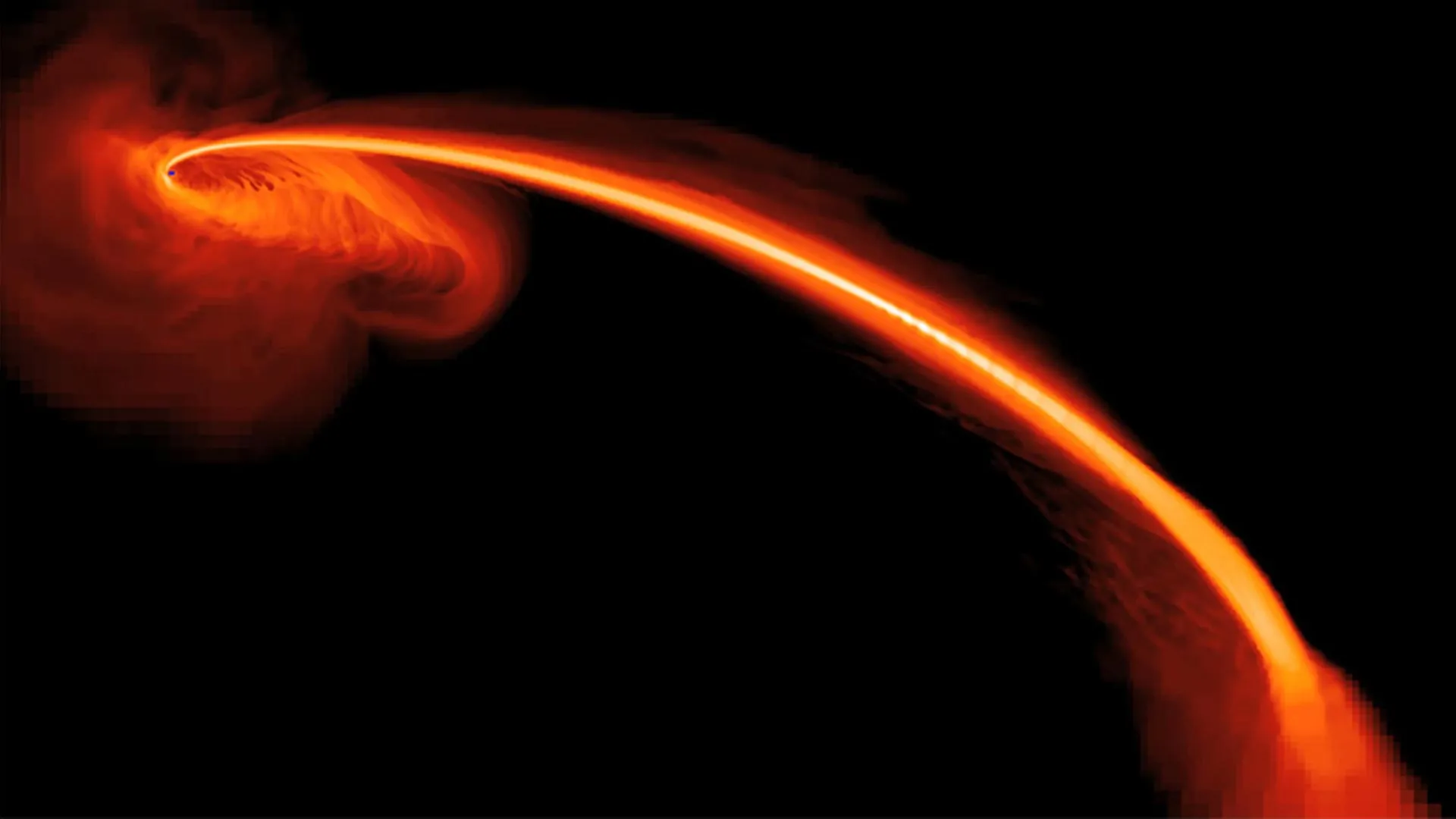
Astronomers propose that stars spinning rapidly before their first encounter with a supermassive black hole explain why repeated partial tidal disruption events produce progressively dimmer flares.
For engineers building time-domain survey pipelines, this offers a physical model to predict flare evolution in repeating partial tidal disruption events. It also highlights that stellar spin, not just mass loss, must be accounted for in simulations of these systems.
Written by elseif from the cluster below · every claim links back to a sourceThe three things worth knowing
Repeating partial tidal disruption events occur when a star survives close passes to a supermassive black hole, shedding material each time.
Four of about ten known repeating systems show flares that fade with each return, which previous models could not reproduce.
Syracuse University researchers propose that a star's rapid spin before capture explains both the fading flares and the tight orbits.
THE CLUSTER