TECH Signal 204
Astronomers debate if 'little red dots' are black holes or black hole stars
 ↗
↗
Comments
The debate over the nature of the 'little red dots' could redefine our understanding of cosmic structures. If these objects are indeed black hole stars, it may explain the formation of supermassive black holes in a new way. This discovery could impact astrophysical models and theories about the early universe.
Written by elseif from the cluster below · every claim links back to a sourceThe three things worth knowing
The James Webb Space Telescope has identified mysterious 'little red dots' that challenge current astronomical theories.
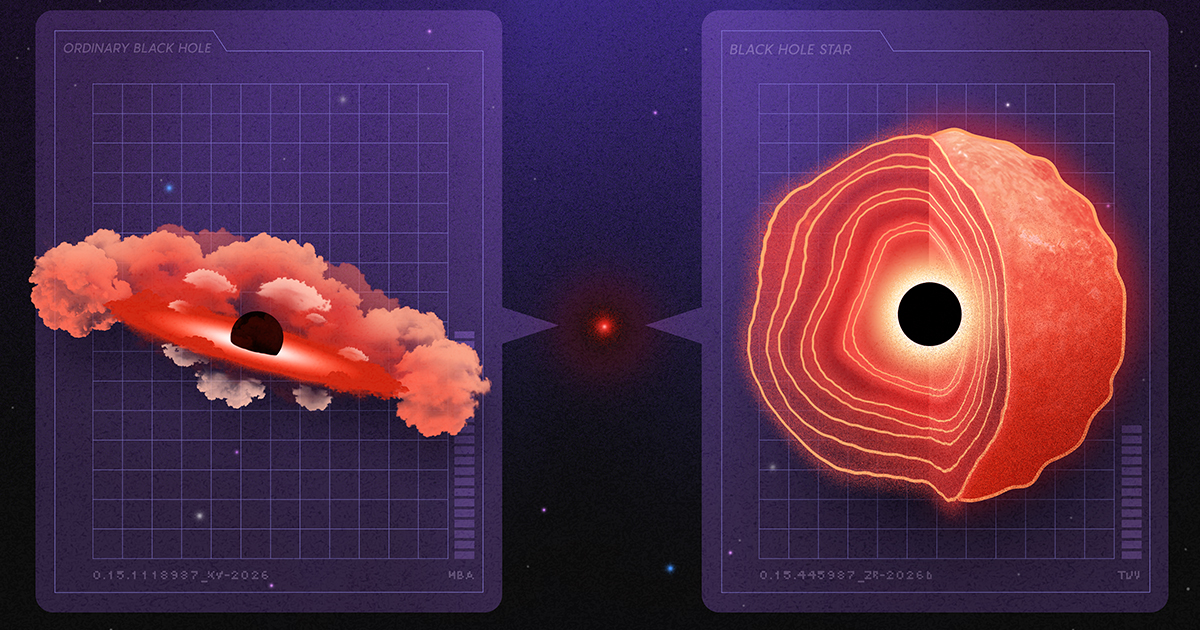
Two competing theories suggest these dots could either be black holes or new types of stars containing black holes.
The ongoing debate has led to increased scrutiny and research into the properties of these celestial objects.
THE READ
What the cluster adds up to.
The recent observations from the James Webb Space Telescope have revealed enigmatic 'little red dots' that are sparking significant debate among astronomers. Initial interpretations suggested they resembled distant galaxies, but further analysis indicates they may be something entirely different, potentially redefining our understanding of cosmic structure.
The competing theories propose that these dots are either supermassive black holes or black hole stars, which are massive stars containing black holes at their cores. This change in perspective may require a reevaluation of existing astrophysical models, particularly those concerning the formation and evolution of black holes in the early universe.
Adopting this new interpretation could have profound implications for the study of cosmic evolution. If these objects are indeed black hole stars, it could provide insights into how supermassive black holes form from the cores of massive stars, a phenomenon that has yet to be fully understood. However, these theories need extensive validation through further observational data and modeling.
The disagreement among astronomers indicates a polarized field, with significant implications for both theoretical astrophysics and observational strategies. The ongoing research efforts, including surveys like Rubies and MOM, will be critical in determining the true nature of these 'little red dots' and advancing our understanding of the universe.
Written by elseif from the cluster below · checked for specifics the sources never containedTHE CLUSTER