TECH Signal 227
Kayabaga disavows petition she sponsored to criminalize recording homeless individuals
 ↗
↗
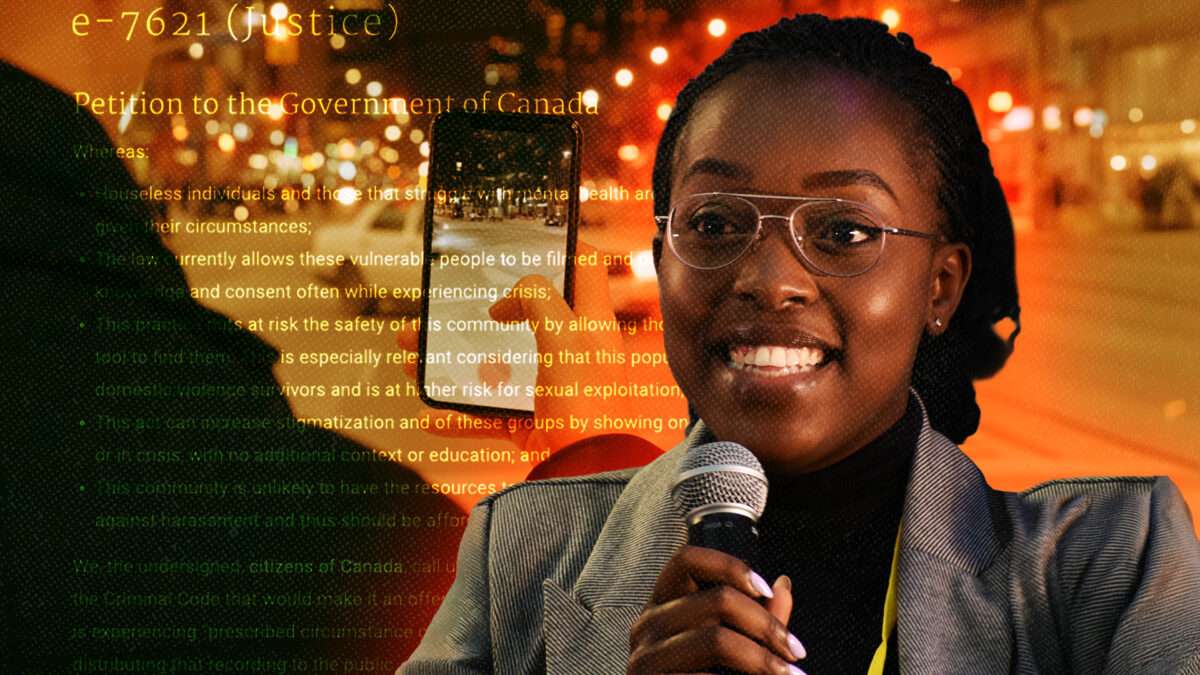
Arielle Kayabaga, a Liberal Party member of Canada's Parliament, has distanced herself from a petition she sponsored that would criminalize recording homeless individuals in public, citing concerns over journalism and public documentation.
The petition's proposed law to criminalize recording vulnerable individuals in public raises critical tensions between protecting marginalized groups and safeguarding press freedom and public accountability. Its potential passage would significantly impact how journalists and citizens document public crises, affecting transparency and the ability to expose systemic issues.
Written by elseif from the cluster below · every claim links back to a sourceThe three things worth knowing
Kayabaga's disavowal follows criticism that the petition could restrict journalism and public documentation of homelessness and mental health crises.
The petition seeks to criminalize 'knowingly recording' vulnerable individuals in public for publication, with supporters citing protection from exploitation and critics warning of journalistic interference.
Her spokesperson clarified that sponsoring a petition does not imply endorsement of its contents, emphasizing parliamentary participation over policy agreement.
THE READ
What the cluster adds up to.
The core conflict centers on whether protecting vulnerable populations justifies criminalizing the recording of their public distress, a move that directly threatens journalistic practices documenting systemic issues like homelessness and drug use.
Adopting such a law would impose significant costs on newsrooms and citizen journalists, requiring legal compliance checks and potentially deterring coverage of critical public health and social crises, thereby reducing transparency.
The proposed law's scope would stop working for journalists and watchdog groups who rely on public recordings to hold institutions accountable, as it would create a chilling effect on documenting vulnerable individuals in public spaces.
Kayabaga's distancing highlights the political risk of sponsoring controversial measures without full alignment, underscoring how legislative proposals can become flashpoints for broader debates on civil liberties versus protectionism.
Critics' concerns about the petition's impact on journalism are validated by the potential for such laws to be weaponized against documentation of public suffering, making this a pivotal case for balancing compassion with press freedom.
Written by elseif from the cluster below · checked for specifics the sources never containedTHE CLUSTER