TECH Signal 234
Cassini reveals a surprising twist in Saturn’s magnetic shield
 ↗
↗
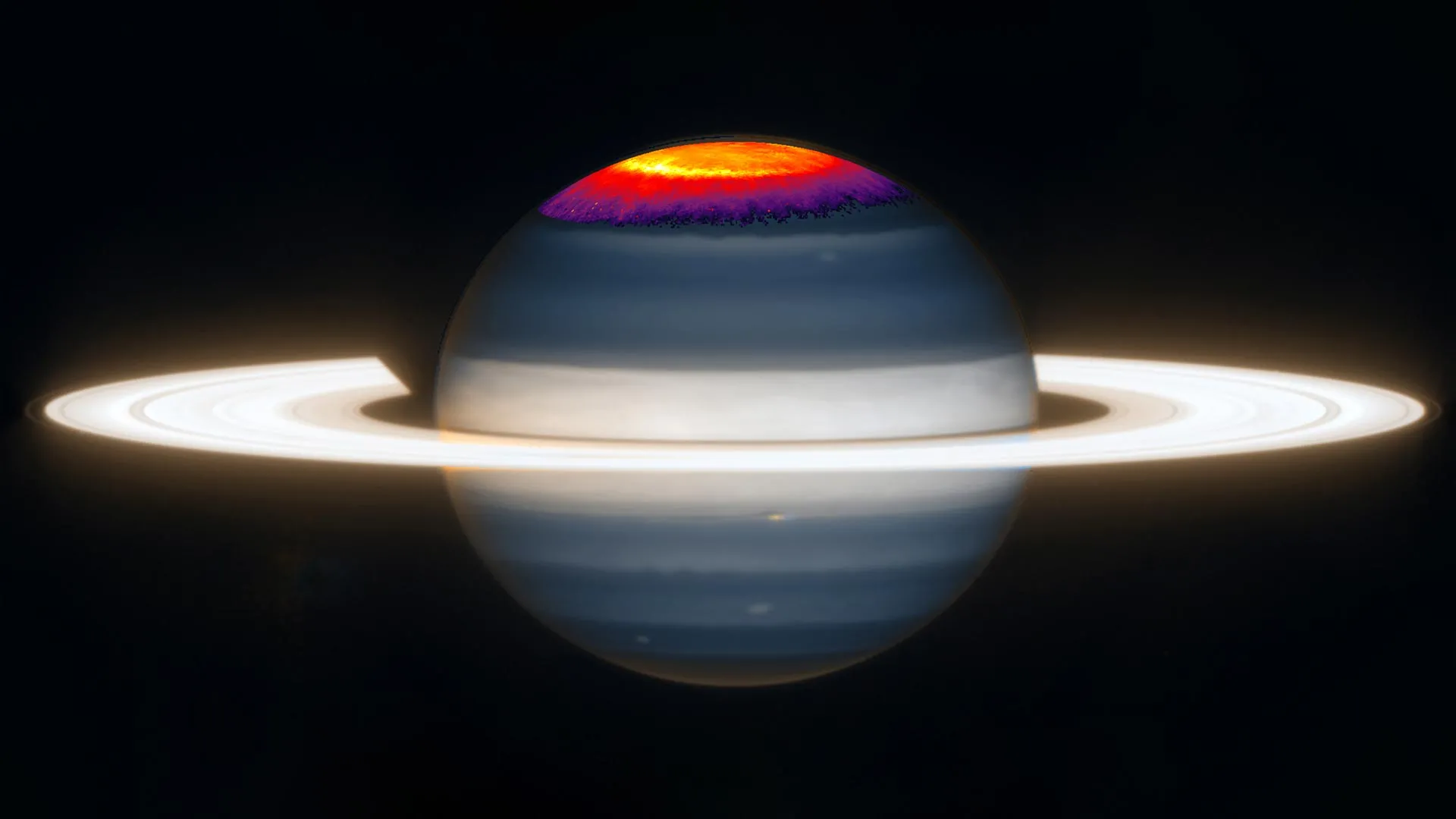
Cassini data shows Saturn’s magnetospheric cusp is dragged toward the afternoon side by the planet’s rapid rotation, unlike Earth’s noon-aligned cusp.
Engineers modeling space weather or designing instruments for outer-planet missions must now account for a magnetospheric geometry that is dominated by fast rotation and moon-sourced plasma rather than solar-wind pressure. The shift in cusp location changes where and when magnetic reconnection and particle acceleration occur, altering auroral predictions and radiation-belt models.
Written by elseif from the cluster below · every claim links back to a sourceThe three things worth knowing
Saturn’s cusp is displaced 3 to 7 hours past local noon, whereas Earth’s remains near noon.
Rapid rotation and Enceladus-supplied plasma overpower solar-wind pressure in shaping Saturn’s magnetosphere.
The afternoon cusp location forces revisions to auroral forecasts and reconnection-site models for gas-giant planets.
THE READ
What the cluster adds up to.
The discovery revises the textbook picture of magnetospheric cusps. On Earth, the cusp sits near local noon because solar-wind pressure and planetary magnetic pressure reach equilibrium there. Saturn’s ten-hour rotation and heavy plasma load from Enceladus shift that equilibrium point deep into the afternoon. Engineers who build radiation models or auroral instruments for gas-giant missions must now place the cusp several hours later in local time, increasing the computational cost of trajectory planning and instrument pointing schedules.
Adopting the new geometry requires re-running global magnetospheric simulations with updated boundary conditions. The afternoon cusp location implies that magnetic reconnection and particle injection happen later in the day, so auroral ovals and radiation belts may peak hours after previously expected. Spacecraft charging codes and particle-shielding designs must be re-validated against the revised injection timing and energy spectra.
The effect is strongest when Saturn’s rotation axis is nearly perpendicular to the solar-wind flow, a geometry that recurs every 15 years. During other orbital phases, solar-wind pressure can partially restore the noon alignment, creating a time-dependent cusp position. Missions targeting Saturn’s moons or rings must therefore carry flexible observation windows to capture reconnection events that migrate across local time.
Cassini’s long baseline of observations (2004 to 2017) provided the statistical weight needed to separate rotational effects from solar-wind variability. Single-flyby missions lack this coverage, so future orbiters at ice giants or fast-rotating exoplanets will need extended campaigns to map cusp migration. Until then, engineers must treat cusp location as a variable rather than a fixed point in mission-planning tools.
Written by elseif from the cluster below · checked for specifics the sources never containedTHE CLUSTER