TECH Signal 359
OpenAI rolls out stricter teen mode with automatic enrollment and safety restrictions
 ↗
↗
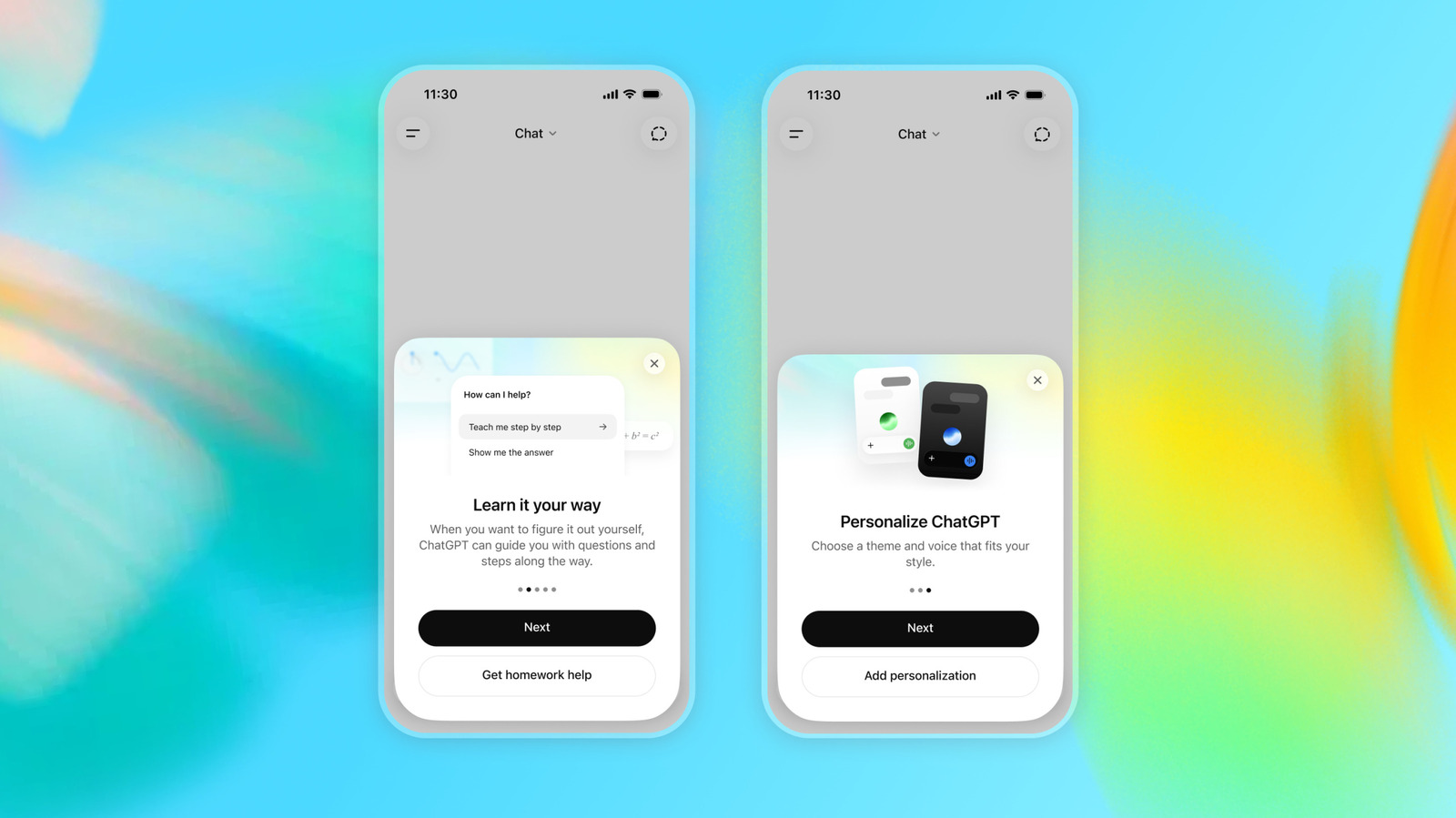
ChatGPT will now default to a restricted experience for users under 18, combining learning-focused tools with stricter safety measures.
Engineers building or integrating AI tools for younger audiences must account for these new restrictions, which may limit functionality or require additional compliance checks. The shift also signals broader industry trends toward age-gated AI interactions, potentially affecting user experience design and moderation workflows.
Written by elseif from the cluster below · every claim links back to a sourceThe three things worth knowing
Automatic enrollment in teen mode applies to users under 18, with no opt-out for predicted age groups.
Study Mode and parental controls like quiet hours are now default features, nudging educational use cases.
Safety restrictions include stricter relational boundaries and expanded alerts for self-harm concerns.
THE READ
What the cluster adds up to.
OpenAI’s rollout of ChatGPT for Teens introduces a bifurcated experience for younger users, automatically enrolling them in a mode that prioritizes learning and safety. The system relies on age prediction or self-reported data, meaning engineers integrating ChatGPT into educational or youth-focused platforms must now handle two distinct user flows. The absence of an opt-out for predicted under-18 users suggests OpenAI is treating this as a compliance-driven feature, not a user preference. This could complicate deployments where age verification is unreliable or where teen users expect full functionality.
The learning-focused tools, such as Study Mode and Study Hours, are designed to guide users toward self-directed problem-solving rather than direct answers. For engineers, this means ChatGPT’s responses in teen mode may deviate from standard outputs, requiring adjustments to downstream applications that rely on specific response formats. The Socratic approach could also introduce latency or unpredictability in interactions, particularly for time-sensitive use cases. Parental controls, like quiet hours, add another layer of configuration that platforms must support if they expose these settings to end users.
Safety restrictions in teen mode target anthropomorphism and self-harm detection, with stricter relational boundaries and expanded parental notifications. Engineers working on AI moderation systems may need to adapt to these new rules, which could affect how prompts are processed or flagged. The emphasis on avoiding human-like interactions, such as prohibiting the model from calling itself a friend, may require retraining or filtering models to comply. The expansion of alerts for eating disorders and self-harm also suggests OpenAI is increasing its reliance on third-party consultations, which could set a precedent for other platforms.
The rollout’s reliance on randomized controlled trials for Study Mode indicates OpenAI is using empirical data to shape its approach, but the lack of specific performance metrics leaves engineers without clear benchmarks. The system’s effectiveness in real-world scenarios, particularly in balancing safety with usability, remains untested at scale. For teams building on ChatGPT, this introduces uncertainty about how teen mode will behave in edge cases or high-volume environments. The absence of granular details about what triggers safety alerts further complicates integration efforts, as platforms may struggle to predict when user interactions will be flagged or restricted.
Written by elseif from the cluster below · checked for specifics the sources never containedTHE CLUSTER