DATABASES Signal 129
ClickHouse as a streaming HTTP API
 ↗
↗
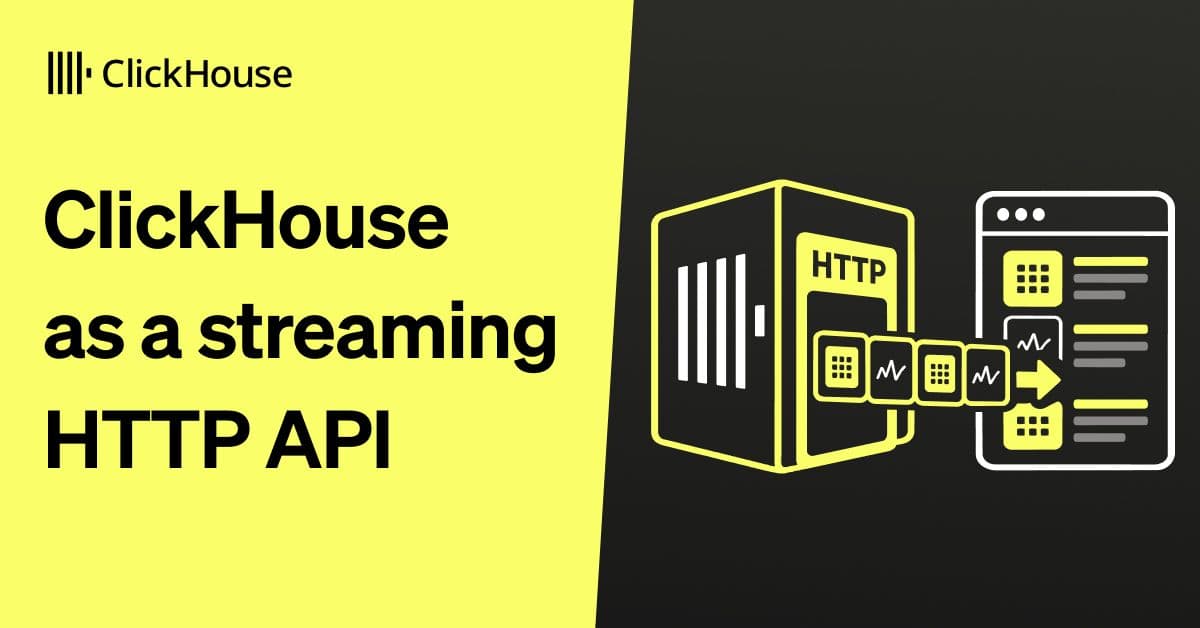
ClickHouse 26.8 introduces named HTTP handlers, typed parameters, and framing formats to serve query results directly as streaming HTTP APIs without a separate application layer
Engineers can now eliminate a thin API proxy layer for ClickHouse-backed services that only expose controlled queries. This reduces operational overhead but requires careful access control and query design to avoid exposing raw database internals
Written by elseif from the cluster below · every claim links back to a sourceThe three things worth knowing
Named HTTP handlers in ClickHouse 26.8 map URL paths to parameterised SQL queries with typed inputs
Result framing formats and pagination are configurable per endpoint, supporting streaming JSON or other formats
Business logic or complex validation still requires a separate application layer; this feature targets query-only APIs
THE READ
What the cluster adds up to.
ClickHouse 26.8 introduces named HTTP handlers that allow engineers to define URL endpoints directly in the database. Each handler maps to a SQL query with typed parameters, enabling HTTP requests to trigger database operations without an intermediate API layer. This change targets architectures where a thin proxy currently translates HTTP parameters into ClickHouse queries and returns results. The feature supports pagination, framing formats like JSONEachRow, and access control via ClickHouse's user permissions system.
The operational cost of this approach is reduced complexity for query-only APIs. Engineers no longer need to maintain a separate service for simple data exposure, and the database handles streaming responses directly. However, this shifts responsibility for query safety and performance to the handler definitions. Poorly designed handlers could expose inefficient queries or sensitive data if access controls are misconfigured. The feature does not replace application layers that require business logic, orchestration, or custom validation beyond what ClickHouse's SQL dialect supports.
Where this approach stops working is in scenarios requiring dynamic query construction or complex request processing. Named handlers are static definitions, so each new query variant requires a new handler. The feature also lacks built-in rate limiting or request validation beyond basic parameter typing. Engineers must still implement these protections elsewhere if needed. For use cases that fit within these constraints, the feature offers a simpler architecture for exposing ClickHouse data over HTTP.
Written by elseif from the cluster below · checked for specifics the sources never containedTHE CLUSTER