TECH Signal 435
Cloudflare adds post-origin response rules to modify cache headers before storage
 ↗
↗
Cloudflare now evaluates and modifies origin response headers before caching, allowing dynamic control over cache behavior without origin changes.
Engineers can now override problematic headers like Set-Cookie or Cache-Control at the edge, improving cache hit rates and reducing origin load. This simplifies CDN migrations and optimizes performance without requiring application code changes.
Written by elseif from the cluster below · every claim links back to a sourceThe three things worth knowing
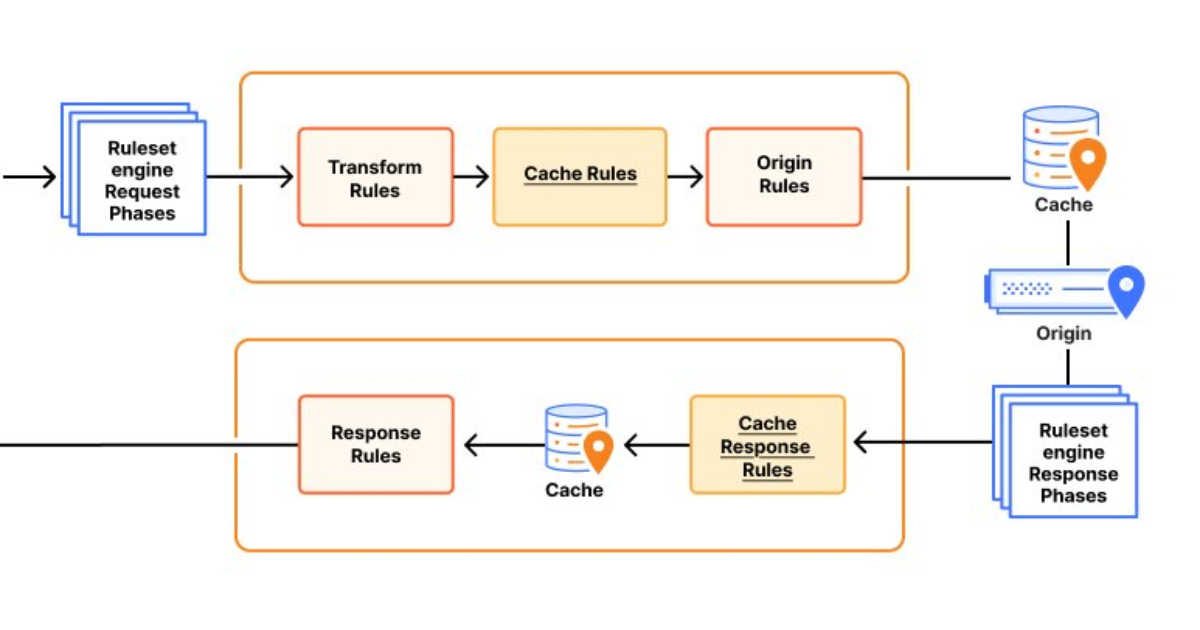
Cache Response Rules execute after origin responses but before content is stored in Cloudflare’s cache.
Users can strip interfering headers, modify Cache-Control directives, and manage cache tags without origin modifications.
The feature is available across all Cloudflare plans and complements existing Cache Rules.
THE READ
What the cluster adds up to.
Cloudflare’s Cache Response Rules introduce a new phase in its caching pipeline, operating after the origin server responds but before content is written to the cache. Previously, Cloudflare’s Cache Rules only evaluated request attributes to determine caching behavior. The new rules allow engineers to inspect and modify origin response headers, such as Set-Cookie, ETag, or Cache-Control, before they influence cache storage. This addresses a long-standing limitation where misconfigured headers from the origin could inadvertently prevent caching, degrading performance and increasing origin load.
The feature provides three core actions: removing headers that interfere with caching, managing cache tags, and modifying Cache-Control directives. For example, an origin might include a Set-Cookie header in a response for a static asset, making it uncacheable. Cache Response Rules can strip this header at the edge, ensuring the asset remains cacheable. This is particularly useful for legacy applications or third-party origins where modifying the source is impractical or impossible. The rules operate without requiring changes to the origin, reducing operational friction during CDN migrations or performance optimizations.
Cache Response Rules do not replace Cloudflare’s existing Cache Rules but complement them. Cache Rules determine *whether* and *how* content is cached based on request attributes, while Cache Response Rules refine *how* and *whether* content is cached based on the origin’s response. This two-phase approach allows for more granular control, such as overriding Cache-Control directives for specific paths or removing headers that would otherwise bypass the cache. However, the feature’s effectiveness depends on engineers correctly identifying which headers to modify; incorrect rules could force caching of dynamic content or miss opportunities to optimize static assets.
The feature is available across all Cloudflare plans, making it accessible to a broad range of users. For engineers, this reduces the need to rely on origin-side fixes or workarounds, such as rewriting applications or deploying additional infrastructure. It also simplifies edge-case handling, such as managing cache tags for content invalidation or ensuring consistent caching behavior across multi-region deployments. While the rules add flexibility, they require careful configuration to avoid unintended consequences, such as caching sensitive or time-sensitive data. The trade-off is between operational simplicity and the risk of misconfiguration at the edge.
Written by elseif from the cluster below · checked for specifics the sources never containedTHE CLUSTER