TECH Signal 144
CPU-Z V3 adds 100+ health checks, built-in stress testing, and XOC effective clock tracking
 ↗
↗
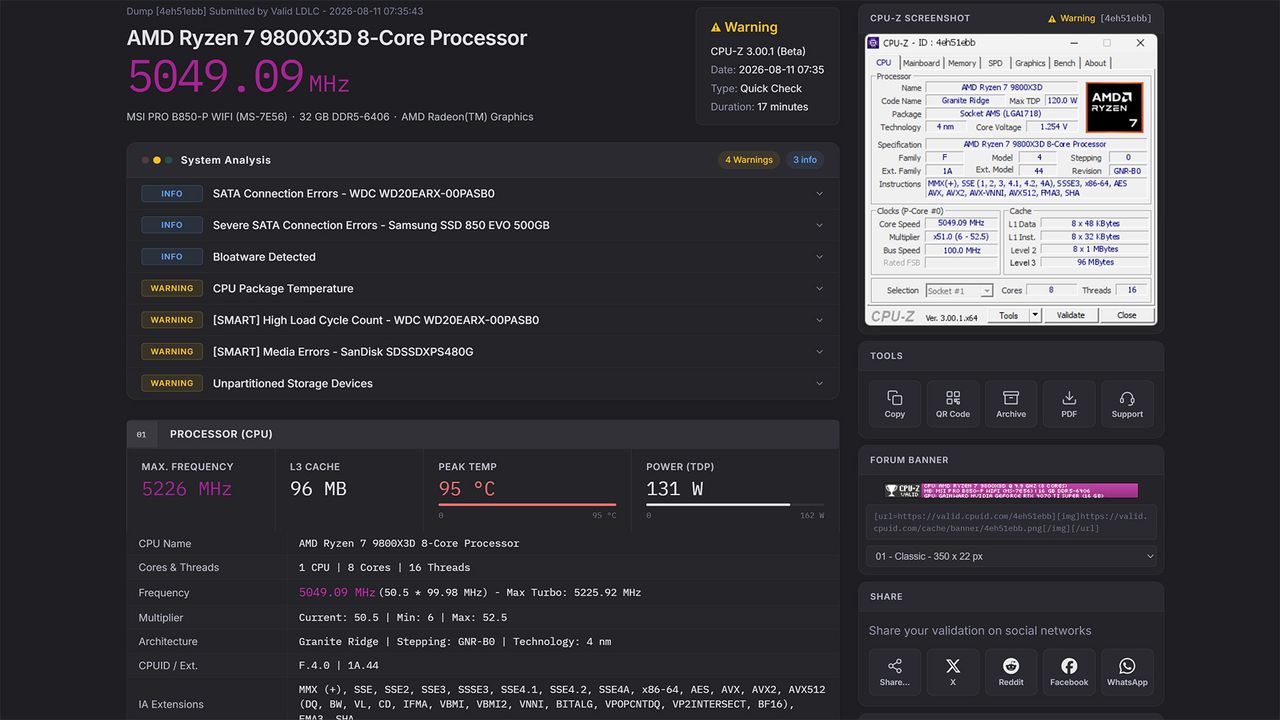
CPU-Z V3 overhauls its validation system with over 100 detection points, stress testing, and improved overclocking validation for modern CPUs.
For engineers and system builders, CPU-Z V3 introduces faster and more detailed hardware diagnostics, reducing the need for separate stress-testing tools. The new validation modes provide clearer health assessments, but some features remain disabled until the V3 database matures.
Written by elseif from the cluster below · every claim links back to a sourceThe three things worth knowing
Standard validation now checks over 100 system health points in under 10 seconds with labeled severity indicators.
Advanced validation includes stress testing and extended benchmarking, taking minutes to hours to complete.
XOC validator improves overclocking validation by tracking effective CPU clock speeds for modern processors.
THE READ
What the cluster adds up to.
CPU-Z V3 marks the first major update to the tool in over two decades, shifting from a lightweight hardware identifier to a more comprehensive diagnostic utility. The standard validation mode now scans over 100 detection points, including drivers, temperatures, and bloatware, providing a near-instantaneous health snapshot. This reduces the need for manual checks or third-party tools, though the accuracy of these labels depends on the underlying database’s maturity.
The new advanced validation mode introduces stress testing and extended benchmarking, targeting CPU, RAM, GPU, and storage performance. While this adds depth, the process can take hours, making it less practical for quick diagnostics. The integration of HWMonitor-based sensors improves real-time monitoring, but users may still need dedicated tools for specialized workloads or deeper analysis.
For extreme overclockers, the XOC validator now tracks effective clock speeds rather than relying on a single five-second measurement. This change addresses validation issues with modern CPUs, where dynamic clock adjustments could previously lead to incorrect rejections. However, the feature’s usefulness depends on the V3 database accumulating enough validations to refine its benchmarks.
The update is available now, but some features remain limited until the V3 database grows. The V2 database will continue accepting validations until October, after which it becomes read-only. Engineers should note that while V3 improves diagnostics, it may not yet replace specialized tools for niche use cases or enterprise-level validation.
Written by elseif from the cluster below · checked for specifics the sources never containedTHE CLUSTER