TECH Signal 373
Dark mode toggles: two states are enough
 ↗
↗
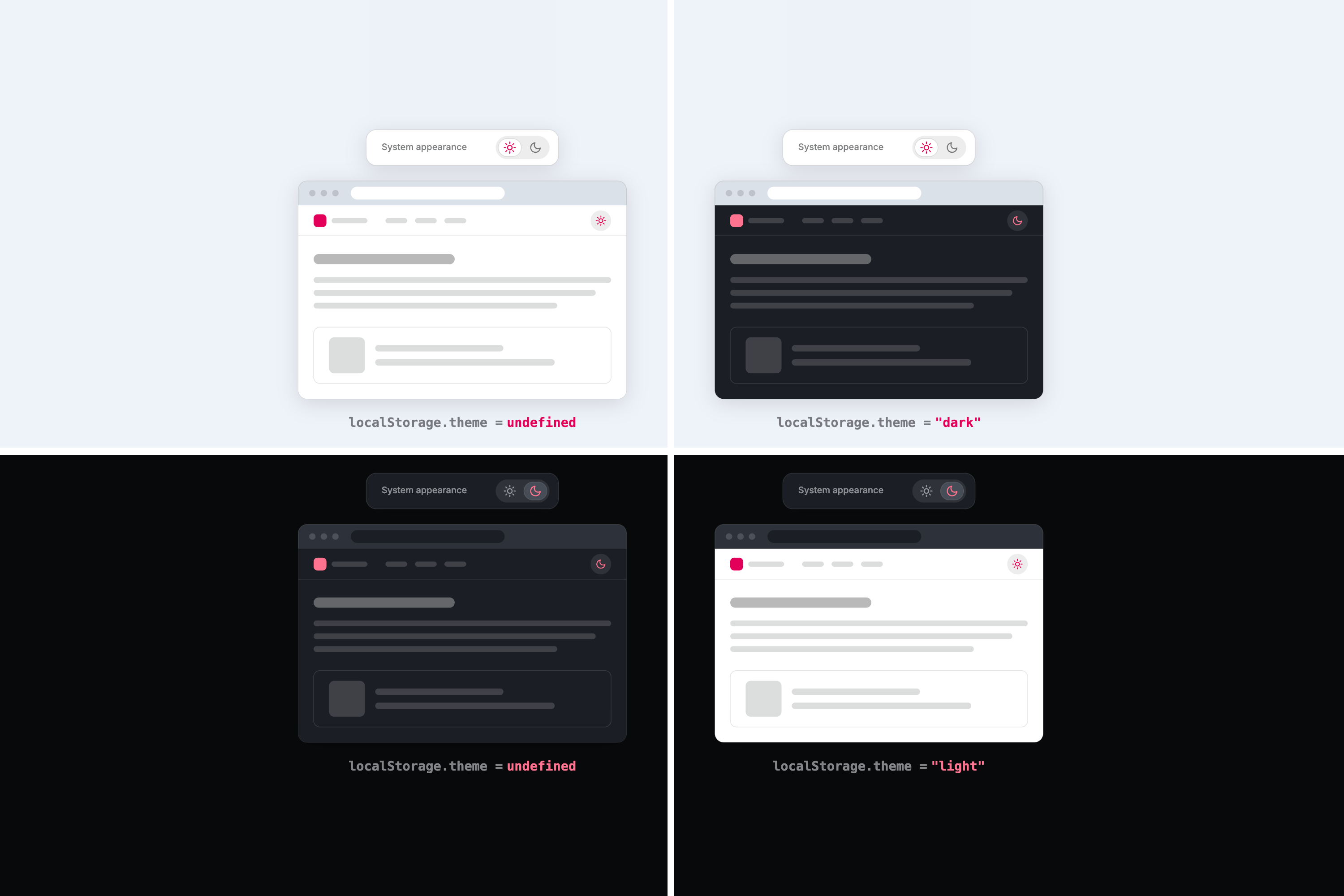
An article on implementing dark mode toggles argues for keeping the control to two states, while noting that relying on system preferences or future browser-level controls are also valid choices.
The provided material is thin, offering only a high-level opinion on UI design rather than a concrete technical shift. For engineers, it serves as a reminder to consider defaulting to system preferences before building custom controls. The extract lacks the technical depth to provide substantive guidance on implementation costs or limitations.
Written by elseif from the cluster below · every claim links back to a sourceThe three things worth knowing
A properly implemented dark mode toggle only requires two states.
Choosing to default entirely to system preferences without offering a custom toggle is a valid design decision.
Browsers should eventually handle dark mode natively, but currently do not provide this functionality.
THE READ
What the cluster adds up to.
The discussion around dark mode implementation continues to focus on reducing unnecessary UI complexity. The author posits that a simple two-state toggle is sufficient when a custom control is deemed necessary. This pushes back against the trend of adding intermediate or automatic states to custom theme selectors. However, the piece explicitly avoids mandating the inclusion of a toggle in the first place.
Adopting a two-state approach reduces the development and maintenance cost of managing complex theme persistence logic. Alternatively, adopting the author's suggestion to default entirely to system preferences eliminates the cost of building and maintaining a custom UI element altogether. The primary cost of the system-default approach is losing the ability for users to diverge their application theme from their operating system setting.
The current approach of website-level implementation stops being scalable because it places the burden on individual application developers. The author notes that browsers should eventually absorb this functionality into their native chrome. Until that shift occurs, engineers must continue to implement these controls at the application layer. The extract provides no technical details on how to implement the two-state logic or handle edge cases where system preferences might conflict with user expectations.
The provided material is exceptionally thin, limiting the depth of analysis possible without violating grounding rules. The source consists solely of introductory caveats rather than the technical implementation details promised by the headline. Consequently, engineers cannot extract specific architectural patterns or code solutions from this extract. The only actionable takeaway is a philosophical check on over-engineering theme selectors.
Written by elseif from the cluster below · checked for specifics the sources never containedTHE CLUSTER