TECH Signal 395
Open Sauce 2026 showcases $1,700 desktop UV printers and rideable speeder bike builds
 ↗
↗
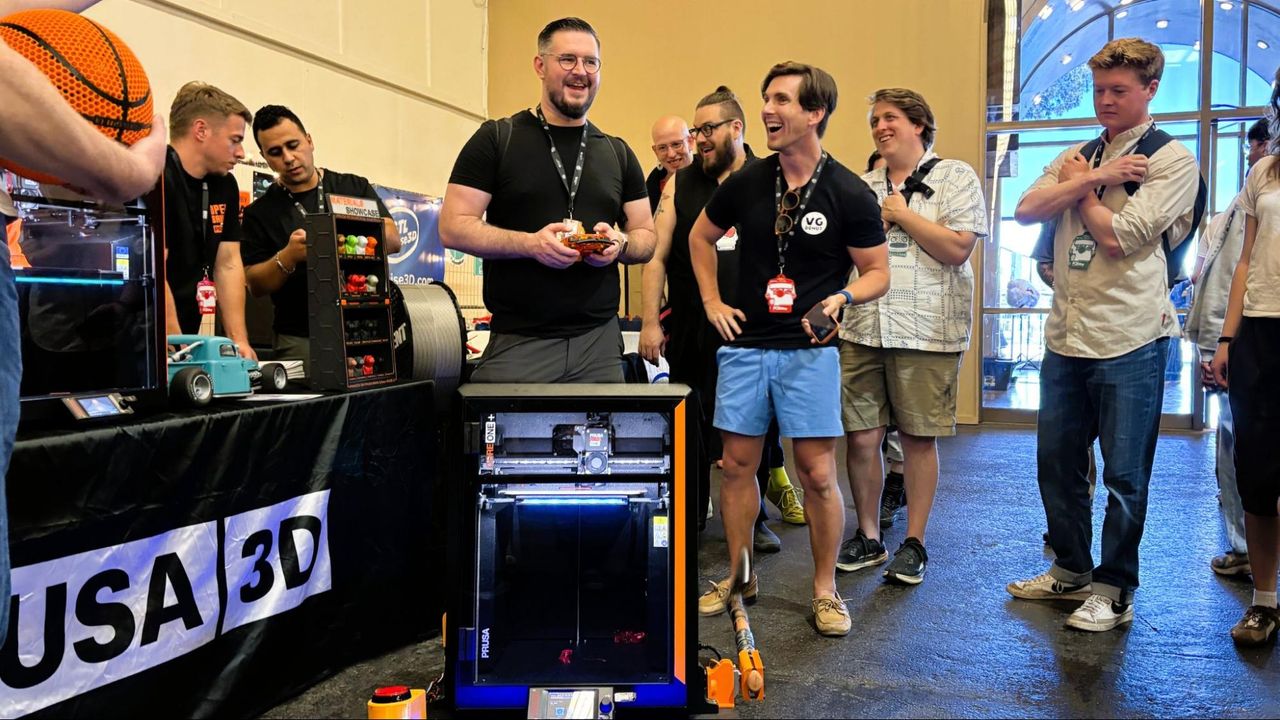
Open Sauce 2026 highlighted desktop UV printers priced at $1,700, flash-cured resin curing, and a rideable speeder bike constructed from 3D-printed components.
Engineers can now access full-color, high-resolution printing without needing industrial-grade machines, shortening prototyping cycles. Flash-cured resin cuts down post-process handling, allowing faster iteration on functional parts. The speeder bike example shows how 3D-printed structures can be combined with off-the-shelf actuation to create functional vehicles, illustrating integration limits.
Written by elseif from the cluster below · every claim links back to a sourceThe three things worth knowing
Desktop UV printers at Open Sauce 2026 were offered for $1,700, delivering full-color output previously limited to higher-cost systems.
Flash-cured resin was demonstrated to solidify instantly under UV light, reducing post-process washing and curing steps.
A rideable speeder bike combined a 3D-printed frame with a concealed electric scooter, showing where pure 3D-printed propulsion is not yet feasible.
THE READ
What the cluster adds up to.
At Open Sauce 2026 the exhibition floor featured desktop UV printers that could produce full-color parts at a price point of $1,700, a level previously associated with larger industrial systems. These printers were shown alongside flash-cured resin that solidifies instantly when exposed to UV light, eliminating the need for lengthy post-cure baths. The combination signaled a shift toward affordable, high-fidelity color prototyping for small teams and individual makers.
The $1,700 price tag places capable color printing within reach of hobby workshops, educational labs, and start-ups that previously relied on outsourced services or monochrome machines. By lowering the capital barrier, teams can iterate on aesthetic and functional designs more frequently, reducing lead times for product development. The flash-cured resin further speeds workflow by cutting the washing and post-cure steps that normally add hours to each print cycle.
While the resin technology accelerates curing, it still requires proper ventilation and protective equipment due to the volatile nature of uncured photopolymers. Build volumes remain limited to desktop scales, restricting the size of parts that can be produced in a single run. These constraints mean that large structural components or high-volume production still necessitate larger format printers or alternative manufacturing methods.
The rideable speeder bike demonstrated at the event combined a largely 3D-printed frame with a hidden electric scooter drivetrain, illustrating that current 3D-printed structures can support loads and aesthetics but cannot yet provide propulsion on their own. This integration highlights where the technology stops working for fully printed vehicles and points to a hybrid approach as the practical path forward for functional, moving prototypes.
Written by elseif from the cluster below · checked for specifics the sources never containedTHE CLUSTER