AI Signal 141
DoorDash Uses Multi Agent LLMs to Clean up 60,000 Feature Flags
 ↗
↗
DoorDash built a multi-agent LLM system that automates cleanup of 60,000 stale feature flags across 623 repositories, using engineer approval, isolated Git worktrees and automated validation.
The system cuts manual cleanup time from one to two hours per flag to about 13.8 minutes and $4.79 per cleanup, reducing operational overhead. It also handles complex flag dependencies that rule-based tools miss, improving codebase maintainability.
Written by elseif from the cluster below · every claim links back to a sourceThe three things worth knowing
DoorDash’s system processes stale flags identified by a daily Jira ticket workflow.
Cleanup uses up to four concurrent agents in isolated Git worktrees with automated validation checks.
Evaluation showed 45 usable pull requests from 50 flags, with simple flags achieving 100% single-pass cleanup.
THE READ
What the cluster adds up to.
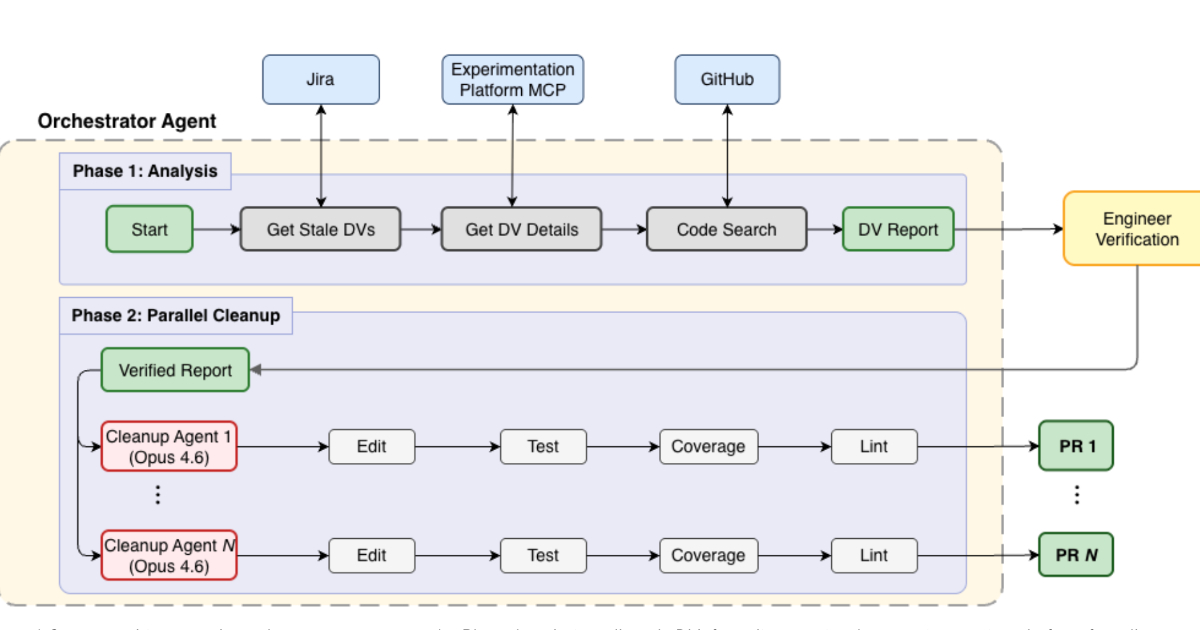
The workflow replaces manual removal of stale feature flags with an automated multi-agent LLM pipeline. It retrieves stale flag tickets from Jira and queries the experimentation platform via MCP for rollout data. Engineers then review a generated report before code changes begin.
Adoption requires the Google Agent Development Kit and isolated Git worktrees for each repository. Up to four agents run concurrently, each limited to a one-hour timeout and running Gradle without the daemon. The process incurs compute costs measured at $4.79 per cleanup and consumes engineering time for review and validation.
Complex flags with deep call chains or cross-interface threading often need multiple revisions or direct engineer fixes. Simple flags achieve a 100% single-pass cleanup rate, while medium and complex flags succeed less frequently. The system currently stops short of handling all flag patterns without human intervention.
Written by elseif from the cluster below · checked for specifics the sources never containedTHE CLUSTER