TECH Signal 417
30TB TLC enterprise SSD price jumps to $22,600 while HDD supply locked until 2027
 ↗
↗
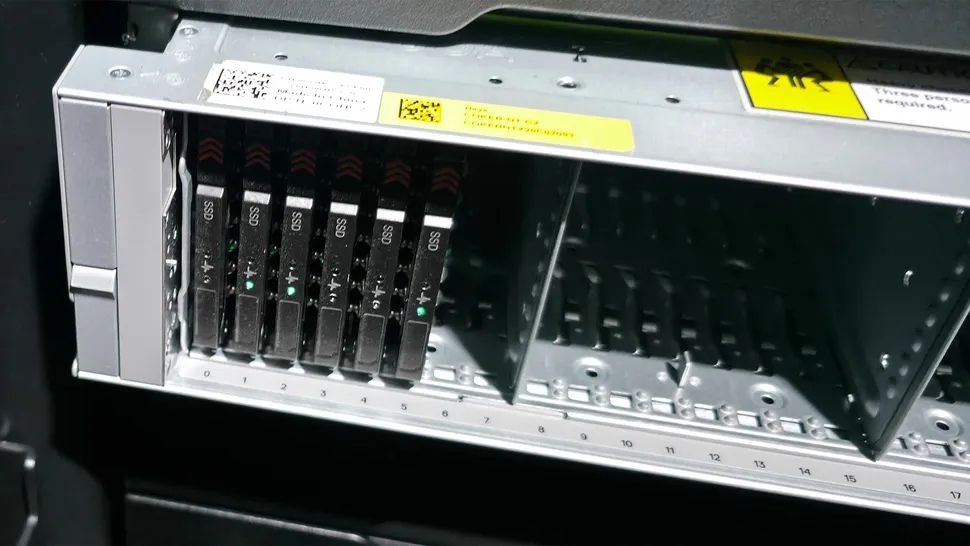
A 30TB TLC enterprise SSD now sells for $22,600, about 6.5 times its price a year ago, while a comparable HDD costs $1,216, making flash roughly 18.6 times more expensive per terabyte.
Engineers designing large-scale storage must now factor in flash prices that are nearly twenty times higher than disk, pushing all-flash AI storage projects into the tens of millions of dollars. The hybrid SSD-HDD approach only saves money if hard drives are available under long-term contracts; otherwise spot pricing erodes the cost advantage. With Seagate and Western Digital reporting nearline HDD output sold out through 2027, new projects may face delayed procurement or higher expenses.
Written by elseif from the cluster below · every claim links back to a sourceThe three things worth knowing
A 30TB TLC enterprise SSD now costs $22,600, about 6.5 times its price a year ago.
Equivalent hard drives are priced at $1,216, making flash roughly 18.6 times more expensive per terabyte.
Seagate and Western Digital report nearline HDD supply sold out through 2027, forcing spot purchases that raise hybrid system costs.
THE READ
What the cluster adds up to.
The price of a 30TB TLC enterprise SSD has risen to $22,600, which is about 6.5 times what the same drive cost a year ago. At the same time, a comparable hard drive is listed at $1,216. This puts the flash-to-disk price ratio at roughly 18.6 times per terabyte according to VDURA's Flash Volatility Index.
Using those unit prices, a 25PB all-flash AI storage system would cost about $51.60 million, while a hybrid configuration that mixes flash and hard drives would be around $12.86 million. The hybrid figure assumes the hard-drive price of $1,216 per unit. The index shows that the hybrid approach can reduce capital outlay compared with the all-flash alternative.
The hybrid savings depend on being able to buy hard drives at contract prices. Seagate and Western Digital have told investors that their nearline HDD output is sold out through 2027. Without a long-term supply contract, purchasers must pay spot prices, which are higher than the $1,216 used in the index. Analysts have estimated the spot premium at 30 % to 40 % for nearline drives.
VDURA’s Flash Volatility Index, updated in August, records a 5 % flash price rise in July, continuing a trend of quarterly increases that began with a 55-60 % jump in Q1 and a 70-75 % rise in Q2. The company’s senior vice president described the elevated flash pricing as structural. Consumer SSD prices have climbed as much as 220 % over the same period, according to independent tracking cited in the article.
Written by elseif from the cluster below · checked for specifics the sources never containedTHE CLUSTER