TECH Signal 563 2 feeds carried it
Engineer reflects on mistaking effort in isolation for real-world progress in software and sport
 ↗
↗
A technologist argues that private grinding in development or training often fails to deliver results when tested in real conditions
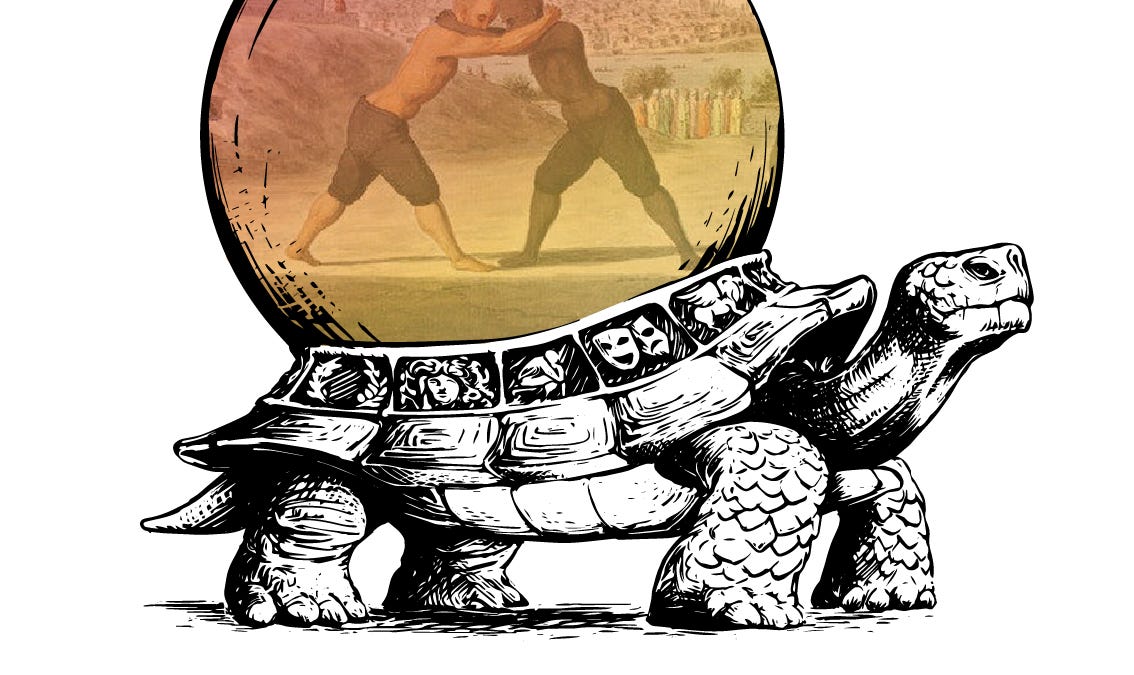
The piece challenges the assumption that measurable inputs, lines of code, hours logged, or feature polish, guarantee success. For engineers, it warns that comfort in controlled environments can blind us to what actually works in production or competition. The analogy to wrestling underscores that outcomes depend on factors we cannot fully control or simulate.
Written by elseif from the cluster below · every claim links back to a sourceThe three things worth knowing
Private effort in a 'Cave', whether coding or training, can create the illusion of progress without real-world validation
Measurable inputs like technique or conditioning are necessary but not sufficient for success in wrestling or software
Real-world outcomes expose misaligned motivations and force engineers to confront uncomfortable truths about their work
THE READ
What the cluster adds up to.
The author draws a parallel between the isolated grind of software development and the controlled training of wrestling. In both domains, engineers and athletes can mistake effort for progress, assuming that hours logged or features built will translate directly into success. The piece argues that this 'Cave' mentality, comfortable, measurable, and self-reinforcing, can obscure the gap between what we control and what actually determines outcomes. For engineers, this might mean shipping polished code that fails under real-world load or user behavior, or optimizing for metrics that don’t align with business goals.
The wrestling analogy highlights the limits of controlled environments. Technique and conditioning are necessary but not sufficient; the third period is won by 'the guy with the biggest heart,' a factor that resists quantification. Similarly, in software, no amount of unit testing or CI/CD optimization can fully prepare a system for the unpredictability of production traffic, user error, or market shifts. The piece suggests that engineers often over-index on what they can measure, lines of code, test coverage, or sprint velocity, while neglecting the unquantifiable factors that ultimately decide success, like adaptability or user empathy.
The author’s personal wrestling experience reveals a deeper issue: misaligned motivations. He trained hard to avoid shame rather than to win, and this avoidance mindset cost his team points. In software, this might manifest as engineers optimizing for internal approval (e.g., clean code reviews) rather than external outcomes (e.g., user retention). The piece implies that real progress requires confronting uncomfortable truths, whether that’s a flawed architecture, a misaligned product vision, or a personal aversion to failure. The 'Cave' shields us from these truths, but the real world does not.
The cultural context adds another layer. Smart devices, recommendation algorithms, and AI reinforce our existing beliefs, creating a feedback loop that makes the 'Cave' even cozier. For engineers, this could mean over-relying on tools that validate our assumptions (e.g., A/B tests that confirm biases) or communities that echo our perspectives. The piece warns that this curated comfort can blind us to alternative approaches or critical flaws in our work. The antidote, it suggests, is to step out of the 'Cave' and engage with the 'brutal' real world, where outcomes are not guaranteed and assumptions are tested.
Written by elseif from the cluster below · checked for specifics the sources never containedTHE CLUSTER