TECH Signal 506
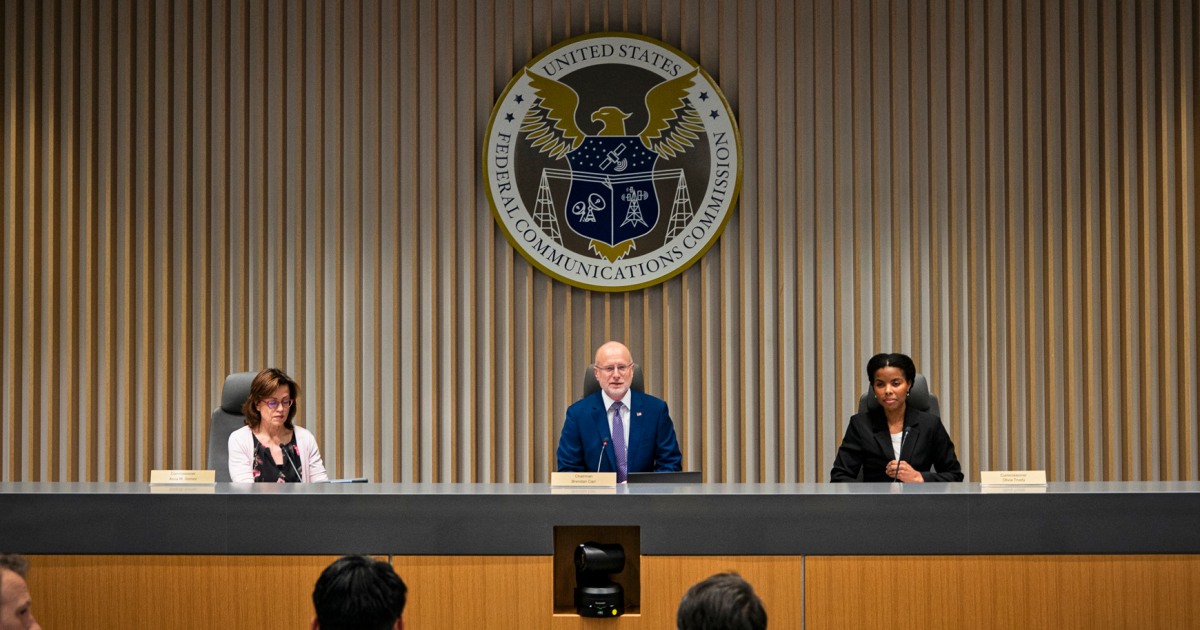
Federal Communications Commission scraps limit on broadcast TV ownership
 ↗
↗
The FCC has eliminated the 39% cap on broadcast TV ownership, allowing a single company to reach a larger share of U.S. television households without regulatory limits.
This change removes a long-standing constraint on media consolidation, potentially reshaping competition in local broadcasting. Engineers working on media distribution, ad-tech, or compliance systems may need to adapt to new ownership structures and their implications for content licensing, regional ad markets, and regulatory reporting. Legal challenges could delay or alter the rule’s implementation, adding uncertainty to planning.
Written by elseif from the cluster below · every claim links back to a sourceThe three things worth knowing
The FCC replaced the 39% ownership cap with a case-by-case review process, removing a fixed numerical limit.
The decision is expected to face legal challenges, particularly over whether the FCC has authority to override a congressionally set rule.
Major broadcast groups like Nexstar stand to benefit, potentially accelerating mergers and reducing independent station ownership.
THE READ
What the cluster adds up to.
The FCC’s vote removes a hard cap on broadcast TV ownership, replacing it with discretionary oversight. This shifts the burden from a clear regulatory threshold to a process where approvals depend on FCC interpretation. For engineers, this means compliance systems that previously relied on a fixed 39% limit will need to be updated to handle dynamic, case-specific evaluations. The change also introduces unpredictability, what was once a straightforward calculation now requires legal or policy input to assess risk for mergers or acquisitions.
The rule change is framed as leveling the playing field for local broadcasters against unregulated streaming and social media platforms. However, the immediate beneficiaries are large station groups like Nexstar, which can now pursue mergers without the 39% constraint. For engineers in media companies, this could mean integrating larger, more complex ownership structures into content distribution pipelines, ad-serving systems, or regional compliance tools. Smaller broadcasters may face increased competition or acquisition pressure, potentially reducing the diversity of technical ecosystems in local markets.
Legal challenges are likely to focus on whether the FCC overstepped its authority by scrapping a rule codified in federal law. If courts block the change, engineers may need to revert systems to the old 39% cap or maintain parallel compliance paths. Even if the rule stands, the case-by-case approach could slow deal approvals, creating delays for teams working on integration projects tied to mergers. The uncertainty around enforcement may also discourage smaller players from investing in broadcast infrastructure or innovation.
Opponents argue the move will reduce viewpoint diversity and increase layoffs, but the technical impact is more about scale. Larger ownership groups may centralize operations, standardizing workflows and reducing regional customization. Engineers in broadcast or ad-tech may see shifts toward unified platforms, with fewer bespoke solutions for local markets. This could simplify some integrations but may also limit flexibility for stations serving niche audiences or unique regulatory environments.
Written by elseif from the cluster below · checked for specifics the sources never containedTHE CLUSTER