DATABASES Signal 453
Study suggests Sun may carry detectable chemical fingerprints of engulfed super-Earth
 ↗
↗
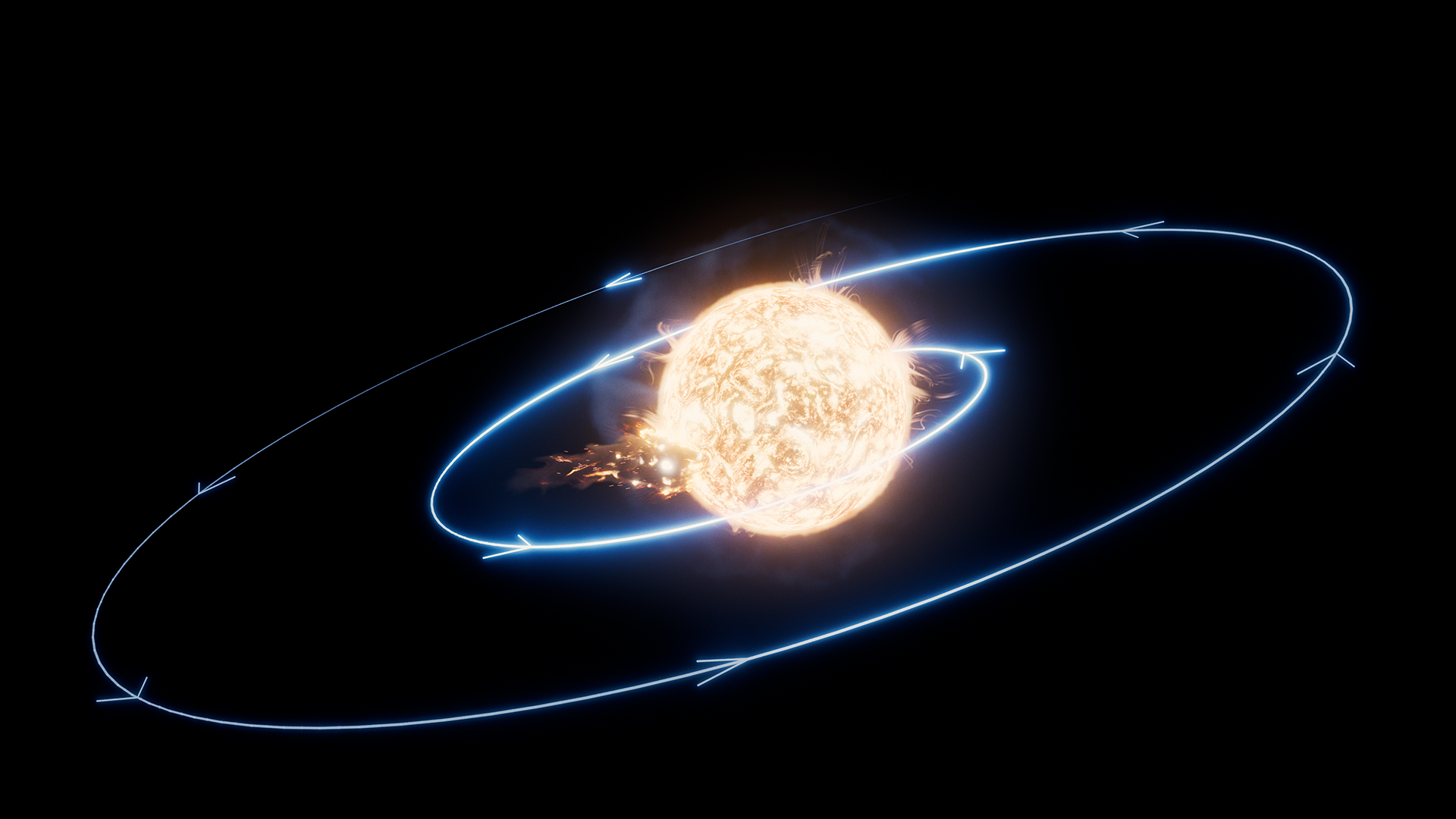
Research models indicate a planet 5 to 10 times Earth’s mass could have left lasting structural and chemical imprints in the Sun’s interior.
If confirmed, this finding would revise solar evolution models and explain discrepancies in helioseismic data and lithium depletion. It also offers a method to detect past planetary engulfment in other stars, changing how we interpret stellar chemistry.
Written by elseif from the cluster below · every claim links back to a sourceThe three things worth knowing
A super-Earth engulfed by the young Sun may have altered its internal structure and lithium abundance.
Simulations match multiple solar observations, including sound-speed anomalies and convection zone depth.
Detecting such fingerprints could provide evidence of planetary engulfment in other star systems.
THE READ
What the cluster adds up to.
A new study proposes that the Sun may retain measurable traces of a super-Earth it swallowed early in its formation. The research models how a planet 5 to 10 times Earth’s mass could have been absorbed without fully disintegrating, leaving behind chemical and structural imprints. These fingerprints include altered sound-speed profiles below the convection zone and a depleted lithium abundance at the surface, both of which standard solar models struggle to explain simultaneously.
The study uses the MESA stellar-evolution code to test whether planetary engulfment could resolve long-standing discrepancies in solar observations. By simulating different accretion scenarios, the researchers found that a super-Earth’s ingestion aligns with helioseismic constraints and surface abundance data. The results suggest that such an event could account for multiple independent measurements, rather than just one anomaly, strengthening the case for its plausibility.
While the idea of planetary engulfment is not new, this work shifts focus from theoretical migration pathways to detectable consequences. Previous research proposed that super-Earths could have formed near the Sun and migrated inward, but this study asks whether the Sun itself still carries observable evidence. If confirmed, the findings would not only refine solar models but also provide a tool for identifying similar events in other stars, reshaping our understanding of stellar chemistry and planetary system evolution.
The next step involves independent verification of these fingerprints through helioseismic or other observational methods. If successful, it would offer strong evidence that the Sun once swallowed a planet, addressing why our solar system lacks super-Earths while many others appear to host them. The study also highlights how stellar interiors can preserve clues about their past interactions with planets, opening a new avenue for astrophysical research.
Written by elseif from the cluster below · checked for specifics the sources never containedTHE CLUSTER