TECH Signal 174
First stellar stream beyond the Milky Way reportedly reveals dark matter distribution
 ↗
↗
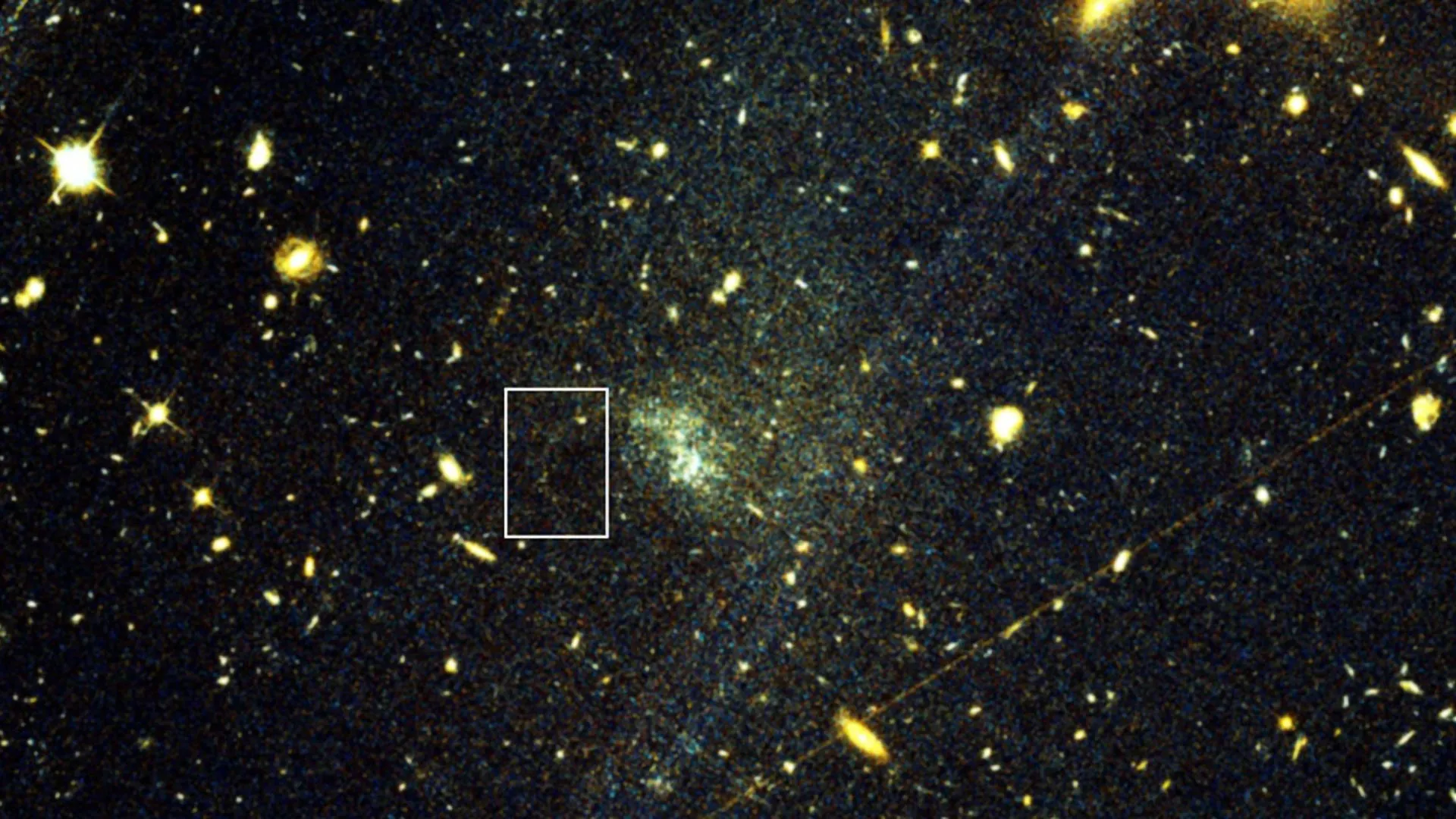
Astronomers have discovered the first globular cluster stellar stream beyond the Milky Way, opening a new way to study dark matter in distant galaxies. These faint trails of stars trace a galaxy’s gravitational structure and could eventually help scientists map invisible matter across the universe.
This discovery represents a significant advancement in understanding dark matter, which constitutes a major portion of the universe's mass. By utilizing globular cluster stellar streams as tracers, astronomers can delve deeper into the structure of galaxies beyond the Milky Way, potentially transforming dark matter studies. This method could pave the way for more accurate measurements of dark matter in various galactic environments.
Written by elseif from the cluster below · every claim links back to a sourceThe three things worth knowing
A globular cluster stellar stream has been discovered in an ultra-diffuse galaxy, marking the first such finding outside the Milky Way.
This discovery allows for the potential measurement of dark matter distribution in other galaxies, a previously challenging task.
The research opens new avenues for understanding galactic evolution and dark matter through advanced astronomical analysis techniques.
THE READ
What the cluster adds up to.
The identification of a globular cluster stellar stream beyond the Milky Way represents a groundbreaking achievement in astrophysics. This discovery provides a new tool for astronomers to explore the gravitational structure of galaxies, particularly those that are faint and difficult to study. The ability to trace dark matter through these stellar streams could lead to significant advancements in our understanding of the universe's mass composition.
Adopting this technique involves leveraging improvements in astronomical datasets and advanced analysis methods, which have made the detection of such faint structures feasible. Researchers are likely to encounter challenges related to the faintness of the signals produced by these streams, necessitating sophisticated observational strategies. However, the potential insights gained from this method could justify the investment in the required technology and resources.
While this discovery focuses on one specific ultra-diffuse galaxy, the implications could extend to a wider range of galaxies, allowing for more comprehensive studies of dark matter. This approach could reveal how dark matter is distributed across different types of galactic environments, enhancing our understanding of galaxy formation and evolution. However, the technique may face limitations in more densely packed galaxies where stellar interactions could complicate the analysis.
Written by elseif from the cluster below · checked for specifics the sources never containedTHE CLUSTER