SECURITY Signal 51
Mantle waves lifted East Antarctica to enable ice sheet formation 34 million years ago
 ↗
↗
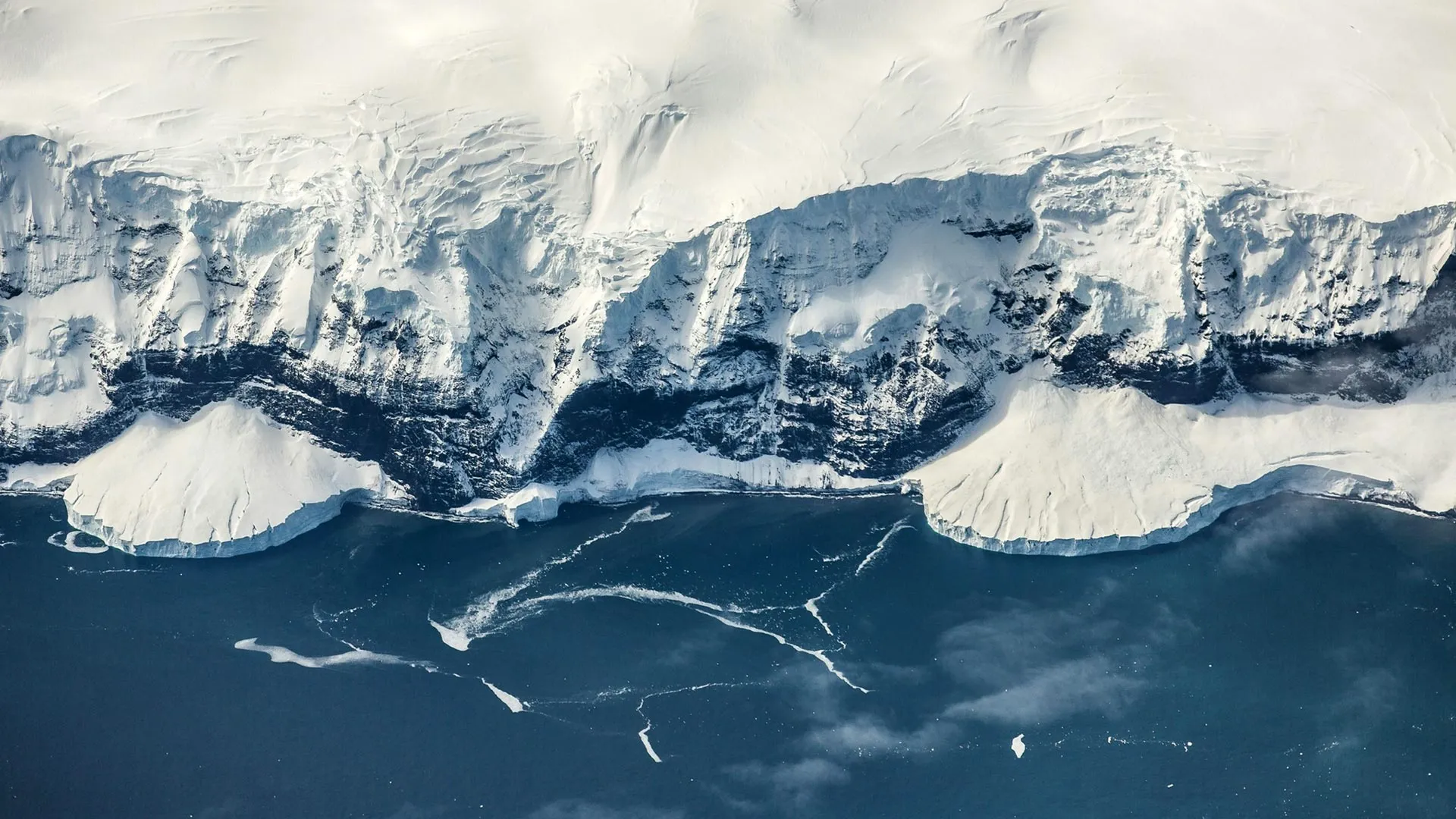
Geological uplift in East Antarctica created high terrain where ice could persist despite warmer global temperatures, preceding Arctic glaciation by millions of years.
This finding clarifies why Antarctica froze long before the Arctic, despite similar atmospheric conditions. For engineers modeling climate systems or sea-level rise, the role of geological processes in ice sheet formation adds a critical variable to long-term projections. It also underscores how local topography can override global climate trends in shaping regional environments.
Written by elseif from the cluster below · every claim links back to a sourceThe three things worth knowing
Slow-moving mantle waves beneath East Antarctica gradually lifted the region over 100 million years, forming mountains and plateaus.
Elevations above 2 km allowed snow and ice to persist even in a warmer climate, seeding the East Antarctic Ice Sheet around 34 million years ago.
The geological uplift explains why Antarctica froze millions of years before the Arctic, despite similar CO2 levels and global temperatures.
THE READ
What the cluster adds up to.
The study identifies mantle waves as the mechanism behind East Antarctica’s gradual uplift. These waves, traveling beneath continents after tectonic plate separation, raised the region’s elevation over 100 million years. The process created a high plateau and the Gamburtsev Mountains, which provided the cold, elevated terrain necessary for ice to accumulate. This geological change occurred independently of atmospheric conditions, demonstrating how local factors can drive large-scale environmental shifts.
The uplift of East Antarctica reached a critical threshold around 45 million years ago, when elevations surpassed 2 km. At this height, mountain glaciers could form and expand, eventually coalescing into the East Antarctic Ice Sheet. The ice sheet’s reflective surface further cooled the region, amplifying the effect. This feedback loop highlights how small changes in topography can trigger irreversible climate processes, with implications for modern ice sheet stability.
The findings address a long-standing climate mystery: why Antarctica froze millions of years before the Arctic. While falling CO2 levels were a global trigger, Antarctica’s head start was due to its elevated terrain. The Arctic, lacking similar geological uplift, remained ice-free until much later. This asymmetry underscores the importance of regional geology in climate modeling, particularly for engineers assessing long-term sea-level rise or polar ice dynamics.
The study’s computational models simulated 100 million years of Antarctic uplift, linking mantle waves to the formation of the coastal escarpment and inland mountains. These models provide a framework for understanding how tectonic processes shape surface conditions over geological timescales. For engineers, the work offers a case study in how deep Earth processes can influence surface environments, with potential applications in hazard assessment or resource exploration.
Written by elseif from the cluster below · checked for specifics the sources never containedTHE CLUSTER