INFRA Signal 417
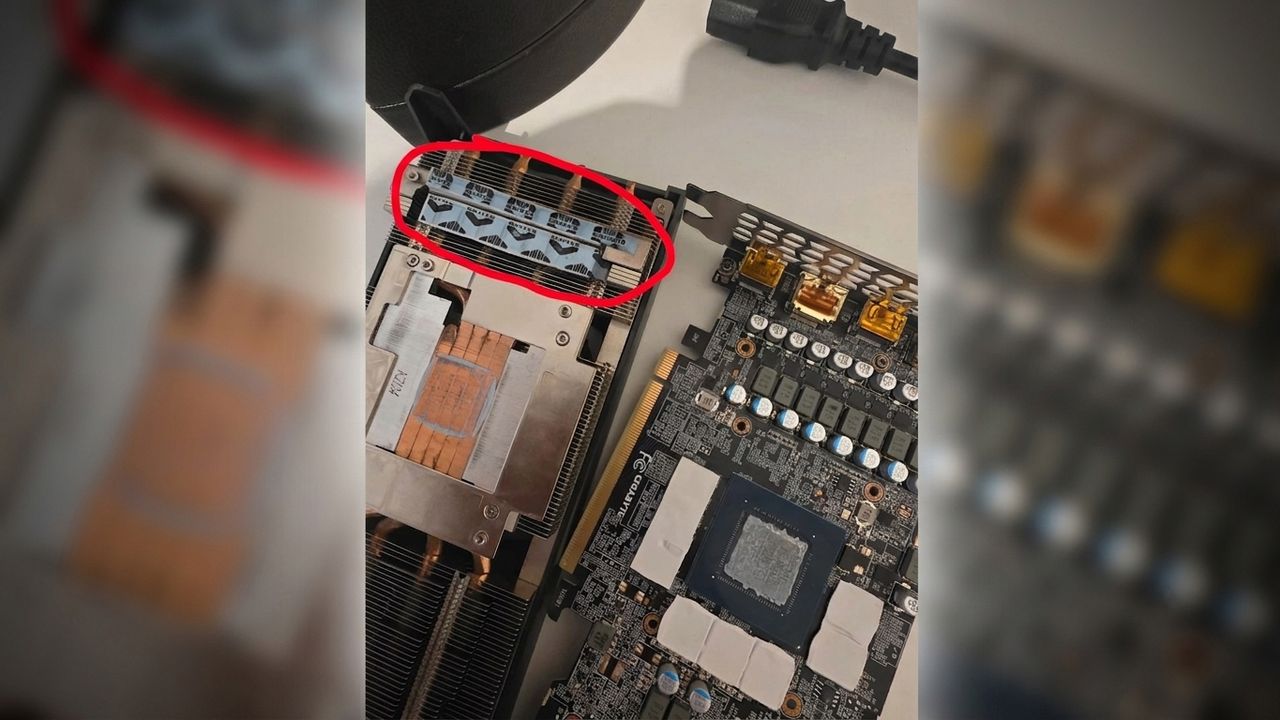
Gigabyte RTX 3070 reportedly shipped with factory plastic on VRM thermal pads causing 30°C overheating
 ↗
↗
A user found protective film left on VRM thermal pads of a Gigabyte RTX 3070 after five years, leading to overheating and black screens until removal and repasting.
Thermal pads with factory plastic film can degrade cooling performance over time, risking component damage. This highlights potential quality control gaps in GPU manufacturing and the importance of verifying thermal interface integrity during assembly or repairs.
Written by elseif from the cluster below · every claim links back to a sourceThe three things worth knowing
Protective film left on VRM thermal pads of a Gigabyte RTX 3070 caused overheating and black screens after five years of use.
Removing the film and repasting reduced GPU hotspot temperatures by 30°C and stabilized performance in benchmarks.
Gigabyte support declined to address the manufacturing defect, citing the card’s out-of-warranty status.
THE READ
What the cluster adds up to.
A Gigabyte RTX 3070 owner discovered that protective plastic film had been left on the VRM thermal pads during manufacturing, likely impairing heat transfer for nearly five years. The film, intended to protect pads during assembly, was never removed, leading to elevated temperatures and erratic behavior under load. The user reported frequent black screens, fan spikes, and hotspot temperatures reaching 105°C despite firmware updates and BIOS tweaks. This suggests that even minor assembly oversights can have long-term thermal consequences in high-performance hardware.
After disassembling the GPU, the user removed the film and reapplied thermal paste, resulting in a 30°C drop in hotspot temperatures and a 15°C reduction in overall GPU temps. Benchmark stability tests showed no errors post-fix, though the user noted that prior overheating may have caused irreversible damage to components like MOSFETs and capacitors. The incident underscores the fragility of thermal management in GPUs, where even a thin barrier can degrade performance over time. Engineers should consider inspecting thermal pads during builds or repairs, especially in older or heavily used cards.
Gigabyte’s response to the issue was limited to suggesting the user test the GPU in another system, refusing to acknowledge the manufacturing defect due to the card’s expired warranty. This raises questions about post-warranty support for hardware defects, particularly those that may not surface until years after purchase. The case also highlights the role of community-driven diagnostics in identifying systemic issues, as the problem was only resolved after the user shared findings on Reddit. For engineers, this serves as a reminder to document and report persistent hardware anomalies, as they may reveal broader quality control lapses.
Written by elseif from the cluster below · checked for specifics the sources never containedTHE CLUSTER