TECH Signal 417
GameStop customer in Oregon receives $10,690.06 store credit for trading hundreds of broken consoles
 ↗
↗
The $10,690.06 store credit can be spent on GameStop's inventory of PlayStation, Xbox, Switch consoles and games, but not on PC components or laptops.
It shows that accepting GameStop's store credit can yield up to 50% more value than taking cash for the same broken consoles. The trade also highlights the effort saved compared to selling hundreds of items individually on auction sites, while raising questions about GameStop's profit from refurbishing or parting out the hardware.
Written by elseif from the cluster below · every claim links back to a sourceThe three things worth knowing
A customer traded hundreds of broken consoles at GameStop's Clackamas, Oregon store and received $10,690.06 in store credit.
Store credit offers up to 50% more value than a cash payout for the same trade-in items.
The credit can only be used for GameStop's stock of consoles, games, and limited electronics, not for PC components or laptops.
THE READ
What the cluster adds up to.
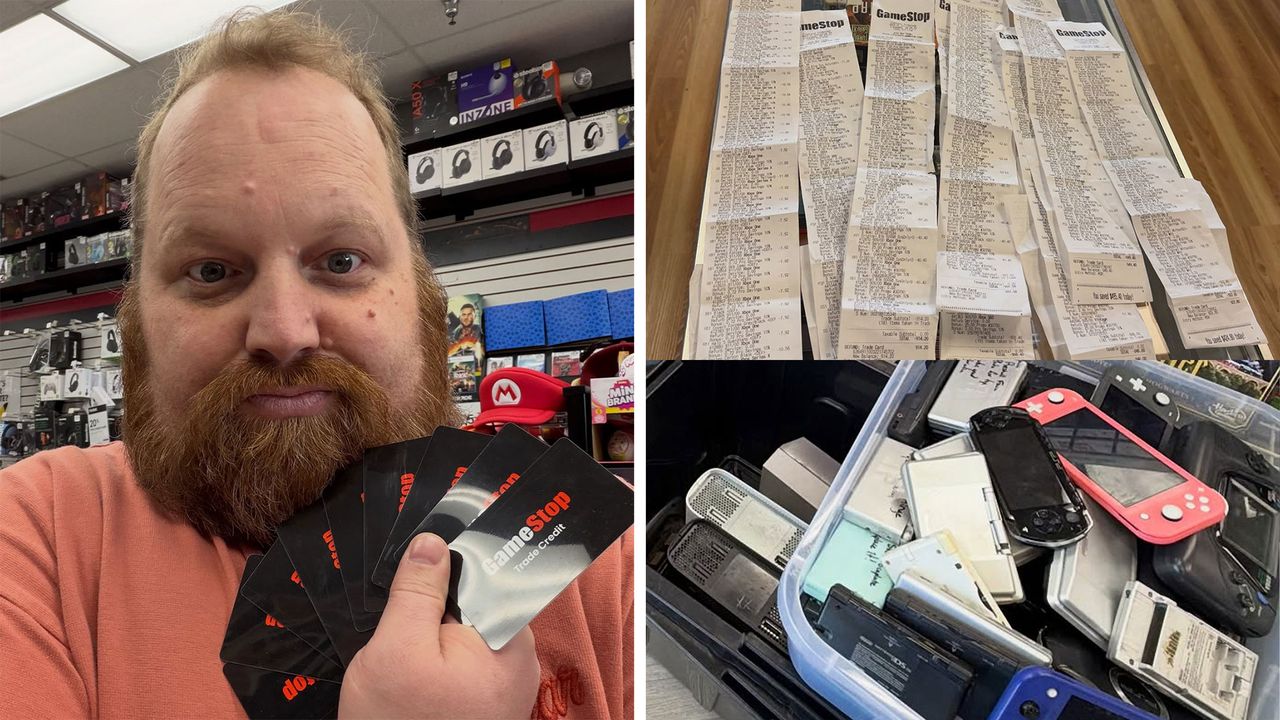
Josh brought a large collection of broken gaming hardware, including PlayStation, Xbox, Game Boy, Switch, and other handheld consoles, to the GameStop location in Clackamas, Oregon. The store logged the trade as hundreds of individual units and issued $10,690.06 in store credit. Photos shared by GameStop show Josh holding stacks of trade-in cards and receipts documenting the transaction. This event illustrates how a single customer can accumulate significant trade-in volume through broken or obsolete hardware.
The receipts reveal specific trade-in values: multiple Xbox One consoles at $7.92 each, Xbox Series X units for $10-11, PS4 consoles at $16 each, and working Xbox One consoles around $40. GameStop’s policy states that choosing store credit over cash can increase the payout by up to 50 %. Thus, the same batch of broken consoles would have fetched considerably less if Josh had requested cash instead of credit.
Because GameStop’s trade-in credit is tied to its in-store inventory, the $10,690.06 can only be spent on items the retailer stocks, primarily PlayStation, Xbox, and Switch consoles, games, and a small selection of accessories like MacBooks or iPhones. The credit cannot be applied to PC components, laptops, or other electronics that GameStop does not carry. This limits the customer’s purchasing options to the gaming-focused catalog available at the store.
Some commentators argued that Josh could have earned more by selling the consoles individually on platforms such as eBay, but noted that doing so would require substantial effort in listing, photography, shipping, and handling returns. Meanwhile, GameStop may profit by refurbishing functional units or salvaging parts from non-working consoles, although it is unlikely to share this kind of business data. The episode underscores the trade-off between immediate, hassle-free credit and the potential higher return from a more labor-intensive resale process.
Written by elseif from the cluster below · checked for specifics the sources never containedTHE CLUSTER