SECURITY Signal 330
GeForce NOW exploit lets you access the full Windows desktop through a simple file swap — Modder runs local AI models on Ultimate tier with 48GB of VRAM and no restrictions
 ↗
↗
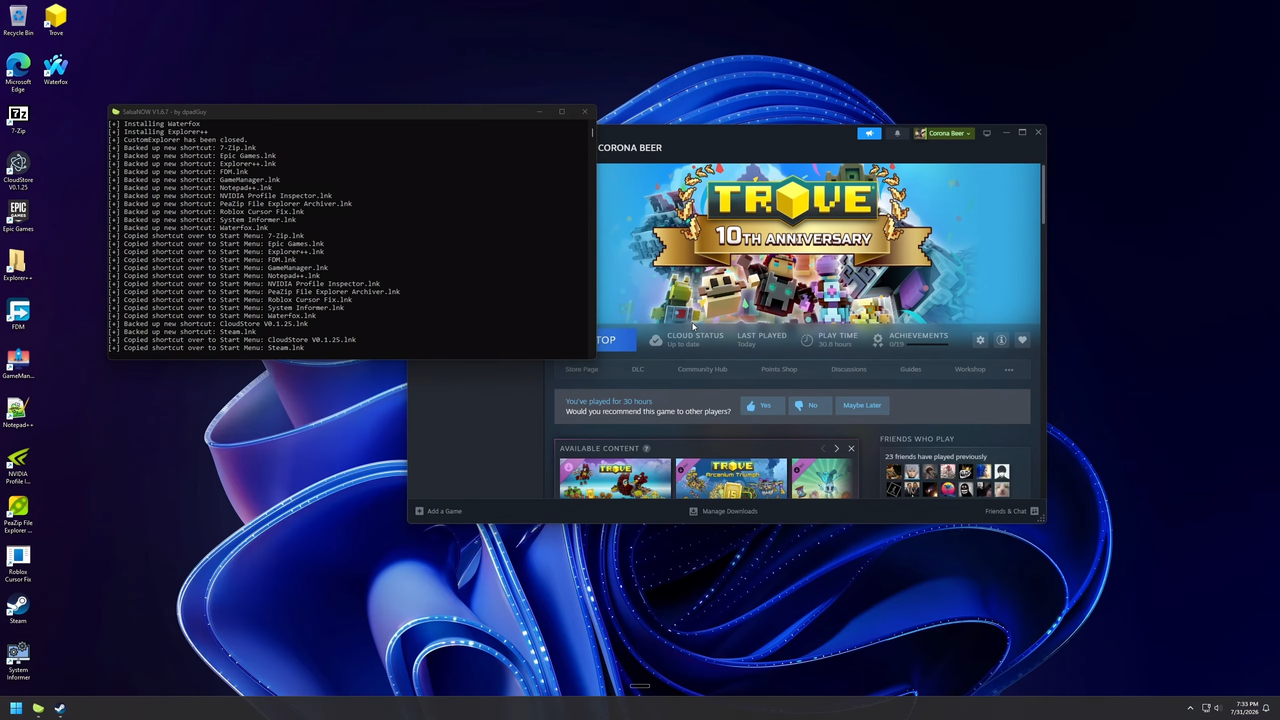
A modder swapped a game’s executable with a custom binary, tricking GeForce NOW’s launch flow into opening the full Windows desktop instead of the game.
The technique turns a gaming-only cloud service into a general-purpose compute node, exposing Nvidia’s infrastructure to arbitrary user code and data. For engineers managing cloud workloads, it demonstrates how unchecked file handling can break service boundaries and create a vector for malware or resource abuse.
Written by elseif from the cluster below · every claim links back to a sourceThe three things worth knowing
The exploit replaces a game’s launch file with a program that opens the host’s desktop, bypassing GeForce NOW’s intended game-only sandbox.
Running the hack requires an Ultimate-tier subscription, persistent storage, and carries the risk of account termination under Nvidia’s terms of service.
GeForce NOW may terminate sessions when it detects file-explorer activity or block the file download needed for the swap, limiting reliability of the method.
THE READ
What the cluster adds up to.
The attack starts by installing an I2P (Install-to-Play) title from Steam, then navigating to the local Steam folder and swapping the game’s main executable with a custom binary supplied by another modder. Steam is fooled into thinking the user is launching the game, while the modified file launches the Windows desktop inside the cloud instance. This manipulation relies on the fact that GeForce NOW hands off the executable to the underlying Windows environment without additional integrity checks.
Once the desktop is exposed, the user can treat the cloud machine like a regular PC, installing software such as Wallpaper Engine and even running local AI inference workloads. The Ultimate tier provides a high-end GPU with 48 GB of VRAM, making it attractive for compute-heavy tasks despite the service’s rate-limit constraints. However, this usage violates Nvidia’s terms, meaning the account can be banned if detected.
The method only works on paid tiers that allow persistent storage and sufficient GPU resources; free tiers lack the necessary hardware and session length. Users have reported that GeForce NOW sometimes ends the session when a file-explorer window appears, and the platform may block the download of the replacement executable, which is essential for the exploit. Consequently, the hack is not guaranteed to persist across sessions without careful handling of storage and timing.
From a security standpoint, granting unrestricted desktop access on a service that is not designed for general compute opens a path for malicious actors to spread malware or run unauthorized workloads across Nvidia’s fleet. A comment in the source speculated that if the underlying machines are domain-joined, an attacker could potentially reach other internal systems. This highlights the importance of strict sandboxing and executable validation in cloud-gaming platforms.
Mitigation would involve Nvidia adding verification of launched binaries, monitoring for unexpected desktop or file-explorer activity, and enforcing stricter isolation between user sessions. Engineers responsible for similar services should treat this as a case study in how a seemingly benign file-swap can collapse a service’s threat model and expose valuable compute resources to abuse.
Written by elseif from the cluster below · checked for specifics the sources never containedTHE CLUSTER