TECH Signal 507
Taleb: alcohol study's asymmetric confidence intervals and dominant age bracket undermine its risk estimates
 ↗
↗
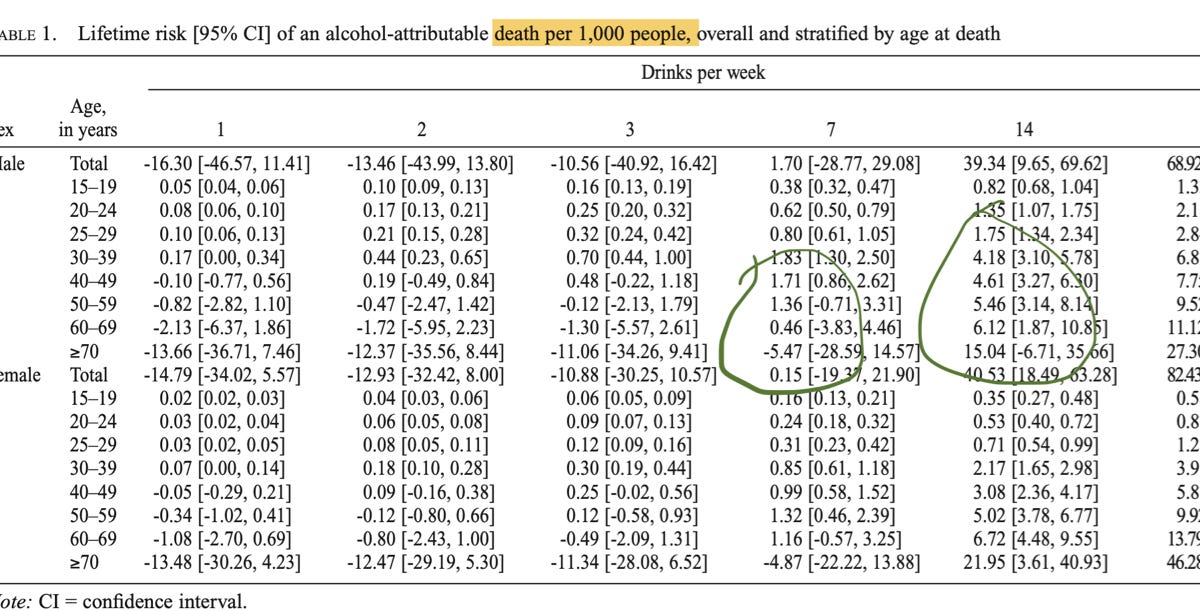
Nassim Taleb critiques a government-commissioned alcohol study, pointing to asymmetric confidence intervals, an unexplained correlation structure, and a dominant age bracket as statistical flaws.
For engineers who rely on statistical analysis, Taleb's critique highlights how underdocumented methodology and unexplained correlation structures can undermine conclusions. The study's claim that low-level alcohol consumption has no protective effect and that risk rises to 1 in 25 at 14 drinks per week is now in question. This matters because such studies directly influence public health guidelines and individual decisions.
Written by elseif from the cluster below · every claim links back to a sourceThe three things worth knowing
Taleb identifies asymmetric confidence intervals in the study's Table 1 that do not match standard probability distributions.
The total risk is an unweighted sum of age segments, but the confidence intervals are not added, suggesting a Monte Carlo with correlated draws.
One age bracket (over 70) dominates the result, with the highest standard error and cause-of-death attribution rarely isolated.
THE CLUSTER