AI Signal 444
Grab reduces mechanical analytics work from 44% to 30% using AI agents with human oversight
 ↗
↗
Grab deployed AI agents to automate routine analytics tasks, cutting the share of mechanical work handled by analysts from 44% to 30% over four months.
This shift demonstrates how AI agents can handle repetitive analytics workflows while preserving human accountability for critical decisions. Teams adopting similar systems may see reduced operational overhead but must invest in certified data and context management to ensure reliability.
Written by elseif from the cluster below · every claim links back to a sourceThe three things worth knowing
AI agents at Grab now handle 67-90% of self-service analytics requests without human intervention, up from 50-63% earlier this year.
The system uses a five-level autonomy model, with humans retaining oversight for metric definitions and business assumptions.
Grab maintains over 5,000 certified tables and 4,000 context documents to support agent reliability and accuracy.
THE READ
What the cluster adds up to.
Grab’s AI agents automate analytics workflows by handling tasks like data preparation, query execution, and reporting. The system routes requests through specialized workflows, reducing the mechanical workload for analysts. This change shifts human effort from repetitive tasks to higher-value activities like causal interpretation and business decision-making. The approach relies on a structured autonomy model, where agents operate within defined boundaries while humans retain final accountability.
The reduction in mechanical work, from 44% to 30%, reflects the system’s ability to handle routine requests independently. Self-service analytics adoption grew significantly, with 67-90% of metric, data, and SQL requests now resolved without human involvement. However, this efficiency depends on Grab’s investment in certified data and context management. The company maintains thousands of certified tables and context documents to ensure agents produce reliable results, highlighting the need for robust data infrastructure.
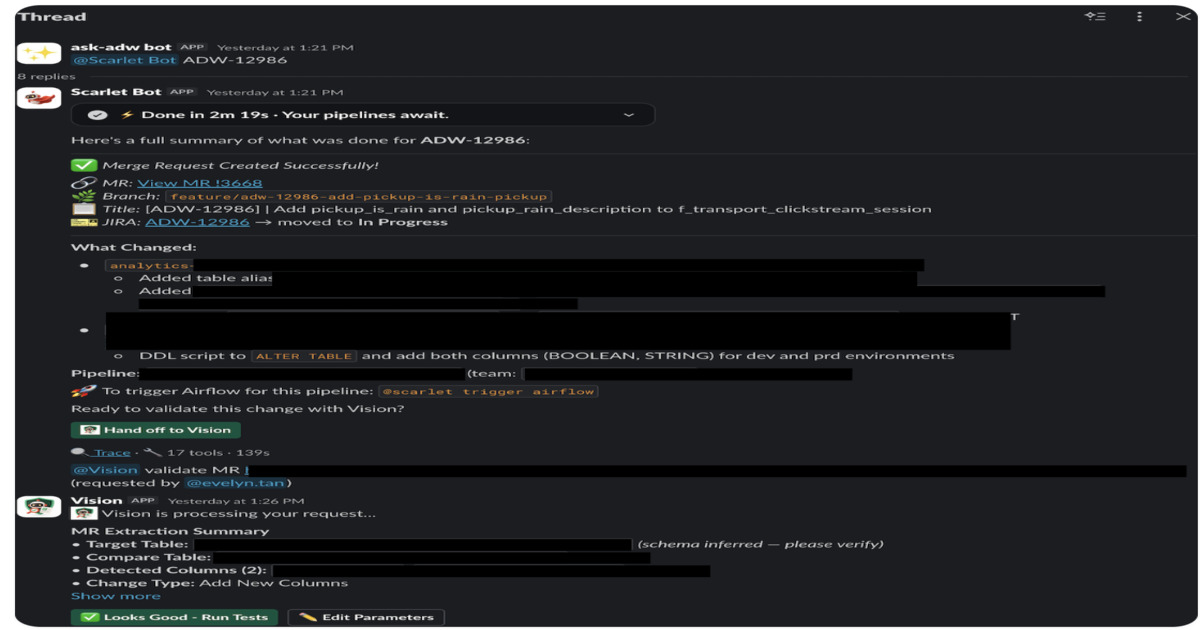
Grab’s implementation includes operational AI agents like Scarlet, which performs root cause analysis for pipeline failures and can fix or escalate issues. For recurring analytics, agents automate metric commentary and OKR breakdowns, correlating data with operational changes. While this reduces manual effort, it also introduces new dependencies on agent accuracy and context updates. Teams adopting similar systems must balance automation benefits with the cost of maintaining data quality and oversight frameworks.
Written by elseif from the cluster below · checked for specifics the sources never containedTHE CLUSTER