SECURITY Signal 56
Open-source reverse-engineered GTA III and Vice City return to browsers after DMCA takedown reportedly via WebAssembly
 ↗
↗
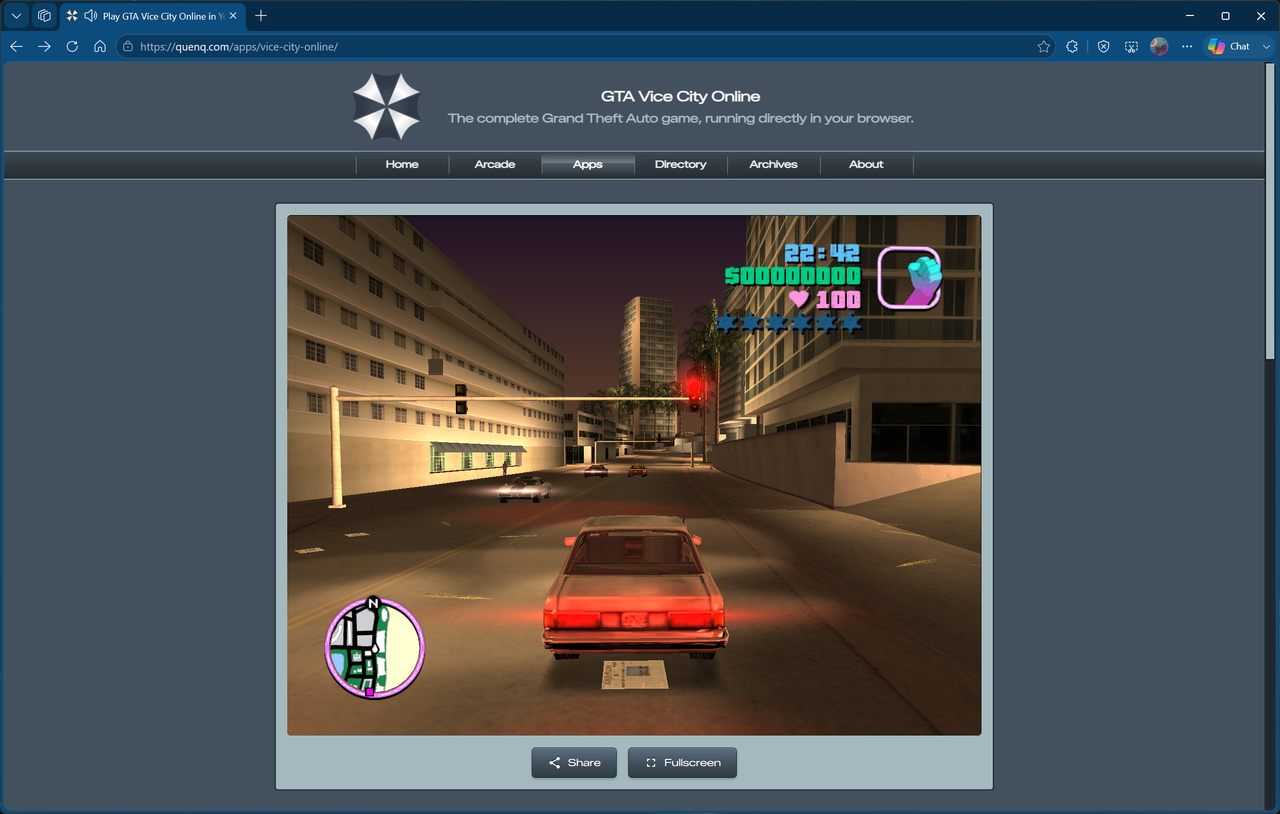
GTA III and Vice City are now playable in browsers using decompiled source code and WebAssembly after a previous takedown.
This demonstrates the resilience of open-source reverse engineering in preserving legacy software, even under legal pressure. For engineers, it highlights the technical feasibility of running complex native code in browsers via WebAssembly, though legal risks remain for such projects.
Written by elseif from the cluster below · every claim links back to a sourceThe three things worth knowing
The browser-based ports use decompiled C++ source code translated to WebAssembly for near-native performance.
A prior DMCA takedown forced a shift from direct asset distribution to requiring users to provide their own game files.
Performance exceeds 100 FPS on desktop but may introduce physics bugs due to unlocked framerates.
THE READ
What the cluster adds up to.
The return of GTA III and Vice City to browsers follows a DMCA takedown of an earlier implementation, showing how open-source reverse engineering can adapt to legal challenges. The projects rely on community-driven decompilation efforts (re3 and reVC) that reconstruct the original games' source code in C++. This approach avoids direct copyright infringement by not distributing proprietary assets, though it still operates in a legal gray area.
Technically, the ports leverage WebAssembly to run the decompiled C++ code in browsers, achieving performance that reportedly exceeds 100 FPS on desktop systems. WebGL 2 is used for GPU acceleration, bypassing browser layout engines to handle graphics-intensive tasks. However, the unlocked framerates can break physics and other game mechanics, as the original games were designed for 30 FPS. This trade-off between performance and stability is a common challenge in reverse-engineered ports.
The distribution model has shifted in response to legal pressure. While the earlier version on DOS Zone allowed direct asset downloads, the current implementation on Quenq requires users to upload or torrent game files themselves. This reduces legal exposure for the host but complicates the user experience. The persistence of these projects despite legal action underscores the difficulty of enforcing copyright on reverse-engineered software that does not distribute protected assets directly.
For engineers, this case illustrates the potential of WebAssembly for running complex legacy code in modern environments. The ability to achieve near-native performance in a browser opens possibilities for preserving and extending older software. However, the legal risks and technical limitations, such as framerate-related bugs, highlight the challenges of such efforts. The project also serves as a case study in how open-source communities can navigate legal constraints while maintaining access to culturally significant software.
Written by elseif from the cluster below · checked for specifics the sources never containedTHE CLUSTER