INFRA Signal 446
China approves limited Nvidia H200 AI GPU imports while domestic chips claim 90% of market
 ↗
↗
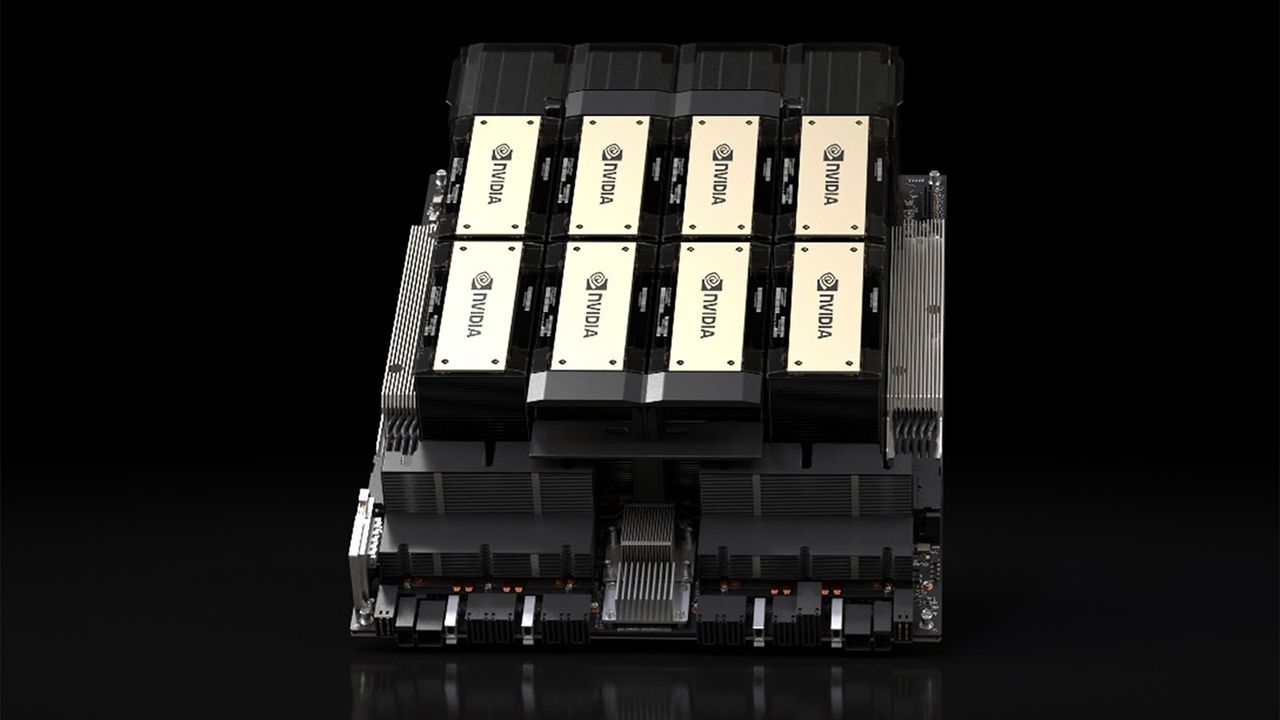
China has begun allowing case-by-case imports of Nvidia H200 GPUs under strict quotas, but domestic accelerators now dominate the market.
This shift signals China’s accelerating push for semiconductor independence, reducing reliance on U.S. hardware. For engineers, it means designing AI workloads around a fragmented supply chain where training and inference hardware may diverge. The limited H200 allocations suggest Beijing is prioritizing strategic access over volume, leaving most workloads dependent on domestic alternatives.
Written by elseif from the cluster below · every claim links back to a sourceThe three things worth knowing
China’s National Development and Reform Commission approved ~10,000 H200 GPUs for mainland use, a fraction of licensed U.S. export allowances.
Domestic AI chips, led by Huawei’s Ascend series, are projected to capture nearly 90% of China’s high-end market this year.
Nvidia’s China market share has collapsed from 95% to near-zero, with training workloads still favoring U.S. hardware where permitted.
THE READ
What the cluster adds up to.
China’s approval of Nvidia H200 imports under case-by-case licenses marks a tactical concession rather than a market reversal. The 10,000-unit allocations to firms like ByteDance and Tencent represent less than 3% of their U.S.-licensed quotas, with the remainder stranded in Hong Kong. This mirrors the U.S. export control playbook, using quantity caps and transit requirements to enforce oversight. For engineers, the implication is clear: even when foreign hardware is available, supply will be unpredictable and insufficient for large-scale deployments.
The domestic AI chip market has filled the void left by U.S. restrictions, with TrendForce projecting 83% year-over-year growth in high-end shipments. Huawei’s Ascend 910C, the most prominent alternative, is now the default for inference workloads, though its limited production capacity, reportedly 750,000 units this year, has created bottlenecks for training. DeepSeek’s leaked investor memo underscores this constraint, revealing a 16,000-unit allocation against a request for 200,000. Engineers must now optimize models for heterogeneous hardware, as training and inference may run on entirely different architectures.
Nvidia’s eroding market share reflects both regulatory pressure and Beijing’s industrial policy. State media campaigns labeling foreign chips as ‘unsafe’ and bans on their use in state-funded data centers have accelerated the shift to domestic alternatives. However, the H200’s performance, six times that of the H20 and approaching the banned H100, ensures it remains critical for frontier training. The calibrated 10,000-GPU clusters suggest Beijing is balancing access to cutting-edge hardware with the goal of nurturing a self-sufficient supply chain. For engineers, this means designing systems that can leverage limited foreign hardware for training while relying on domestic chips for scalable inference.
The broader consequence is a bifurcated AI hardware ecosystem in China. U.S. export controls have forced a decoupling, with domestic chips now dominant in volume but foreign hardware still essential for performance-critical workloads. This fragmentation increases operational complexity, as engineers must navigate compatibility, performance trade-offs, and supply chain risks. The trend also signals a long-term shift: China’s semiconductor independence efforts are no longer aspirational but a near-term reality, with domestic chips set to define the infrastructure for most AI applications.
Written by elseif from the cluster below · checked for specifics the sources never containedTHE CLUSTER